
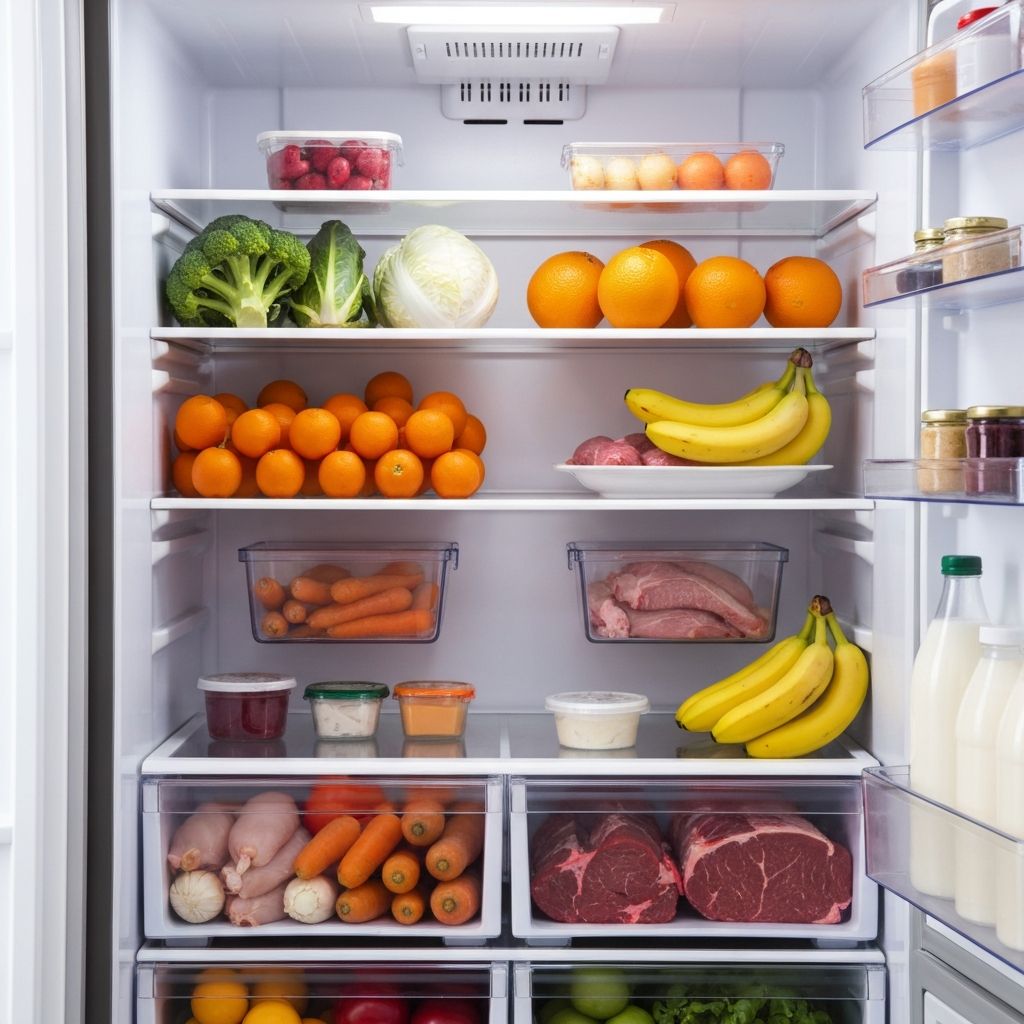
Why Refrigerator Organization Matters for Food Safety
The way you organize food in your refrigerator is not just about convenience or saving space. It is a critical food safety practice that can prevent cross-contamination and reduce the risk of foodborne illness. When raw meats, poultry, and seafood are stored improperly, their juices can drip onto other foods, potentially transferring dangerous pathogens like Salmonella, E. coli, Campylobacter, and Listeria to items that may be consumed without further cooking.
The FDA Food Code and food safety guidelines from the ServSafe program establish a specific hierarchy for storing food in commercial refrigerators, and these same principles apply to home refrigerators. The golden rule is simple: foods that require the highest cooking temperatures should be stored on the lowest shelves, while foods that require the least cooking or are ready to eat should be stored on the highest shelves. This arrangement ensures that if any dripping occurs, the contaminated juices fall onto foods that will be cooked to temperatures high enough to kill any pathogens.
The Correct Shelf Order from Top to Bottom
Ready-to-eat foods should always be stored on the top shelf of the refrigerator. These include prepared foods, leftovers, deli meats, cheeses, fruits, vegetables that will be eaten raw, desserts, and any other items that will be consumed without additional cooking. Since these foods will not undergo any heat treatment before being eaten, they must be protected from any possible contamination by raw animal products stored below.
The second shelf should be reserved for fruits and vegetables that will be cooked before eating, as well as other items that require minimal cooking temperatures. Fresh produce that will be washed and cooked, such as vegetables for stir-fries or soups, can be stored here. This shelf serves as a buffer zone between ready-to-eat items above and raw animal products below.
Whole cuts of raw beef, pork, and lamb should be stored on the third shelf. These meats have a minimum internal cooking temperature of 145 degrees Fahrenheit, which is sufficient to kill most pathogens. While they do require cooking, they present a lower contamination risk than ground meats and poultry because bacteria are typically present only on the surface of whole cuts rather than throughout the meat.
Ground meats and ground fish should be stored on the fourth shelf, below whole cuts of meat. Ground meats require a higher minimum internal cooking temperature of 155 degrees Fahrenheit because the grinding process distributes surface bacteria throughout the meat. This means that ground beef, ground pork, ground lamb, and ground fish all carry a higher risk of containing harmful bacteria throughout the product rather than just on the surface.
Raw poultry, including whole chickens, chicken parts, turkey, and duck, should always be stored on the bottom shelf of the refrigerator. Poultry requires the highest minimum internal cooking temperature of 165 degrees Fahrenheit because it is frequently contaminated with Salmonella and Campylobacter. By storing poultry on the lowest shelf, any dripping juices cannot contaminate other foods stored below, since there are no foods stored below.
Additional Refrigerator Storage Tips
Beyond the shelf hierarchy, there are several additional practices that enhance food safety in your refrigerator. Always store raw meats in sealed containers or on plates with rims to contain any juices that may leak from the packaging. Double-bagging raw meats in plastic bags provides an extra layer of protection. Keep your refrigerator temperature at or below 40 degrees Fahrenheit, and use a refrigerator thermometer to verify the temperature regularly since the built-in thermostat dial is often imprecise.
Eggs should be stored in their original carton on an interior shelf rather than in the door egg tray. The door is the warmest part of the refrigerator because it is exposed to room temperature air every time the door opens. Milk, dairy products, and other temperature-sensitive items should also be stored on interior shelves rather than in the door. Condiments, which are typically high in acid or preservatives and less susceptible to spoilage, are ideal for door storage.
Leftovers should be stored in shallow containers that allow the food to cool quickly and evenly. Large, deep containers can take too long to cool, allowing bacteria to multiply in the danger zone between 40 and 140 degrees Fahrenheit. Label leftovers with the date they were prepared and consume them within 3 to 4 days. When in doubt about whether a food is still safe to eat, follow the food safety motto: when in doubt, throw it out.
