
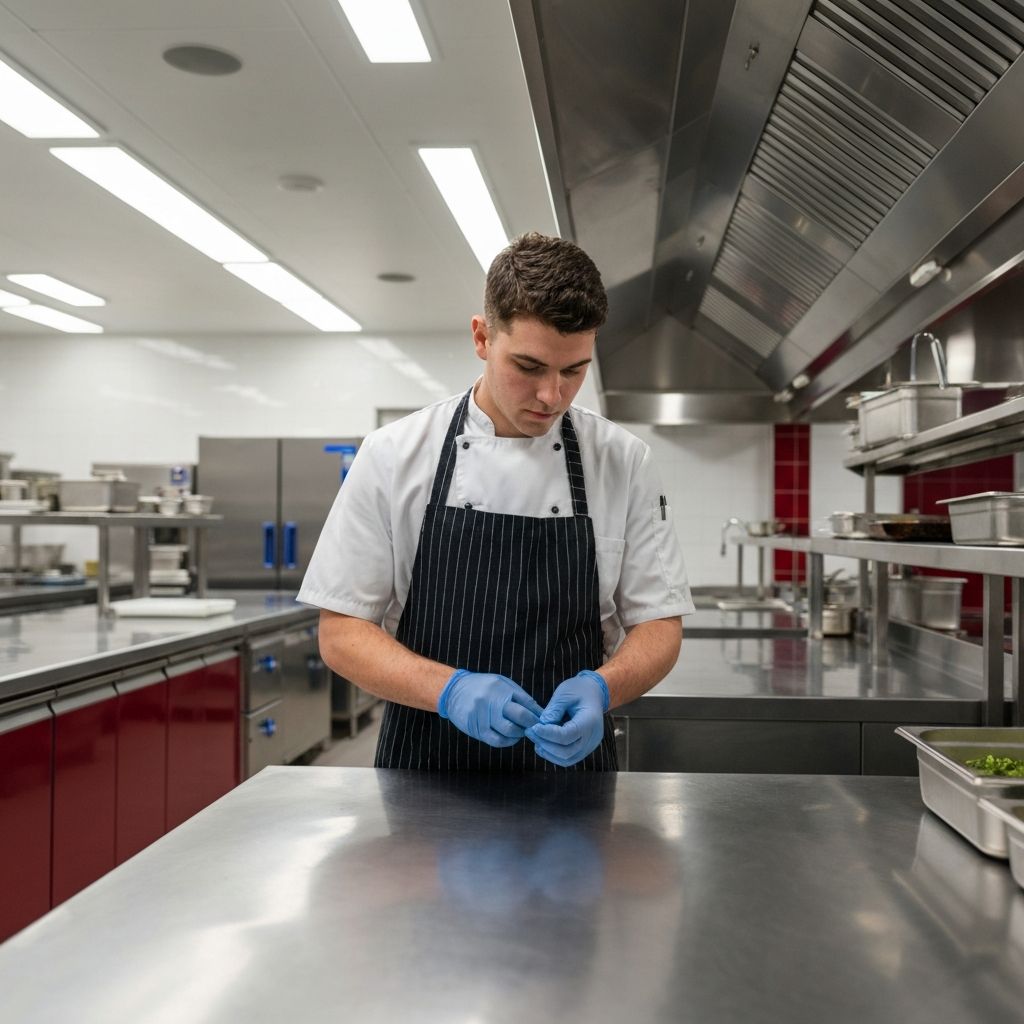
When Gloves Are Required in Food Service
Food safety is a critical concern in any food service operation, and the proper use of single-use gloves plays a vital role in preventing the spread of foodborne illness. According to the FDA Food Code, which serves as the basis for most state and local food safety regulations, food handlers are required to wear single-use gloves whenever they are handling ready-to-eat foods with their bare hands. Ready-to-eat foods are foods that will be consumed without any further cooking or processing that would kill harmful pathogens.
The primary purpose of wearing gloves is to create a barrier between the food handler's hands and the food, reducing the risk of transferring harmful bacteria, viruses, and other pathogens from the handler's skin to the food. Even hands that have been thoroughly washed can harbor transient bacteria, and gloves provide an additional layer of protection that significantly reduces the risk of contamination.
Specific Situations Requiring Gloves
There are several specific situations in which food handlers must wear single-use gloves. The most important is when touching ready-to-eat foods that will not be cooked before serving. This includes assembling salads, preparing sandwiches, plating desserts, garnishing dishes, slicing bread, cutting fruit, handling sushi, arranging cold cuts and cheese, and any other task that involves direct hand contact with food that the customer will eat without further cooking.
Gloves are also required when a food handler has any cuts, sores, burns, or bandages on their hands. Even if the wound is covered with a bandage, a glove must be worn over the bandage to prevent the bandage from falling off into the food and to provide an additional barrier against bacterial contamination from the wound. Open wounds, particularly those that are infected, can harbor dangerous bacteria like Staphylococcus aureus, which is a leading cause of foodborne illness.
Food handlers must also wear gloves when they have been diagnosed with or are recovering from a gastrointestinal illness. Many foodborne pathogens can be present on a person's hands even after symptoms have subsided, and glove use provides critical protection during this period. Some jurisdictions require food handlers to be excluded from work entirely during active illness, while others permit them to work with restrictions including mandatory glove use.
When Gloves Are Not Required
It is equally important to understand when gloves are not necessarily required. Gloves are generally not required when handling food that will be thoroughly cooked before serving, as the cooking process will kill most pathogens. For example, a cook placing raw chicken on a grill does not need to wear gloves for food safety purposes, though they should wash their hands thoroughly after handling raw meat.
Gloves are also not required when using utensils like tongs, scoops, spatulas, or deli tissue to handle ready-to-eat foods, as these tools serve the same barrier function as gloves. Many food service operations prefer utensils over gloves where practical because they eliminate the risk of glove-related contamination issues like tearing and improper removal.
Proper Gloving Techniques
Wearing gloves incorrectly can actually increase the risk of contamination rather than reduce it. The first and most important rule is that gloves are not a substitute for handwashing. Food handlers must wash their hands thoroughly before putting on gloves and again after removing them. Putting gloves on unwashed hands simply traps bacteria inside the glove, where the warm, moist environment actually promotes bacterial growth.
When putting on gloves, touch only the cuff area to avoid contaminating the fingers and palm areas that will contact food. If a glove tears during use, remove it immediately, wash your hands, and put on a new glove. Never attempt to wash or reuse single-use gloves, as this compromises their integrity and defeats the purpose of wearing them.
Gloves must be changed frequently during food preparation. Change gloves between handling different types of food, especially when switching between raw and ready-to-eat items. Change gloves after touching non-food surfaces like equipment, countertops, or your face. Change gloves after handling money, taking out trash, or performing any cleaning tasks. Change gloves at least every four hours during continuous use, even if you have not changed tasks, as bacteria can build up on the glove surface over time.
Common Glove Mistakes to Avoid
One of the most common and dangerous mistakes in food service is the false sense of security that gloves can create. When food handlers feel protected by gloves, they may become less careful about hygiene practices, touching their faces, hair, or phones while wearing gloves and then returning to food preparation without changing gloves. This phenomenon, known as the glove barrier effect, can actually lead to more contamination than bare-hand contact with proper handwashing.
Another common mistake is using the wrong size gloves. Gloves that are too large slip and bunch up, making it difficult to handle food properly and increasing the risk of the glove falling off into food. Gloves that are too tight are more likely to tear during use. Always select the correct size for each food handler and ensure that multiple sizes are available in the kitchen. Latex-free options should also be available to accommodate food handlers with latex allergies, with nitrile gloves being the most popular alternative for food service applications.
