
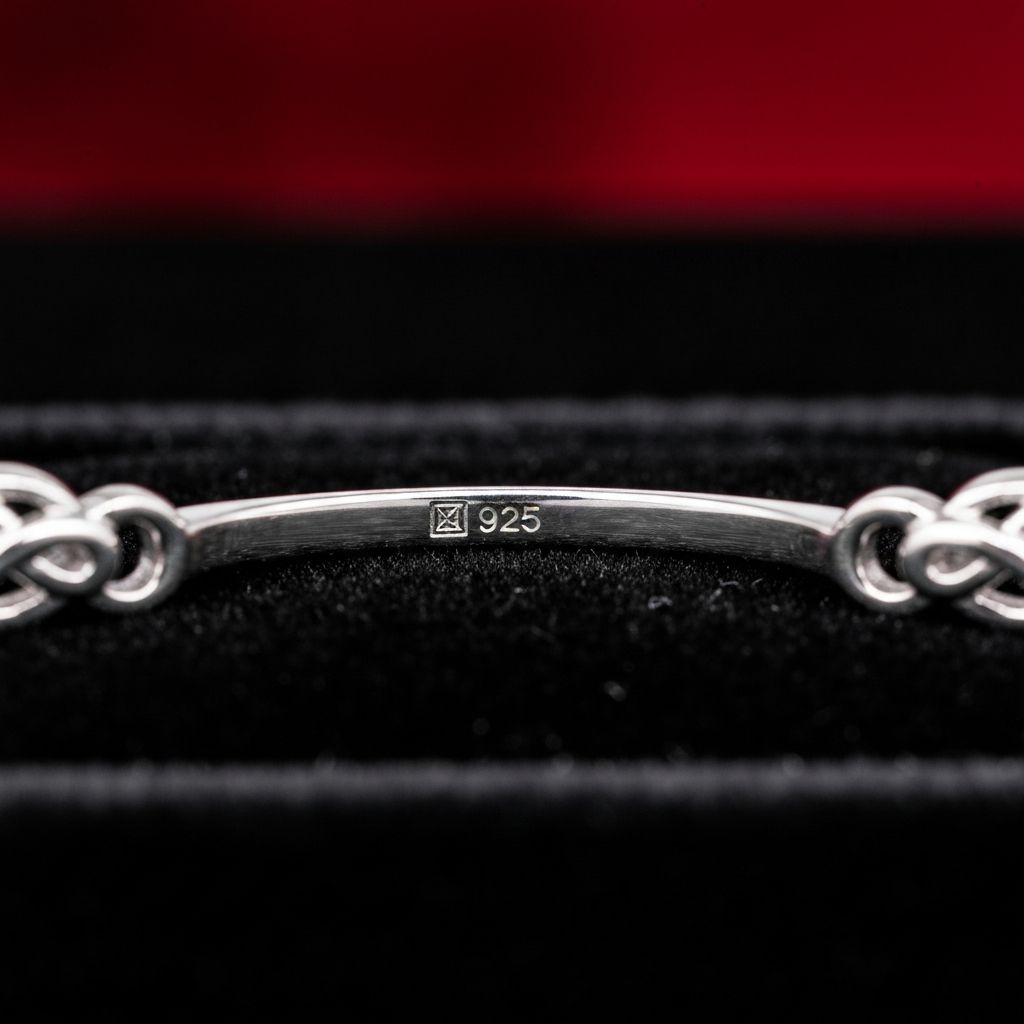
The Meaning Behind the 925 Stamp
If you have ever examined a piece of silver jewelry closely, you may have noticed a small stamp reading 925 on the inside of a ring band, on a clasp, or on a small tag attached to a chain. This marking is known as a hallmark, and it indicates that the piece is made of sterling silver. The number 925 refers to the composition of the metal: 92.5 percent pure silver mixed with 7.5 percent other metals, usually copper.
Pure silver, also known as fine silver and marked as 999, is too soft for everyday jewelry. It bends, scratches, and deforms easily, making it impractical for items that will be worn regularly. By alloying pure silver with a small percentage of copper or other metals, jewelers create sterling silver, which is significantly harder and more durable while still maintaining the beautiful bright white luster that silver is known for. The 925 standard has been used for centuries and is recognized internationally as the benchmark for quality silver jewelry.
History of the 925 Standard
The sterling silver standard has a fascinating history that dates back to medieval England. The term sterling is believed to derive from the Old Norman French word esterlin, which referred to a type of silver penny used in trade. By the 13th century, King Henry III of England established a standard requiring that silver coins contain at least 92.5 percent pure silver, which became known as the sterling standard.
The hallmarking system, which involves stamping metal items with marks indicating their composition and origin, was formalized in England by the Goldsmiths Company of London, which was granted a royal charter in 1327. The practice of hallmarking spread throughout Europe and eventually the world, and today the 925 stamp is universally recognized as indicating sterling silver regardless of where the jewelry was manufactured.
Different countries have additional hallmarking requirements and symbols. In the United Kingdom, sterling silver items may also carry a lion passant symbol, the mark of the assay office where it was tested, and the maker's mark. In France, sterling silver is indicated by a Minerva head stamp. In the United States, the 925 stamp is the primary indicator, though some pieces also carry the word sterling or the abbreviation ster.
How to Identify Genuine 925 Sterling Silver
The most reliable way to identify genuine sterling silver is to look for the 925 hallmark. However, not all silver jewelry is hallmarked, and unfortunately, some non-silver items may carry fraudulent stamps. There are several additional methods you can use to verify the authenticity of sterling silver jewelry.
The magnet test is a simple first check. Sterling silver is not magnetic, so if a piece of jewelry is attracted to a magnet, it is not genuine sterling silver. However, passing the magnet test does not guarantee authenticity, as many non-silver metals are also non-magnetic. The ice test takes advantage of silver's exceptional thermal conductivity. Place a piece of ice on the jewelry. If it is genuine sterling silver, the ice will melt noticeably faster than it would on a non-silver surface because silver conducts heat extremely efficiently.
The nitric acid test is the most definitive at-home test for sterling silver but should be performed with caution. Apply a small drop of nitric acid to an inconspicuous area of the jewelry. Genuine sterling silver will turn a creamy white color, while silver-plated items will turn green and non-silver metals will turn other colors. For valuable pieces, consider having them tested by a professional jeweler or an assay office, which can provide a definitive analysis of the metal's composition.
Sterling Silver vs Other Silver Types
Understanding the differences between sterling silver and other types of silver can help you make informed purchasing decisions. Fine silver at 99.9 percent purity is the purest form of silver available. It has a brighter, more white appearance than sterling silver and does not tarnish as readily, but its softness makes it impractical for most jewelry applications. It is primarily used in bullion coins, bars, and some specialty jewelry pieces.
Silver-plated jewelry consists of a base metal, usually copper or brass, coated with a thin layer of silver. These pieces are significantly less expensive than sterling silver but the plating wears off over time, revealing the base metal underneath. Silver-plated items should not carry a 925 stamp, though fraudulent sellers sometimes apply false markings. Argentium silver is a modern alloy that replaces some of the copper in traditional sterling silver with germanium, resulting in a metal that is more tarnish-resistant and slightly whiter in appearance. It is typically marked with a 935 or 960 stamp, indicating higher silver content.
Caring for 925 Sterling Silver Jewelry
Sterling silver requires regular care to maintain its appearance because the copper content makes it susceptible to tarnishing. Tarnish occurs when silver reacts with sulfur compounds in the air, forming a dark layer of silver sulfide on the surface. To minimize tarnishing, store sterling silver in airtight containers or anti-tarnish bags when not wearing it. Keep silver away from household chemicals, chlorine, perfumes, and lotions, which can accelerate tarnishing and cause discoloration.
Regular cleaning with a soft polishing cloth is the simplest way to maintain sterling silver's luster. For more thorough cleaning, soak the piece in warm water with mild dish soap, then gently brush with a soft toothbrush and rinse thoroughly. For removing heavier tarnish, the aluminum foil and baking soda method works exceptionally well. Line a bowl with foil, add baking soda and hot water, and let the silver soak for a few minutes. The electrochemical reaction transfers the tarnish from the silver to the foil, leaving your jewelry bright and clean. With proper care, sterling silver jewelry can last for generations and even improve in character over time.
