
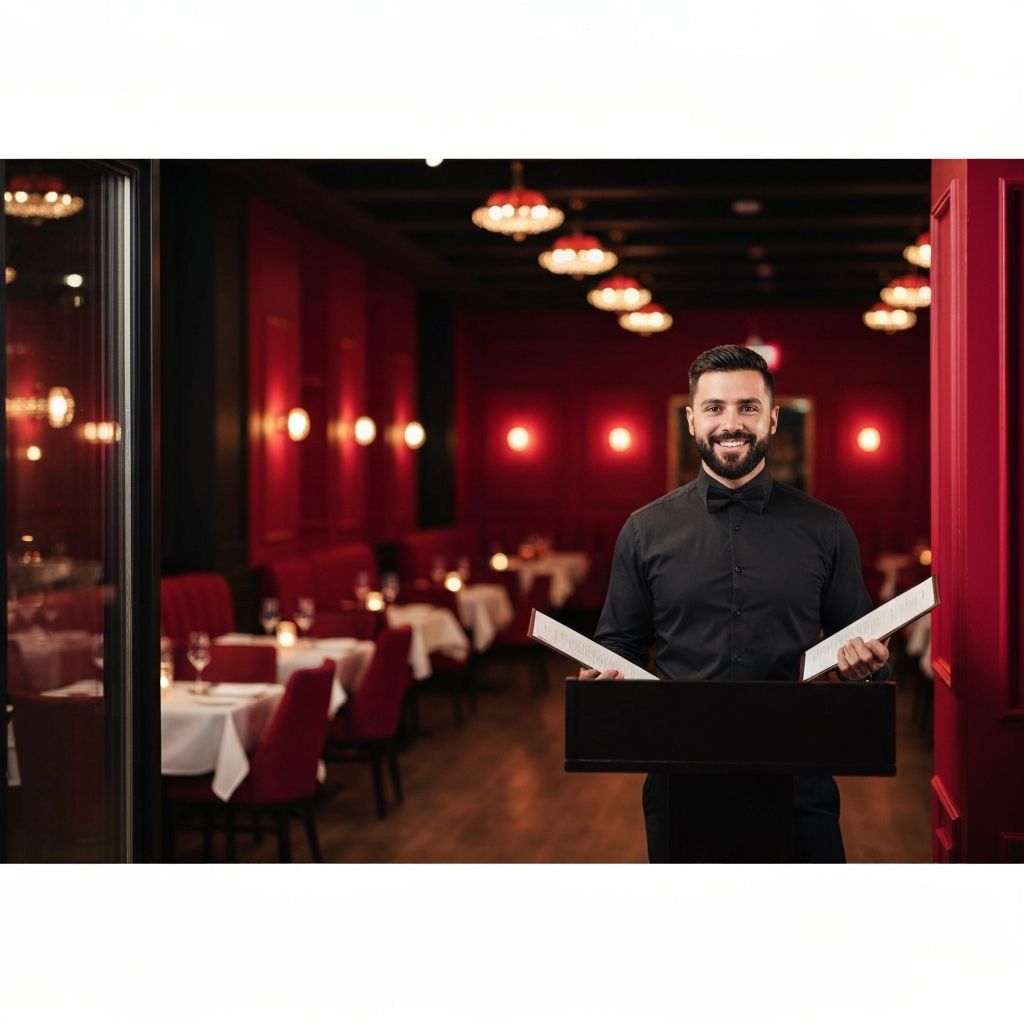
The Critical Role of a Restaurant Host
The restaurant host, also commonly referred to as a hostess or maitre d' in fine dining establishments, is often the first and last person a guest interacts with during their dining experience. This pivotal role serves as the face of the restaurant, setting the tone for the entire visit from the moment guests walk through the door. While the position may seem straightforward on the surface, effective hosting requires a complex blend of interpersonal skills, organizational abilities, and real-time problem-solving that can make or break a restaurant's reputation.
In the hierarchy of restaurant operations, the host position bridges the gap between front-of-house management and guest-facing service. While servers attend to guests at their tables and managers oversee overall operations, the host controls the flow of guests through the restaurant, manages wait times, handles reservations, and coordinates with servers and kitchen staff to ensure smooth operations throughout service.
The importance of a skilled host cannot be overstated. Research in the hospitality industry consistently shows that first impressions significantly influence overall satisfaction. A warm, professional greeting, an accurate wait time estimate, and a smooth seating process can positively predispose guests toward the entire dining experience. Conversely, a disorganized or unwelcoming host station can set a negative tone that is difficult for even the best food and service to overcome.
Greeting Guests and Making First Impressions
The primary and most visible responsibility of a restaurant host is greeting guests as they arrive. This greeting should be warm, genuine, and delivered within moments of a guest's entrance. Making eye contact, smiling, and offering a verbal welcome are the basic elements of a proper greeting. Many restaurants train their hosts to use specific greeting phrases that align with the establishment's brand and atmosphere.
Beyond the initial hello, the host must quickly assess the situation: How many guests are in the party? Do they have a reservation? Are there any special needs such as a highchair, wheelchair accessibility, or a preference for a specific seating area? An experienced host can gather this information through a brief, friendly conversation without making the interaction feel like an interrogation.
The host must also manage their own appearance and demeanor as part of the first impression. Professional attire, good posture, a friendly expression, and a calm, confident manner all contribute to the guest's initial perception of the restaurant. In fine dining establishments, the host may be expected to maintain an especially polished appearance and demonstrate knowledge of formal etiquette and service protocols.
Managing Reservations and the Wait List
Reservation management is one of the most technically demanding aspects of the host's role. Most modern restaurants use digital reservation systems such as OpenTable, Resy, or Yelp Reservations to manage bookings. Hosts must be proficient in operating these systems, which involves confirming incoming reservations, updating table statuses, communicating with guests about their reservations, and optimizing table assignments to maximize both guest satisfaction and restaurant revenue.
Walk-in management is equally important, especially during busy periods when the restaurant is full and a waiting list forms. The host must provide accurate wait time estimates, which requires a real-time understanding of the dining room's status: which tables are occupied, how long current parties have been seated, which tables are approaching dessert or check-out, and how many tables are being turned. Inaccurate wait time estimates are one of the most common sources of guest frustration, making this skill particularly important.
Managing the wait list also involves deciding the order in which waiting parties are seated. While a first-come, first-served approach is the most common and fairest method, the host must also consider table sizes (a party of two waiting for a two-top should not have to wait while a four-top becomes available) and special circumstances (elderly guests, families with young children, or guests with reservations who arrived early). Balancing fairness with efficiency requires sound judgment and diplomacy.
Seating and Table Management
Table management is the strategic aspect of the host's role that has the most direct impact on restaurant operations and revenue. The host must assign tables in a way that balances several competing priorities: distributing guests evenly among server sections to ensure consistent service quality, matching party sizes to appropriate table sizes to maximize seating capacity, accommodating guest preferences for specific tables or areas, and maintaining a steady flow of guests to the kitchen to avoid overwhelming the line.
Section rotation is a key principle of effective table management. By distributing new seatings evenly across server sections, the host ensures that no single server becomes overwhelmed while others have little to do. This practice leads to better service for guests and more equitable earning opportunities for servers. However, strict rotation must sometimes yield to practical considerations, such as when a large party requires a specific table or when a guest requests a particular server.
The host must also manage the physical flow of guests through the restaurant. This includes guiding guests to their tables, pulling out chairs or assisting with seating, presenting menus, and providing any relevant information about the dining experience (such as specials, prix fixe options, or the location of restrooms). The walk from the host station to the table is an opportunity for the host to set expectations and build rapport with guests.
Communication and Coordination
Effective communication is the backbone of successful restaurant hosting. The host serves as a central communication hub, relaying information between guests, servers, managers, and kitchen staff. This requires clear, concise communication and the ability to manage multiple conversations and information streams simultaneously.
The host communicates with servers about incoming seatings, special guest needs, and table status updates. They communicate with managers about wait times, VIP guests, and operational issues. They communicate with guests about reservations, wait times, table availability, and general restaurant information. And they may communicate with kitchen staff about large party arrivals, special dietary needs, or timing requests.
In many restaurants, the host uses a combination of verbal communication, hand signals, two-way radios, and digital communication tools to stay connected with the team. During busy service periods, the volume and pace of communication can be intense, requiring the host to maintain composure and clarity under pressure. The ability to prioritize and triage incoming communications is essential for keeping operations running smoothly.
Handling Difficult Situations
Restaurant hosting inevitably involves dealing with challenging situations. Long wait times, reservation errors, seating disagreements, unhappy guests, and unexpected rushes are all common occurrences that test a host's patience, diplomacy, and problem-solving skills.
When wait times exceed the estimate given to guests, the host must proactively communicate the delay, offer sincere apologies, and, when possible, provide alternatives such as a drink at the bar while waiting. Acknowledging the inconvenience and showing empathy goes a long way toward maintaining guest satisfaction even when things do not go as planned.
Handling guests who are unhappy with their table assignment is another common challenge. Some guests may request a different table for legitimate reasons (noise, temperature, accessibility), while others may simply prefer a particular spot. The host must balance accommodating these requests with the operational needs of the restaurant. When a table change is possible without disrupting service, it should be offered graciously. When it is not possible, the host should explain the situation politely and offer alternatives or solutions.
Dealing with overbooked reservations, no-shows, and last-minute large party arrivals requires quick thinking and flexibility. An experienced host develops contingency plans for various scenarios and maintains a calm, solution-oriented approach even in the most stressful situations. The best hosts turn potential problems into opportunities to demonstrate exceptional service.
Knowledge of the Menu and Restaurant
A well-informed host adds significant value to the guest experience. While hosts are not expected to have the same depth of menu knowledge as servers, they should be familiar with the restaurant's offerings, including signature dishes, daily specials, and common allergen information. This knowledge allows hosts to answer basic questions from guests and direct them to their server for more detailed information.
Hosts should also be knowledgeable about the restaurant's hours of operation, dress code, parking options, private dining facilities, special events, and policies regarding outside food, corkage fees, and dietary accommodations. Being able to answer these questions confidently and accurately demonstrates professionalism and helps guests feel informed and cared for.
Technology Skills for Modern Hosting
Modern restaurant hosting relies heavily on technology. Hosts must be proficient in using reservation management platforms, point-of-sale (POS) systems, table management software, and communication tools. Many of these systems are integrated, allowing hosts to track reservations, manage the wait list, assign tables, communicate with servers, and analyze seating patterns all from a single device, often a tablet or computer at the host stand.
Data analysis is an emerging skill for hosts and restaurant managers. Reservation and seating data can reveal patterns in guest behavior, peak demand periods, average turn times, and no-show rates. Hosts and managers who can interpret this data can make better decisions about staffing, table configurations, and reservation policies. Some restaurants use predictive analytics to forecast demand and optimize seating, and hosts play a key role in implementing these data-driven strategies.
Career Development and Advancement
The host position is often an entry point into the restaurant industry, providing valuable exposure to all aspects of restaurant operations. Many successful restaurant managers, general managers, and even restaurant owners began their careers as hosts. The skills developed in hosting, including customer service, communication, multitasking, and problem-solving, are transferable to virtually any role in hospitality or service industries.
For those who wish to advance within the restaurant industry, the host position provides a strong foundation. Hosts who demonstrate leadership, reliability, and a strong work ethic may be promoted to lead host, front-of-house supervisor, or assistant manager positions. Others may transition into serving, bartending, or event coordination roles that build on the skills developed at the host stand.
Conclusion
The restaurant host plays a far more complex and important role than many people realize. From creating positive first impressions and managing reservations to coordinating seating, communicating with staff, and handling difficult situations with grace, the host is an essential component of a successful restaurant operation. For those with strong interpersonal skills, organizational abilities, and a passion for hospitality, hosting offers a rewarding career path with abundant opportunities for growth and advancement in the dynamic restaurant industry.
