
Understanding the Water Molecule
Water is one of the most studied molecules in science, yet its seemingly simple structure of two hydrogen atoms bonded to one oxygen atom (H2O) belies a remarkable complexity that has fascinated scientists for centuries. The bent molecular geometry, the polar covalent bonds, the hydrogen bonding capabilities, and the anomalous physical properties of water all stem from its molecular structure, making the study of this structure fundamentally important to fields ranging from chemistry and biology to materials science and environmental science.
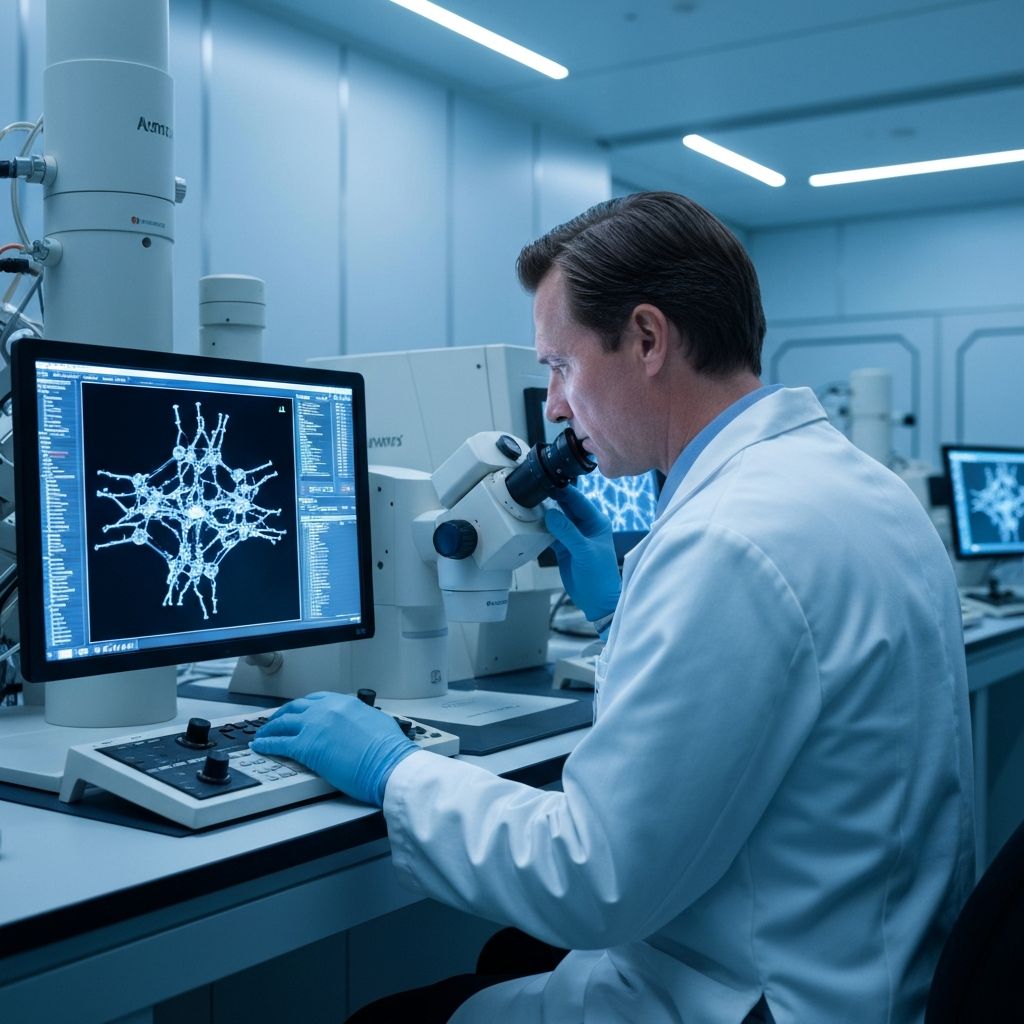
Testing and analyzing the structure of a water molecule requires sophisticated laboratory equipment capable of probing matter at the atomic and molecular level. Over the decades, scientists have developed an impressive array of instruments and techniques that allow them to examine different aspects of water's molecular structure, from the arrangement of atoms and the angles between bonds to the behavior of electrons and the dynamics of hydrogen bonding networks.
This article explores the major types of laboratory equipment used to test and characterize the structure of water molecules, explaining how each instrument works, what information it provides, and why it is important for our understanding of this essential molecule.
Infrared Spectroscopy (IR Spectroscopy)
Infrared spectroscopy is one of the most fundamental and widely used techniques for studying molecular structure, and it has been instrumental in confirming the bent geometry of the water molecule. An IR spectrometer works by passing infrared light through a sample and measuring which wavelengths of light are absorbed. Each molecular bond vibrates at characteristic frequencies, and when infrared light matches these frequencies, it is absorbed by the molecule.
For water, IR spectroscopy reveals three fundamental vibrational modes: the symmetric stretch (where both O-H bonds extend and contract simultaneously), the asymmetric stretch (where one O-H bond extends while the other contracts), and the bending mode (where the H-O-H angle changes). These three distinct absorption bands confirm that water has a bent geometry rather than a linear one, because a linear molecule with the formula H2O would show only two vibrational modes.
Modern Fourier Transform Infrared (FTIR) spectrometers can measure these absorptions with extraordinary precision, allowing scientists to determine bond lengths, bond angles, and force constants with high accuracy. FTIR spectroscopy has revealed that the O-H bond length in water is approximately 0.9584 angstroms and the H-O-H bond angle is approximately 104.5 degrees.
Raman Spectroscopy
Raman spectroscopy complements IR spectroscopy by providing information about molecular vibrations through a different physical mechanism. Instead of measuring the absorption of infrared light, Raman spectroscopy measures the scattering of monochromatic light (typically from a laser) by the sample. When light interacts with molecular bonds, most photons are scattered at the same frequency (Rayleigh scattering), but a small fraction are scattered at shifted frequencies (Raman scattering) that correspond to the vibrational frequencies of the molecular bonds.
For water molecules, Raman spectroscopy is particularly valuable for studying the hydrogen bonding network in liquid water and ice. The Raman spectrum of liquid water shows broad bands that reflect the distribution of different hydrogen bonding environments, providing information about the structure of the liquid that is difficult to obtain by other means.
Advanced Raman techniques, such as surface-enhanced Raman spectroscopy (SERS) and coherent anti-Stokes Raman spectroscopy (CARS), can provide even more detailed information about water's molecular structure in specific environments, such as at interfaces or in confined spaces.
Nuclear Magnetic Resonance (NMR) Spectroscopy
Nuclear Magnetic Resonance spectroscopy is a powerful technique for studying molecular structure that exploits the magnetic properties of certain atomic nuclei. Both hydrogen-1 (proton) and oxygen-17 nuclei in water are NMR-active, allowing scientists to study the electronic environment and bonding of both types of atoms in the water molecule.
Proton NMR of water provides information about the hydrogen bonding environment, as the chemical shift of the water proton signal is highly sensitive to hydrogen bonding strength and the local electronic environment. Temperature-dependent NMR studies of water have provided valuable information about how the hydrogen bonding network changes with temperature.
Oxygen-17 NMR, while more challenging due to the low natural abundance of O-17 (only 0.037 percent), provides unique information about the oxygen environment in water. Isotopically enriched water samples are often used to enhance the O-17 NMR signal. This technique has been used to study water dynamics, rotational correlation times, and the structure of water in various environments including biological systems and confined spaces.
X-Ray Diffraction (XRD)
X-ray diffraction is one of the most important techniques for determining the arrangement of atoms in crystalline materials, and it has been extensively used to study the structure of ice, the crystalline form of water. When X-rays are directed at a crystalline sample, they are diffracted by the regularly spaced atoms, producing a pattern of spots or rings that can be mathematically analyzed to determine the positions of atoms within the crystal lattice.
XRD studies of ice have revealed the tetrahedral arrangement of water molecules in the ice crystal structure, where each water molecule is hydrogen-bonded to four neighbors. This tetrahedral structure explains many of water's unusual properties, including the fact that ice is less dense than liquid water, which is anomalous compared to most substances.
For liquid water, which lacks the long-range order of a crystal, X-ray scattering (rather than diffraction) is used. X-ray scattering studies of liquid water provide radial distribution functions that describe the average distances between molecules, revealing that liquid water retains much of the local tetrahedral ordering found in ice, even though the long-range order is lost.
Neutron Diffraction
Neutron diffraction is complementary to X-ray diffraction and is particularly valuable for studying water because of its sensitivity to hydrogen atoms. X-rays interact primarily with electrons and are therefore less sensitive to light elements like hydrogen, which have few electrons. Neutrons, on the other hand, interact with atomic nuclei and can detect hydrogen (and its isotope deuterium) with high sensitivity.
Neutron diffraction studies of water and ice have provided some of the most precise measurements of O-H bond lengths and hydrogen positions in the water molecule. These studies are typically performed at specialized neutron sources, such as nuclear reactors or spallation sources, using instruments called neutron diffractometers.
By combining X-ray and neutron diffraction data, scientists can obtain a complete picture of both the oxygen framework and the hydrogen positions in water and ice structures, providing unparalleled detail about the molecular geometry and hydrogen bonding arrangements.
Electron Microscopy
While individual water molecules are too small to be imaged by conventional microscopy, advances in electron microscopy have made it possible to observe water at the molecular scale in certain contexts. Cryogenic electron microscopy (cryo-EM) can image water molecules trapped in protein structures or at material surfaces, while environmental transmission electron microscopy (ETEM) allows observation of water under controlled humidity conditions.
Recent advances in scanning tunneling microscopy (STM) and atomic force microscopy (AFM), while not electron microscopy techniques in the traditional sense, have enabled direct imaging of individual water molecules on surfaces. In 2014, researchers used STM to image the internal structure of individual water molecules adsorbed on a salt surface, directly observing the hydrogen bond network for the first time.
Mass Spectrometry
Mass spectrometry provides information about the mass-to-charge ratio of molecular ions and fragments, which can be used to determine molecular composition and isotopic ratios. For water, mass spectrometry is used to distinguish between different isotopologues (molecules with different isotopic compositions), such as H2O, HDO (semi-heavy water), D2O (heavy water), and H2O-18 (oxygen-18 labeled water).
Isotope ratio mass spectrometry (IRMS) is a specialized technique that measures the ratios of different isotopes with extremely high precision. For water, IRMS is used to measure the ratios of deuterium to hydrogen (D/H) and oxygen-18 to oxygen-16 (O-18/O-16), which provide information about the water's origin, history, and the conditions under which it was formed.
Computational Chemistry Tools
While not physical laboratory equipment in the traditional sense, computational chemistry tools have become indispensable for studying water's molecular structure. Quantum mechanical calculations using methods like density functional theory (DFT) and ab initio molecular dynamics can predict and explain the structural properties of water molecules with remarkable accuracy.
These computational tools run on high-performance computing clusters and work in concert with experimental data, helping scientists interpret spectroscopic results, predict molecular behavior under extreme conditions, and develop models of water's structure that extend beyond what any single experimental technique can provide.
Conclusion
The study of water's molecular structure employs an impressive array of laboratory equipment, from spectroscopic instruments that probe molecular vibrations and electronic environments to diffraction techniques that reveal atomic positions and imaging methods that allow visualization at the molecular scale. Each technique provides a different piece of the puzzle, and together they have given us a remarkably detailed understanding of this simple yet extraordinary molecule. As technology continues to advance, new instruments and methods will undoubtedly reveal even more about the fascinating structure of water.
