
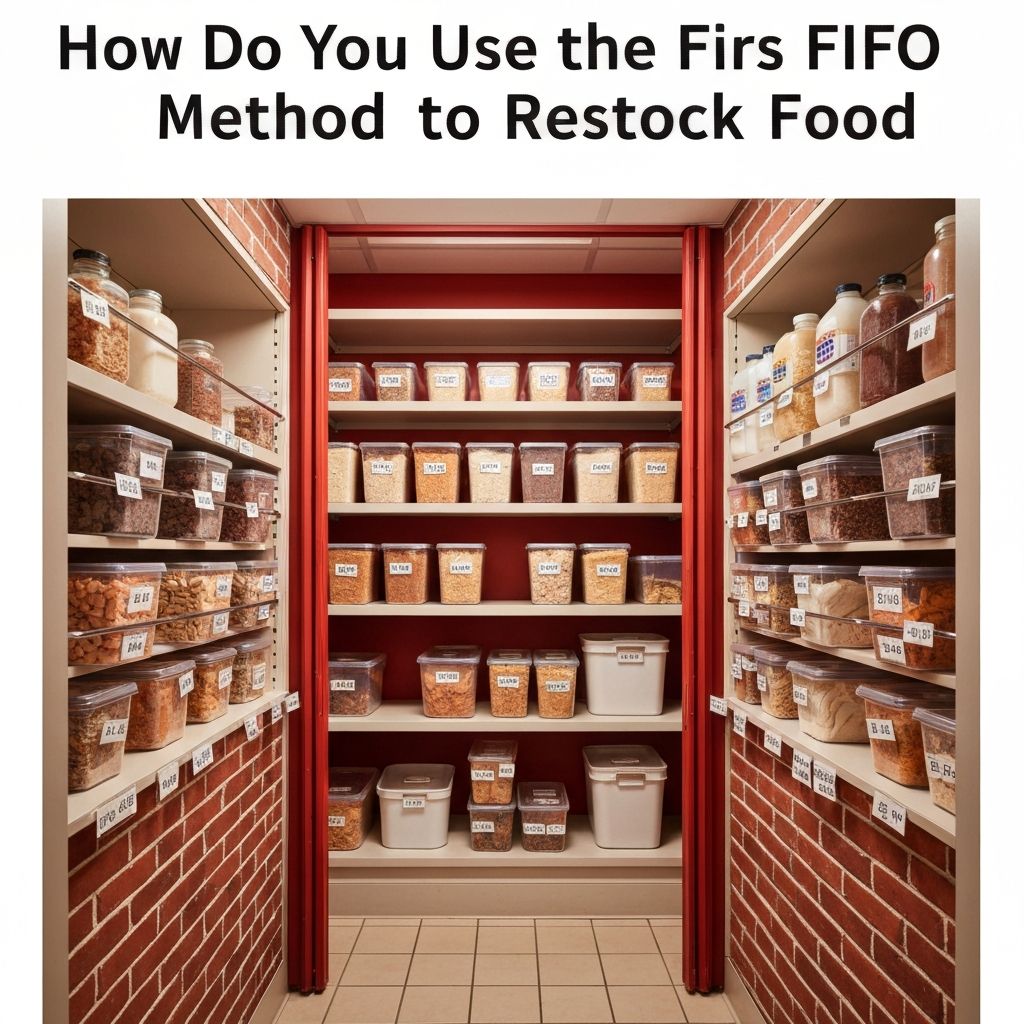
What Is the FIFO Method?
The FIFO method, which stands for First In, First Out, is an inventory management and food rotation system used extensively in the food service industry, grocery stores, and home kitchens. The core principle of FIFO is straightforward: the oldest products (those that were received or prepared first) should be used or sold before newer products. This systematic approach to food rotation ensures that food is consumed before it expires, reduces waste, maintains food quality, and plays a crucial role in food safety compliance.
FIFO is not just a suggestion or a best practice recommendation. In commercial food service operations, proper food rotation using the FIFO method is a requirement enforced by health departments and regulatory agencies. The FDA Food Code explicitly addresses the need for proper food rotation to prevent the use of expired or deteriorated food products. Health inspectors check for evidence of FIFO implementation during routine inspections, and failure to follow proper rotation procedures can result in violations, fines, and potential closure of food service establishments.
While FIFO originated in commercial food service, the principles are equally valuable for home cooks and families managing their household food supplies. Implementing FIFO at home can significantly reduce the amount of food wasted, save money by ensuring you use what you have before it expires, and improve food safety by minimizing the chance of accidentally consuming spoiled food. Whether you manage a restaurant kitchen or your home pantry, understanding and implementing FIFO is a fundamental skill for responsible food management.
Step-by-Step Guide to Implementing FIFO
Implementing the FIFO method involves a systematic approach to receiving, labeling, storing, and using food products. The process begins at the point of delivery or purchase, when new food items enter your storage area. Before putting new items away, take note of the dates on existing inventory. This includes use-by dates, sell-by dates, best-by dates, and any preparation dates marked on house-made items. Understanding these dates is the foundation of effective FIFO rotation.
The first step is to label all incoming products with the date they were received. In commercial settings, this is typically done with date labels or date dots that clearly show when the product arrived. For items that are prepared in-house, such as sauces, soups, or prepped vegetables, labels should include both the preparation date and the use-by date. In a home setting, a simple marker and masking tape can be used to note the purchase date on items that do not have clear date markings.
The second step is the actual rotation process. When placing new products on shelves, in refrigerators, or in freezers, always move older products to the front and place newer products behind them. This ensures that when someone reaches for an item, they naturally grab the oldest product first. Think of it as a conveyor belt: older items move forward toward use, while newer items enter from the back. This physical arrangement is the heart of the FIFO system and is what makes it work in practice.
Organizing Your Storage for Effective FIFO
Proper storage organization is essential for FIFO to work effectively. Without a well-organized storage system, even the most diligent labeling and rotation efforts can be undermined by disorganized shelves that make it difficult to identify and access the oldest products. Start by organizing your storage areas by product category. Group similar items together, such as all canned goods in one area, all dairy products in another, and all meats in their designated section. This makes it easier to compare dates and identify which items need to be used first.
In walk-in coolers and refrigerators, use clear labeling on shelves to designate where specific products should be stored. Shelf labels help staff quickly identify where incoming products belong and ensure that products are always returned to the correct location after use. Use see-through containers and bins where possible, as transparent storage makes it easier to visually assess inventory levels and spot items that need to be used soon.
Consider implementing a color-coded date labeling system for additional clarity. Many commercial kitchens use colored day-of-the-week labels, where each day of the week is assigned a specific color. Items prepared on Monday might receive a blue label, Tuesday items a red label, and so on. This color-coding system allows staff to quickly identify the age of prepared items at a glance without having to read individual date labels, which speeds up the rotation process and reduces errors.
FIFO for Different Types of Food Products
Different categories of food products require slightly different FIFO approaches based on their shelf life and storage requirements. Fresh produce, which has a relatively short shelf life, requires the most frequent rotation. When restocking fruits and vegetables, carefully move older items to the front and inspect them for signs of deterioration such as wilting, browning, soft spots, or mold. Any items that have deteriorated beyond acceptable quality should be discarded rather than rotated forward.
Dairy products and deli items also require vigilant FIFO rotation due to their relatively short shelf lives. Milk, yogurt, cheese, and deli meats should always be organized with the earliest expiration dates in front. Pay particular attention to these items because their expiration dates are typically close together, making it easy to accidentally use a newer product before an older one if rotation is not maintained consistently.
Dry goods and canned products have longer shelf lives but still benefit significantly from FIFO rotation. While a can of beans might not expire for two or three years, consistently placing newer cans behind older ones prevents the accumulation of very old inventory that can eventually expire and need to be discarded. In commercial settings, even long-shelf-life products should be labeled with receipt dates and rotated systematically. In home pantries, periodic shelf organization to bring older items forward can prevent the common experience of discovering expired products pushed to the back of a cabinet.
Common FIFO Mistakes and How to Avoid Them
Even in operations that are committed to FIFO, common mistakes can undermine the effectiveness of the system. The most prevalent mistake is simply placing new products in front of or on top of older products during restocking. This happens when staff are in a hurry or when the importance of rotation has not been adequately communicated. The fix is straightforward: make it a non-negotiable rule that shelves must be rotated before new products are placed. Some operations even post signs in storage areas reminding staff to rotate before restocking.
Another common mistake is failing to label products consistently. When items are received without date labels, there is no way to determine their age relative to other products on the shelf. This is particularly problematic for items that are removed from their original packaging, transferred to house containers, or prepared in-house. Every item that enters storage, without exception, should have a clear date label. Keeping labeling supplies such as markers, tape, and date dots easily accessible in storage areas encourages consistent labeling practices.
Poor storage organization can also defeat FIFO efforts. If shelves are overcrowded, items are stacked haphazardly, or similar products are stored in multiple locations, effective rotation becomes nearly impossible. Regular organization and cleaning of storage areas, combined with designated locations for specific products, helps maintain the structural foundation that FIFO depends on. Scheduling weekly or bi-weekly deep organization sessions for storage areas ensures that the system stays on track over time.
Benefits of FIFO Beyond Food Safety
While food safety is the primary motivation for implementing FIFO, the benefits extend well beyond compliance and safety. One of the most significant additional benefits is waste reduction. The USDA estimates that between 30 and 40 percent of the food supply in the United States is wasted each year. In commercial food service, proper FIFO implementation can dramatically reduce the amount of food that expires and must be discarded, directly improving the bottom line for restaurants and food service operations.
FIFO also improves food quality and customer satisfaction. When products are properly rotated, customers and diners receive the freshest possible products rather than items that have been sitting in storage for extended periods. Fresh ingredients produce better-tasting dishes, more appealing produce displays, and higher overall product quality. This quality improvement can lead to increased customer satisfaction, positive reviews, and repeat business in commercial settings.
Cost savings are another major benefit of effective FIFO implementation. By reducing waste, you directly reduce the amount of money spent on food that is ultimately discarded. These savings can be substantial. A restaurant that reduces its food waste by even ten percent through better rotation practices can see significant improvements in its food cost percentage, which is one of the most important financial metrics in the food service industry. For home cooks, less waste means more efficient use of the grocery budget and fewer trips to the store to replace discarded items.
Training Staff on FIFO Procedures
Successful FIFO implementation in a commercial setting depends on consistent execution by every member of the team. Training is the foundation of this consistency. All new employees should receive FIFO training as part of their onboarding process, with clear explanations of why the system exists, how it works, and what is expected of them. Hands-on training in the actual storage areas, with demonstrations of proper rotation and labeling techniques, is far more effective than simply explaining the concept verbally or through written materials.
Ongoing reinforcement is equally important. Regular reminders about FIFO during pre-shift meetings, periodic spot checks of storage areas by managers, and positive recognition of employees who maintain excellent rotation practices all help keep FIFO top of mind. When rotation errors are discovered, they should be addressed immediately and used as teaching moments rather than punitive opportunities. Creating a culture where everyone understands and values proper food rotation leads to much better compliance than a system enforced purely through consequences.
Managers and kitchen leaders should lead by example, consistently practicing FIFO in their own work and correcting rotation issues when they spot them. Assigning specific responsibility for FIFO compliance in different storage areas can also improve accountability. When one person is responsible for ensuring the walk-in cooler is properly rotated and another is responsible for the dry storage area, the system is less likely to break down because there are clear expectations about who is responsible for each area. Combined with regular training and reinforcement, this accountability structure creates a robust FIFO system that protects food safety, reduces waste, and maintains quality.
