
The Great Food Debate
The question of which country has the best food in the world is one that sparks passionate debate among food lovers, chefs, travelers, and culinary scholars alike. It is a question without a definitive answer, as "best" is inherently subjective and influenced by personal taste, cultural background, and individual experience. However, several countries consistently rise to the top of global food rankings, each offering a culinary tradition so rich, diverse, and beloved that it has earned recognition as an essential part of human cultural heritage.
International organizations, travel publications, and culinary institutions regularly conduct surveys and rankings attempting to identify the world's best food countries. While the specific rankings vary, certain nations appear on virtually every list, reflecting the depth, complexity, and global influence of their culinary traditions. Let us explore the countries most frequently cited as having the best food in the world and examine what makes each one exceptional.
Italy: The Art of Simplicity
Italy consistently ranks at or near the top of any list of the world's best food countries, and for good reason. Italian cuisine is built on a philosophy of simplicity and quality, using the finest ingredients prepared with minimal fuss to allow natural flavors to shine. This approach, known as "cucina povera" or "cooking of the poor," originated from the peasant traditions of rural Italy but has been elevated to an art form that is admired and imitated worldwide.
The regional diversity of Italian cuisine is staggering. Each of Italy's twenty regions has its own distinct culinary identity, shaped by local geography, climate, and history. The rich, butter-based cooking of Emilia-Romagna, home of Parmigiano-Reggiano, prosciutto di Parma, and balsamic vinegar, is completely different from the olive oil-drenched, seafood-focused cuisine of Sicily. The truffle-laden dishes of Piedmont bear little resemblance to the spicy, tomato-based cooking of Calabria. This diversity means that Italian food is not one cuisine but many, each worthy of exploration and celebration.
Italy's contributions to the global food lexicon are unmatched. Pizza, pasta, gelato, espresso, risotto, bruschetta, tiramisu, and countless other Italian creations have become beloved staples of diets around the world. The Italian approach to food, emphasizing seasonal ingredients, simple preparations, and the social importance of shared meals, has influenced cooking cultures on every continent.
Japan: Precision and Perfection
Japanese cuisine represents perhaps the highest expression of food as art. The Japanese approach to cooking emphasizes precision, balance, seasonality, and visual presentation to a degree unmatched by any other culinary tradition. In 2013, UNESCO recognized "Washoku," traditional Japanese cuisine, as an Intangible Cultural Heritage of Humanity, acknowledging its cultural significance and the sophisticated philosophy that underlies every aspect of Japanese food preparation.
The concept of "umami," the fifth basic taste discovered by Japanese chemist Kikunae Ikeda in 1908, is central to Japanese cooking. This savory, deeply satisfying flavor, found in ingredients like dashi, soy sauce, miso, and fermented foods, gives Japanese cuisine its distinctive depth and complexity. The pursuit of umami drives many of the techniques and ingredient choices that define Japanese cooking, from the careful preparation of dashi stock to the patient fermentation of miso paste.
Japan is also home to more Michelin-starred restaurants than any other country in the world, with Tokyo alone boasting more stars than Paris. This reflects not only the excellence of Japan's fine dining scene but also the remarkable quality found at every level of Japanese food, from humble ramen shops and neighborhood sushi bars to multi-course kaiseki meals that can cost hundreds of dollars per person.
Mexico: Bold Flavors and Ancient Traditions
Mexican cuisine was the first cuisine in the world to be recognized by UNESCO as an Intangible Cultural Heritage of Humanity, specifically the traditional cuisine of Michoacan. This recognition reflects the extraordinary depth and antiquity of Mexican culinary traditions, which trace their roots back thousands of years to the ancient civilizations of Mesoamerica. The foundation of Mexican cuisine, corn, beans, and chili peppers, was established millennia before European contact and continues to form the backbone of Mexican cooking today.
The complexity of Mexican cuisine extends far beyond the tacos and burritos familiar to most international diners. Mexico's culinary landscape encompasses hundreds of distinct regional cuisines, each with its own specialties, techniques, and traditions. The moles of Oaxaca, complex sauces made from dozens of ingredients including dried chilies, chocolate, nuts, seeds, and spices, can take days to prepare and represent some of the most sophisticated sauce-making in the world. The seafood dishes of the coastal regions, the barbacoa of the central highlands, and the Yucatecan cuisine influenced by Mayan traditions all contribute to a culinary tapestry of remarkable richness.
France: The Foundation of Fine Dining
France has long been considered the gold standard of culinary excellence, and French cuisine continues to exert enormous influence on cooking and dining worldwide. The French formalized the art of cooking more than any other culture, establishing the brigade system of kitchen organization, codifying cooking techniques, and creating the framework of courses and service styles that define fine dining to this day. The work of legendary French chefs like Auguste Escoffier, who systematized French cooking in the early 20th century, laid the groundwork for modern professional cuisine around the world.
French cuisine is characterized by its emphasis on technique, its use of rich sauces, and its respect for quality ingredients. The concept of "terroir," the idea that the character of food and wine is fundamentally shaped by the geography, climate, and traditions of the place where it is produced, is a French contribution to food culture that has been adopted globally. French cheese, wine, bread, pastries, and charcuterie are considered benchmarks of quality against which similar products from other countries are measured.
The diversity of French regional cooking is remarkable. The butter-rich cuisine of Normandy and Brittany, the Mediterranean-influenced cooking of Provence, the hearty mountain dishes of the Alps and Pyrenees, and the Alsatian cuisine that blends French and German influences all demonstrate that French food is far more varied and interesting than the stereotype of elaborate Parisian haute cuisine might suggest.
India: A Spice-Laden Tapestry
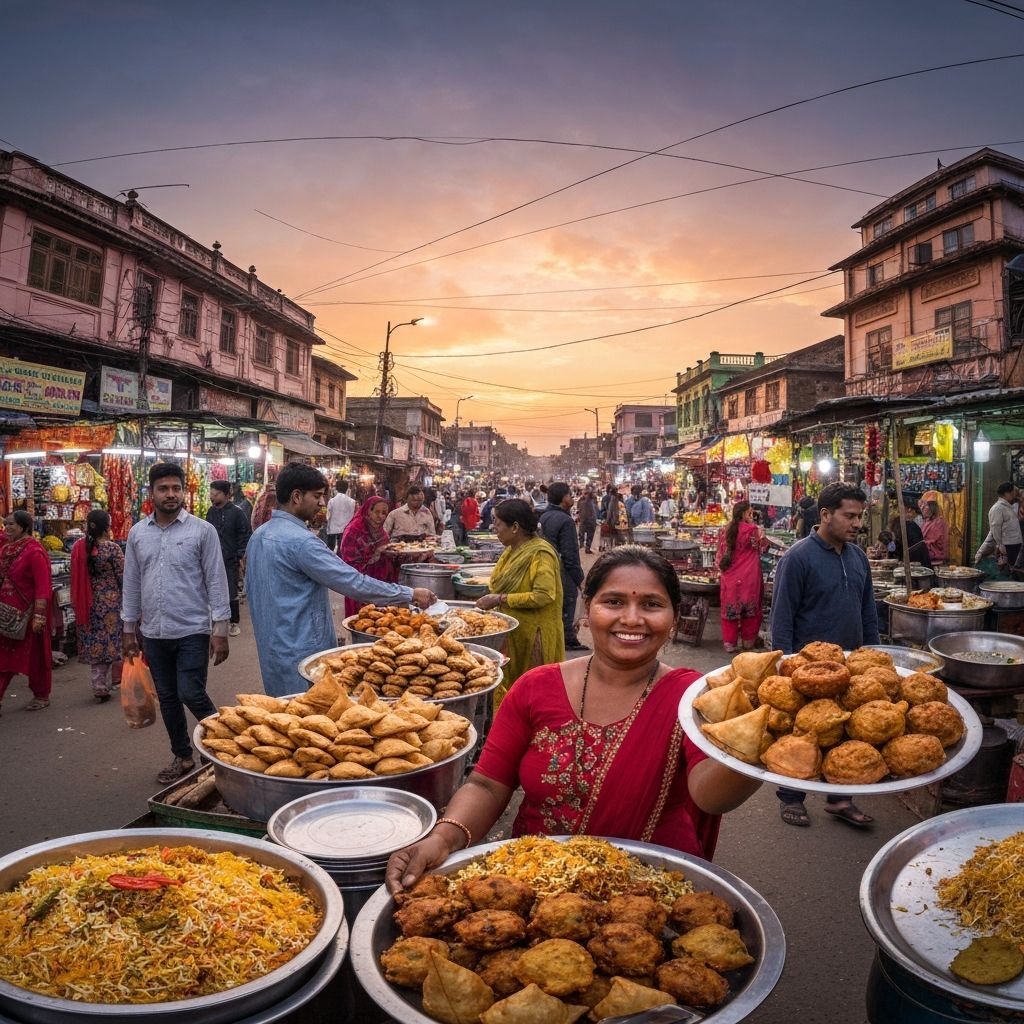
India's culinary tradition is one of the oldest and most complex in the world, encompassing an almost infinite variety of regional cuisines, cooking styles, and flavor profiles. The Indian subcontinent's vast geographic and cultural diversity has produced a culinary landscape of staggering breadth, where the creamy, nut-enriched Mughlai dishes of the north share a country with the coconut-based curries of the south, the seafood specialties of the coast, and the vegetarian traditions of Gujarat and Rajasthan.
India's mastery of spices is unparalleled. Indian cooks work with an extraordinary palette of spices, often using dozens of different spices in a single dish. The art of spice blending, creating masalas that balance heat, sweetness, bitterness, and aromatics, is a skill passed down through generations and refined over millennia. Common spice combinations like garam masala, chaat masala, and tandoori masala are carefully calibrated to create specific flavor profiles that define entire categories of dishes.
Thailand, Peru, China, and Beyond
Several other countries deserve mention in any discussion of the world's best food. Thailand's cuisine, with its masterful balance of sweet, sour, salty, and spicy flavors, has won devoted fans worldwide. Peruvian cuisine, particularly its innovative fusion of indigenous, Spanish, African, Chinese, and Japanese influences, has been hailed as one of the most exciting culinary movements of the 21st century. Chinese cuisine, with its eight great regional traditions and thousands of years of culinary innovation, represents one of the most diverse and influential food cultures on earth.
Other countries frequently mentioned in global food rankings include Spain, with its vibrant tapas culture and molecular gastronomy innovations; Turkey, whose cuisine bridges European and Asian traditions; Greece, with its emphasis on fresh, simple Mediterranean ingredients; and Lebanon, whose mezze tradition has influenced dining cultures across the Middle East and beyond.
Conclusion
Ultimately, the country with the best food in the world is a matter of personal taste and cultural perspective. Italy's elegant simplicity, Japan's artistic precision, Mexico's bold complexity, France's refined technique, and India's spice-laden depth each represent a different approach to the fundamental human activity of eating. Rather than declaring a single winner, perhaps the most rewarding approach is to celebrate the incredible diversity of the world's culinary traditions and to seek out the unique pleasures that each food culture has to offer. The true joy of food lies not in ranking and comparing but in tasting, sharing, and appreciating the remarkable creativity that human beings bring to the table.
