
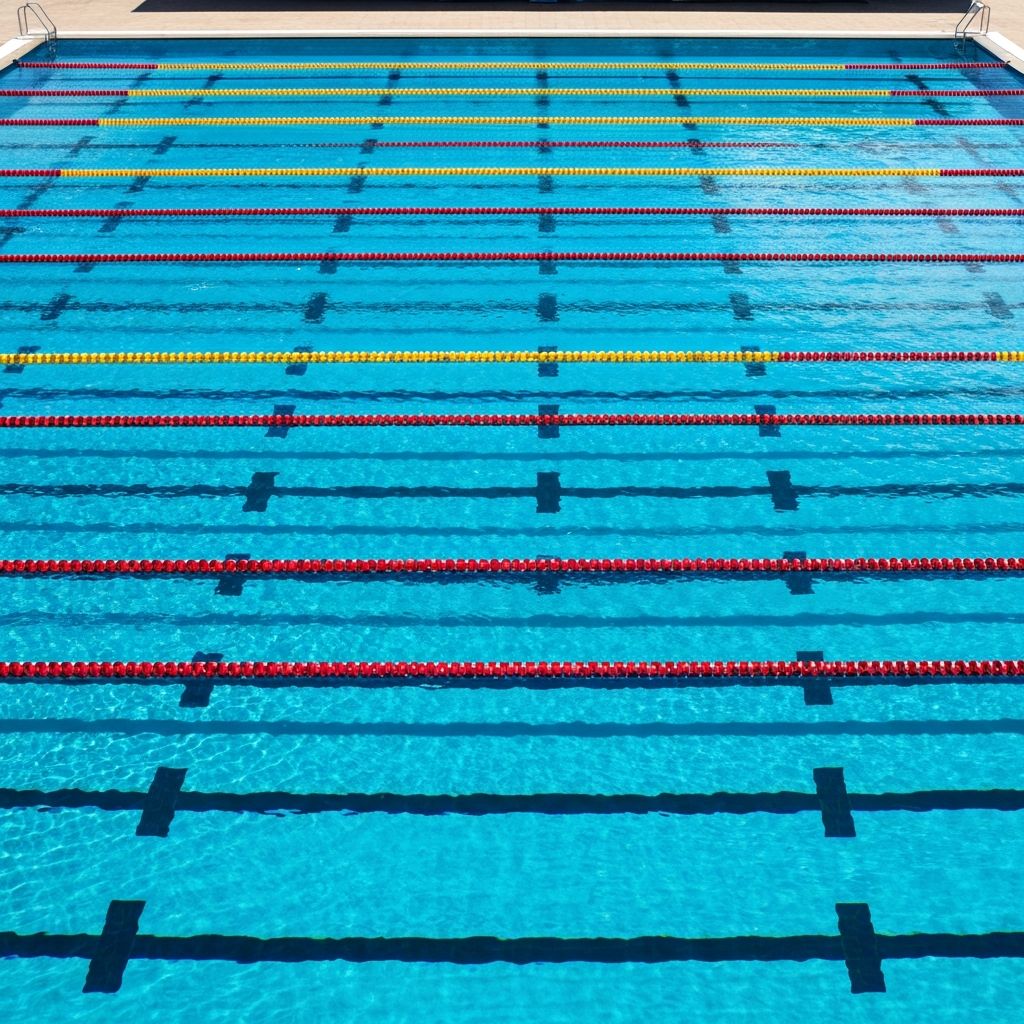
The Quick Answer: Laps Per Mile by Pool Size
If you have ever wondered how many laps you need to swim to complete a mile, you are not alone. It is one of the most common questions asked by beginner and intermediate swimmers. The answer depends entirely on the length of the pool you are swimming in, and it also depends on how you define a "lap."
First, let's clarify terminology. In swimming, a "length" refers to swimming from one end of the pool to the other. A "lap" technically refers to swimming down and back — two lengths. However, many swimmers and coaches use "lap" and "length" interchangeably to mean one trip across the pool. For the purposes of this article, we will define one lap as one length (one trip across the pool), as this is the most common usage among recreational swimmers.
Here are the key numbers you need to know. A mile is 5,280 feet or approximately 1,609 meters. In a standard 25-yard pool, which is the most common pool size in the United States, a mile is approximately 70.4 laps. Most swimmers round this to 70 or 72 laps, with 72 being the more common choice because it divides evenly into sets. In a 25-meter pool, which is the standard short-course pool used internationally, a mile is approximately 64.4 laps. Swimmers typically round this to 64 or 66 laps. In a 50-meter Olympic-size pool, a mile is approximately 32.2 laps, commonly rounded to 32 laps.
Understanding Pool Sizes and Their Impact on Distance
Pool sizes vary significantly around the world, and understanding the pool you are swimming in is essential for accurately tracking your distance.
25-Yard Pool (Short Course Yards - SCY): This is the most common pool size in the United States and is the standard for high school, college, and many community pools. One length is 25 yards (75 feet or approximately 22.86 meters). To swim a true statute mile (5,280 feet), you need to complete 70.4 lengths. However, competitive swimmers in the United States often refer to the "swimmer's mile" as 1,650 yards (66 lengths of a 25-yard pool), which is the standard distance for the mile event in short course yards competition. This is slightly shorter than a true mile.
25-Meter Pool (Short Course Meters - SCM): The 25-meter pool is the international standard for short-course swimming. One length is 25 meters (approximately 82 feet or 27.3 yards). A true mile (1,609 meters) requires approximately 64.4 lengths. In metric competition, the closest standard race distance to a mile is the 1,500 meters, which requires 60 lengths of a 25-meter pool.
50-Meter Pool (Long Course Meters - LCM): The Olympic-size pool is 50 meters long (approximately 164 feet). These pools are used for major international competitions, including the Olympics and World Championships. A true mile requires approximately 32.2 lengths. The 1,500-meter race in a 50-meter pool requires 30 lengths.
The Swimmer's Mile vs. the Statute Mile
An important distinction that often causes confusion is the difference between a "swimmer's mile" and a true statute mile. In competitive swimming, particularly in the United States, the "mile" event is actually 1,650 yards in short course (25-yard pools) or 1,500 meters in long course (50-meter pools). Neither of these distances equals a true statute mile of 5,280 feet (1,609.34 meters).
The 1,650-yard swimmer's mile is approximately 1,508 meters, which is about 101 meters (or 6.3 percent) shorter than a true mile. The 1,500-meter race is even shorter, at approximately 93.2 percent of a true mile. This discrepancy exists because competitive swimming distances are based on clean, round numbers that fit evenly into standard pool lengths, rather than on the imperial measurement of a mile.
For recreational swimmers tracking their fitness goals, swimming a true statute mile provides a more meaningful and consistent benchmark, regardless of the pool size.
How to Track Your Laps Accurately
One of the biggest challenges for distance swimmers is keeping an accurate count of their laps. Losing count is incredibly common, even among experienced swimmers. Here are several strategies to help you track your distance accurately.
Lap Counters: Wearable lap counters, such as the SportCount LapCounter, are simple devices that fit on your finger. You press a button each time you complete a lap, and the device keeps a running total. These are inexpensive (typically $20 to $40) and highly effective.
Swim Watches: GPS-enabled swim watches from brands like Garmin, Apple, and COROS can automatically detect and count your laps using built-in accelerometers. These watches also track your pace, stroke count, distance, and calories burned, making them a comprehensive training tool. Prices range from $150 to $500 depending on features.
Mental Counting Strategies: Many swimmers develop mental tricks to keep track of their laps. One popular method is counting in sets — for example, breaking 70 laps into ten sets of seven or seven sets of ten. Others associate each lap number with a word, image, or landmark to create a memorable sequence.
Physical Markers: Some swimmers place small objects (like coins or rubber bands) at the end of their lane and move one each time they complete a set of laps. While simple, this method requires stopping briefly at the wall.
Pool Clocks and Pace Clocks: Many competitive pools have large pace clocks visible from the water. By noting your start time and maintaining a consistent pace, you can estimate your distance based on elapsed time rather than counting individual laps.
How Long Does It Take to Swim a Mile?
The time it takes to swim a mile varies dramatically based on your fitness level, swimming experience, stroke technique, and the pool conditions.
For beginner swimmers, completing a mile typically takes 40 to 60 minutes or even longer. Beginners often need to take frequent breaks, and their stroke efficiency is still developing. There is absolutely no shame in taking breaks — the important thing is to gradually build your endurance over time.
Intermediate swimmers who swim regularly and have developed a reasonably efficient stroke can typically complete a mile in 25 to 40 minutes. At this level, swimmers can usually maintain a continuous pace with minimal or no rest breaks.
Advanced and competitive swimmers can swim a mile in 15 to 25 minutes. Elite competitive swimmers can complete 1,500 meters in under 15 minutes, with the world record for the men's 1,500-meter freestyle currently standing at 14:31.02, set by Sun Yang of China in 2012.
Tips for Swimming Your First Mile
If you are working toward swimming your first mile, here are some practical tips to help you reach your goal.
Start Gradually: Do not attempt to swim a full mile on your first day. Begin with shorter distances — 200 to 500 yards — and gradually increase your distance by 100 to 200 yards per week. This progressive approach allows your cardiovascular system and muscles to adapt without risking injury or burnout.
Focus on Technique: Efficient technique is far more important than speed when swimming long distances. Focus on maintaining a smooth, relaxed stroke with proper body rotation, a high elbow catch, and rhythmic bilateral breathing. Consider taking a few lessons or joining a masters swimming program to improve your form.
Use Intervals: Instead of trying to swim continuously, break your mile into manageable intervals. For example, swim 4 sets of 250 yards with 30 seconds of rest between sets. As your fitness improves, gradually reduce the rest periods and increase the set distances until you can swim the full mile continuously.
Stay Hydrated: It may seem counterintuitive since you are surrounded by water, but swimmers can become dehydrated during long workouts. Keep a water bottle at the end of your lane and take sips during rest periods.
Use a Pace Clock: Swimming at a consistent pace is more efficient and sustainable than alternating between fast and slow speeds. Find a comfortable pace that you can maintain for the entire distance and use the pace clock to stay consistent.
Health Benefits of Swimming a Mile
Swimming a mile is an excellent full-body workout that offers numerous health benefits. It engages virtually every major muscle group, including the shoulders, back, core, arms, and legs. Swimming burns approximately 400 to 700 calories per mile, depending on your weight, intensity, and stroke. It is also a low-impact exercise, making it ideal for people with joint problems, arthritis, or injuries that prevent them from running or doing other weight-bearing exercises.
Regular mile swimming improves cardiovascular fitness, increases lung capacity, builds muscular endurance, and enhances flexibility. It has also been shown to reduce stress, improve mood, and promote better sleep. Whether you are training for competition or simply swimming for fitness, completing a mile in the pool is a worthy and achievable goal.
