
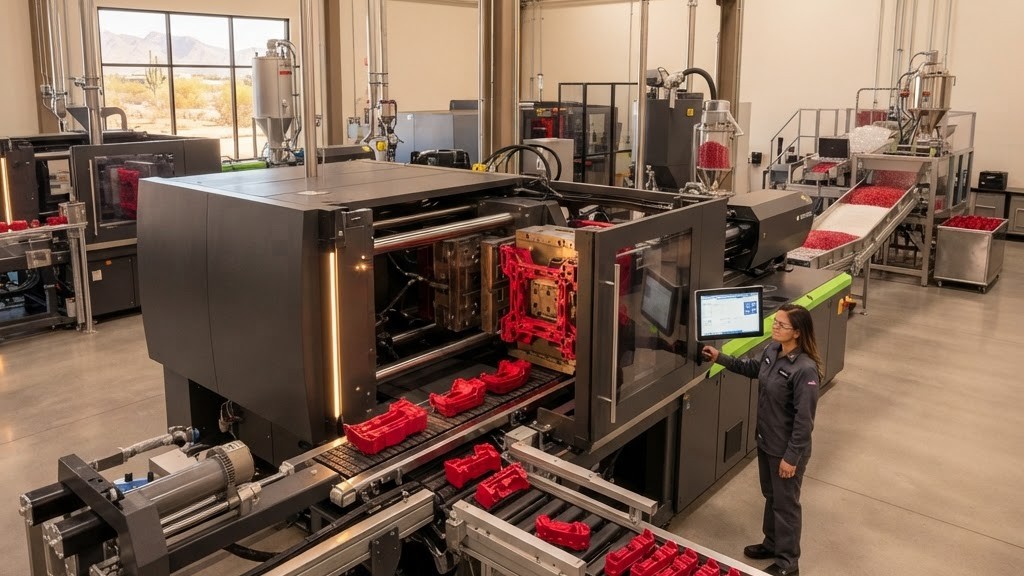
Phoenix's Plastics Manufacturing Landscape
Plastic products support nearly every major Phoenix industry, including semiconductors, aerospace, medical devices, construction, food service, water infrastructure, and consumer goods. Local manufacturing can reduce freight expense, simplify tooling reviews, and improve response when designs change. At the same time, extreme heat and ultraviolet exposure make resin selection especially important for products used outdoors. The following companies represent a range of molding, extrusion, fabrication, and material capabilities in or serving the Valley.
1. Footprint
Gilbert-based Footprint develops fiber-based and other alternatives intended to replace selected single-use plastics in food packaging. Although its mission extends beyond traditional plastic manufacturing, it is highly relevant to the sector's evolution. The company combines material science, product engineering, and scaled manufacturing to address performance requirements such as moisture, grease, temperature, and food contact. Its growth reflects strong demand for packaging that can reduce dependence on conventional polymers.
2. Berry Global
Berry Global is a major manufacturer of plastic packaging, films, and engineered products with operations and customers across the region. Its scale supports broad resin expertise, quality systems, high-volume production, and lightweighting initiatives. Large packaging buyers often value consistent supply and the ability to optimize designs for material reduction. Sustainability evaluation should include recycled content, product weight, transport efficiency, and realistic recovery pathways.
3. Amcor
Amcor supplies flexible and rigid packaging used in food, beverage, healthcare, and consumer products. Phoenix-area customers benefit from access to a global packaging company with technical resources and extensive compliance experience. Packaging development requires balancing barrier performance, seal integrity, machinability, shelf life, appearance, and cost. Medical or food applications add strict cleanliness and traceability requirements.
4. Carlisle Companies
Scottsdale-headquartered Carlisle Companies is closely associated with engineered building products, including polymer-based roofing and insulation systems. Its materials are designed for demanding long-term exposure. In Phoenix, roofing products must withstand intense heat, sunlight, thermal cycling, and monsoon weather. Carlisle's presence illustrates how plastics and elastomers contribute to energy-efficient, durable building envelopes.
5. Uponor
Uponor manufactures polymer piping systems used in plumbing, radiant heating, and infrastructure. Cross-linked polyethylene and related systems can offer corrosion resistance and installation flexibility. For Arizona projects, product certification, temperature and pressure ratings, fitting compatibility, and installer training are essential. Building professionals should follow approved installation methods and account for sunlight exposure during storage.
6. Advanced Plastics
Regional companies operating under the Advanced Plastics name and similar local specialists provide sheet, rod, tube, machining, welding, and custom fabrication. These businesses are valuable for guards, tanks, displays, semiconductor components, and replacement parts. Unlike high-volume molding, fabrication can produce low quantities without expensive hard tooling. Buyers should specify resin grade, tolerances, finish, stress-relief needs, and chemical exposure.
7. Craftech and Precision Plastics Specialists
Phoenix's precision plastics network includes machine shops and component suppliers capable of producing tight-tolerance parts from engineering polymers. Materials such as PEEK, PTFE, acetal, nylon, and polycarbonate each have different thermal, wear, moisture, and chemical properties. A capable supplier helps customers avoid inappropriate substitutions and controls heat generated during machining. Semiconductor and aerospace buyers may also require lot traceability and contamination procedures.
8. Molded Devices
Molded Devices supplies custom plastic and rubber components for medical, industrial, aerospace, and other technical markets. Capabilities can include injection molding, dip molding, extrusion, and assembly. Multi-process expertise is useful when a product combines rigid and flexible components. Customers should review validation practices, tool maintenance, cavity strategy, secondary operations, and the manufacturer's experience with the intended regulatory environment.
9. Rehrig Pacific
Rehrig Pacific manufactures reusable plastic products such as pallets, carts, containers, and waste-handling equipment. Reusable transport packaging can lower damage and waste when a closed-loop logistics system ensures products return. Durability, ergonomic handling, tracking, repair, and end-of-life recycling all affect value. Phoenix distribution centers can benefit from products designed for repeated use in automated material flows.
10. Local Injection Molding and Thermoforming Shops
Independent Valley molders support prototypes, short runs, and established products in markets ranging from electronics to recreation. Their local accessibility can accelerate design reviews and tooling corrections. Injection molding is efficient at scale but requires careful part design and tooling investment, while thermoforming can be economical for larger, thinner shells. Supplier selection should reflect geometry, volume, cosmetic expectations, and tolerance.
How to Evaluate a Plastics Manufacturer
Begin with a controlled drawing and clearly defined material. Ask whether recycled resin, additives, or color concentrate may be substituted and how changes are approved. Review tooling ownership, preventive maintenance, sampling, measurement systems, process validation, and defect limits. Products exposed to Phoenix sunlight may need UV stabilizers or testing, while hot environments require realistic heat-deflection and creep performance.
Sustainability and Circular Design
The industry is moving toward lightweighting, mono-material structures, reusable packaging, recycled content, and fiber substitution where performance allows. Sustainability claims should be specific and supported by the actual collection infrastructure available to customers. A product labeled recyclable may still be discarded if local programs cannot process it. Designing for fewer materials, easy disassembly, long service life, and known recovery channels often produces more credible results.
Final Guidance
Phoenix buyers have access to global packaging leaders, building-product manufacturers, technical molders, and flexible local fabricators. The best partner will understand the application's mechanical, chemical, thermal, regulatory, and cosmetic requirements. Compare total project cost, including tooling, freight, scrap, quality issues, and future revisions. A structured qualification process and early design-for-manufacturing review can prevent expensive surprises while producing a reliable plastic product suited to the desert market.
