
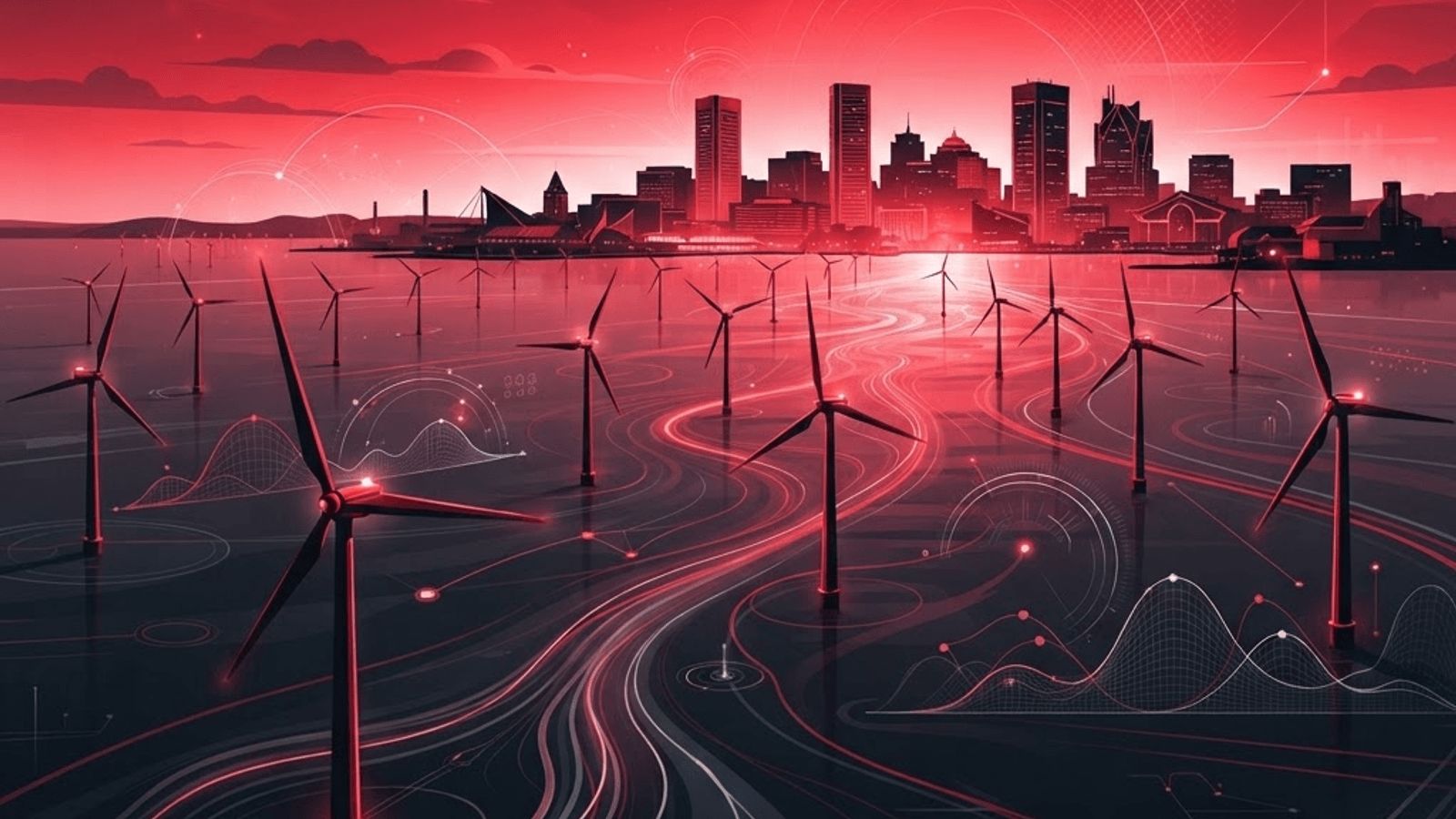
Why Baltimore Is Becoming a Wind Energy Powerhouse
Baltimore sits at the intersection of three advantages that few American cities can claim at once: a deepwater port capable of handling oversized turbine components, a legacy manufacturing workforce accustomed to heavy steel fabrication, and proximity to the Atlantic lease areas where Maryland's offshore wind projects are taking shape. Over the past decade, that combination has drawn developers, engineering firms, marine contractors, and component suppliers into the region, transforming Sparrows Point and the Fairfield Marine Terminal into staging grounds for a new energy economy.
The state's renewable portfolio standard and offshore wind renewable energy credit program have provided the policy certainty that capital-intensive wind projects require. For Baltimore businesses, institutions, and homeowners, this means more procurement options, more competitive power purchase agreements, and a growing pool of local firms with genuine turbine expertise rather than borrowed experience from other markets.
What Separates a Great Wind Energy Company from an Average One
Wind energy is not a single service. It spans site assessment and wind resource modeling, permitting and environmental review, turbine supply, foundation and marine installation, grid interconnection, operations and maintenance, and long-term power marketing. The best companies are honest about where their strengths lie and where they partner. When evaluating a provider in Baltimore, look for documented capacity factors on completed projects, transparent operations and maintenance pricing, in-house technicians rather than fully subcontracted crews, and a track record navigating Maryland Public Service Commission and Army Corps of Engineers processes.
Safety culture matters enormously in this sector. Turbine work involves confined spaces, high voltage, and work at height, sometimes offshore. Firms with mature training programs, GWO certifications for their technicians, and low recordable incident rates tend also to deliver better uptime, because the same discipline that prevents injuries prevents unplanned outages.
The Leading Wind Energy Companies Serving Baltimore
US Wind is arguably the most consequential wind developer in the Baltimore orbit. The company holds a substantial federal lease area off the Maryland coast and has committed to building a steel fabrication and marshalling operation at Sparrows Point, positioning Baltimore as an assembly point rather than merely a consumer of offshore power. Its differentiator is vertical ambition: rather than importing finished components, it has pursued local manufacturing partnerships and workforce agreements that keep value inside the region.
Orsted brings global offshore wind experience to the Mid-Atlantic. As one of the most experienced offshore developers in the world, its value to Baltimore lies in operational rigor: standardized maintenance regimes, sophisticated met-ocean forecasting, and a supply chain that has already solved problems newer entrants are still discovering. Regional offices and vendor programs have opened doors for Baltimore-area marine and electrical subcontractors.
Riverstone Development Group works on the civil and marine construction side of wind, handling the terminal upgrades, heavy-lift pads, and bulkhead reinforcement that turbine staging demands. Its reputation rests on understanding Baltimore's industrial waterfront conditions, including legacy soil issues at former steel sites, which is exactly the knowledge offshore staging requires.
Sparrows Point Steel represents the manufacturing dimension of Baltimore wind. Focused on monopile foundation production, it is a direct descendant of the region's steelmaking identity, retooled for renewable infrastructure. Buyers value it for domestic content compliance, shorter logistics chains, and the ability to inspect fabrication in person.
Kiewit Offshore Services supports large-scale energy construction with heavy civil and marine capability. Its differentiator is scale and self-performance: cranes, barges, and crews under one organization, which reduces the coordination risk that inflates offshore schedules.
Constellation, headquartered in Baltimore, is central to how wind power actually reaches customers. Rather than erecting turbines, it structures the retail and wholesale supply agreements, renewable energy credit portfolios, and load management strategies that let Baltimore hospitals, universities, and manufacturers buy wind power at predictable prices. Its strength is commercial sophistication and creditworthiness on long-term contracts.
Solar Energy World, while known primarily for photovoltaics, serves Baltimore clients pursuing hybrid renewable strategies, including small-scale distributed wind and storage pairings. Homeowners and small commercial clients appreciate its consultative approach and single point of accountability across technologies.
Sandbox Solar and Wind Consultants occupies the advisory niche, performing wind resource assessment, feasibility modeling, and procurement support for organizations that want independent analysis before committing capital. Independence from equipment sales is precisely the point.
EDF Renewables develops and operates utility-scale renewable assets serving the PJM grid that Baltimore draws from. Its differentiator is portfolio diversity and long asset-management experience, which appeals to institutional buyers seeking counterparties likely to be solvent decades from now.
Chesapeake Wind Services focuses on the unglamorous but essential work of operations and maintenance: blade inspection, gearbox monitoring, vibration analysis, and emergency response. For asset owners, availability percentage is the entire business case, and specialists like this protect it.
Industry Trends Shaping the Next Decade
Three trends deserve attention. First, turbine sizes continue to grow, and larger rotors demand port infrastructure that only a handful of East Coast cities can provide, strengthening Baltimore's structural advantage. Second, transmission is becoming the binding constraint rather than generation, elevating firms with interconnection and substation expertise. Third, corporate procurement is maturing beyond simple credit purchases toward hourly matched clean energy, which rewards suppliers who can pair wind with storage and demand response.
How to Choose the Right Partner
Start by defining your role. If you are an institution buying power, prioritize commercial counterparties with strong balance sheets and flexible contract structures. If you are a contractor seeking work in the supply chain, prioritize developers with local content commitments and prequalification programs. If you own or plan to own generating assets, weigh operations and maintenance capability above installation price, because lifetime performance dwarfs upfront savings.
Ask for references from projects of similar scale and vintage, request uptime data rather than marketing claims, and confirm who will actually perform the work. In a market growing as quickly as Baltimore's, capacity is often subcontracted, and knowing the real crew behind a proposal is the single most useful piece of diligence available.
Final Thoughts
Baltimore's wind energy sector has moved from speculative to substantive. The companies above span development, fabrication, marine construction, advisory, and power marketing, and the strongest projects typically combine several of them. For businesses in the region, the practical takeaway is that wind is no longer an aspirational line item but a procurable, competitively priced, locally supported option worth serious evaluation.
