
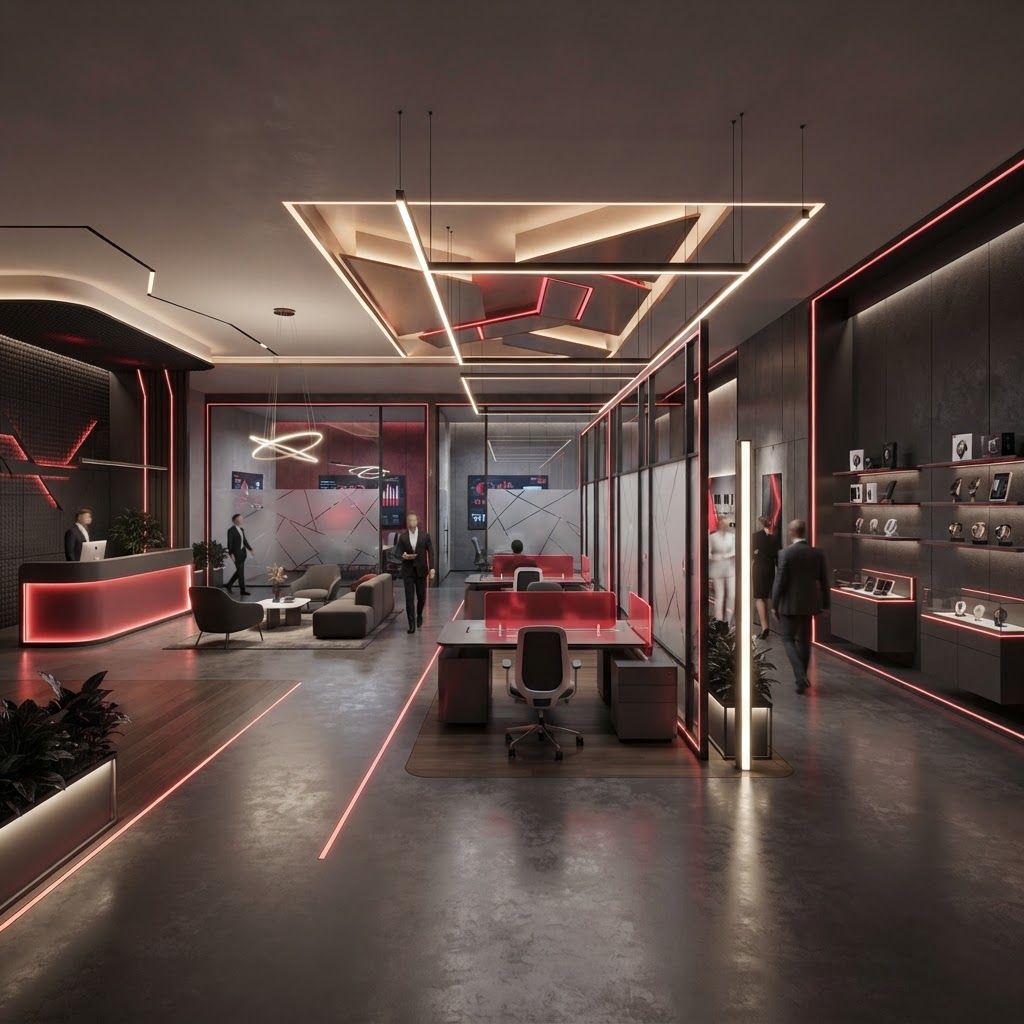
Why Interior Fitout Expertise Matters
An interior fitout turns an empty shell or outdated suite into a functioning business environment. The work may include partitions, ceilings, finishes, millwork, lighting, mechanical distribution, electrical systems, technology, furniture coordination, and life-safety modifications. Success depends on integrating all of these elements without losing sight of the opening date.
Fort Worth's fitout market serves corporate offices, medical practices, restaurants, retail stores, hotels, and industrial support spaces. The following companies bring notable North Texas experience in commercial interiors, renovations, or design-build delivery. The best partner will have direct experience with the project's occupancy type and building conditions.
1. Pacific Builders
Pacific Builders is a North Texas commercial contractor with substantial interior construction experience. The firm works across corporate, healthcare, technology, and other workplace environments. Its interiors focus and repeat-client relationships make it a strong candidate for businesses that value consistent project delivery.
2. Structure Tone Southwest
Structure Tone Southwest is part of a major international construction organization and specializes in commercial interiors and renovation. The company brings systems and resources suited to large corporate fitouts, complex schedules, and occupied buildings. Its scale can support national clients seeking consistency across locations.
3. NOVO Construction
NOVO Construction is known for high-quality office and commercial interiors in the Dallas-Fort Worth market. The firm often works on design-conscious spaces that demand careful finish execution and close coordination with architects. Detailed mockups and samples can protect quality on premium projects.
4. Abstract Construction
Abstract Construction serves North Texas with commercial construction and interior finish-out services. The company works across office, retail, industrial, and related sectors. Regional contractors of this type can offer flexible teams and practical market knowledge for mid-sized tenant projects.
5. Joeris General Contractors
Joeris General Contractors has a broad Texas portfolio spanning retail, education, healthcare, office, and hospitality. Its experience with both ground-up and interior work helps when a fitout touches base-building conditions. The firm brings established preconstruction and safety processes.
6. Scott + Reid General Contractors
Scott + Reid focuses heavily on commercial interiors and has completed numerous corporate workplace projects in North Texas. Its specialization supports fast-paced tenant schedules and detailed office standards. Clients with phased or occupied renovations should ask about noise, dust, access, and business-continuity planning.
7. K2 Construction
K2 Construction operates in the Dallas-Fort Worth commercial market with experience in interiors, renovations, and ground-up projects. The contractor can be considered for office, medical, industrial, and retail environments. Early cost input is useful when balancing design ambition against tenant-improvement allowances.
8. Gordon Highlander
Gordon Highlander is a Texas commercial contractor active in industrial, office, healthcare, and specialty construction. It is particularly relevant where interior work intersects with warehouse, laboratory, manufacturing, or technical operations. Such projects demand close coordination of equipment, utilities, and code requirements.
9. Ridgemont Commercial Construction
Ridgemont Commercial Construction brings Fort Worth-area knowledge to commercial interiors and ground-up projects. Its work in automotive, healthcare, retail, and office settings offers experience with customer-facing and operationally intensive spaces. Sector familiarity can reduce the learning curve during design review.
10. Byrne Construction Services
Byrne Construction Services combines deep Fort Worth roots with commercial and institutional construction capabilities. It can support high-profile or technically involved interior renovations, especially where local coordination and established trade relationships are priorities.
Defining the Fitout Scope
Commercial leases often distinguish between landlord work and tenant work. Before pricing, confirm who provides utility capacity, restrooms, fire protection mains, rooftop equipment, electrical service, slab penetrations, and code upgrades. Ambiguity at this boundary is a common source of delay and unexpected cost.
A test fit should validate headcount, circulation, egress, accessibility, support rooms, and furniture dimensions before detailed design. Restaurants and healthcare spaces need additional scrutiny because equipment, ventilation, plumbing, sanitation, and licensing requirements can drive the layout.
Protecting the Schedule
Permitting, landlord review, equipment lead times, and utility work should appear in the master schedule. Lighting, switchgear, custom millwork, glass, and specialty finishes may require early release. The contractor should also coordinate low-voltage systems, security, audiovisual equipment, furniture, movers, and final cleaning even when those vendors are contracted directly by the tenant.
Workplace and Retail Trends
Office fitouts are moving toward adaptable rooms, stronger acoustic control, hospitality-inspired shared areas, and improved video-conferencing environments. Retail and service businesses increasingly use modular fixtures that can change with merchandising needs. Across sectors, clients are prioritizing healthy materials, efficient lighting, and controls that make operating costs visible.
Selecting an Interior Partner
Ask candidates to walk the site and identify risks before submitting final proposals. Compare supervision plans, not just company portfolios. The superintendent's experience with the building, occupancy type, and schedule may be more important than the firm's overall size.
The best interior fitout company understands that the project is a business transition, not merely a collection of finishes. Clear scope, disciplined coordination, quality workmanship, and thoughtful turnover allow employees and customers to use the new space effectively from opening day.
