
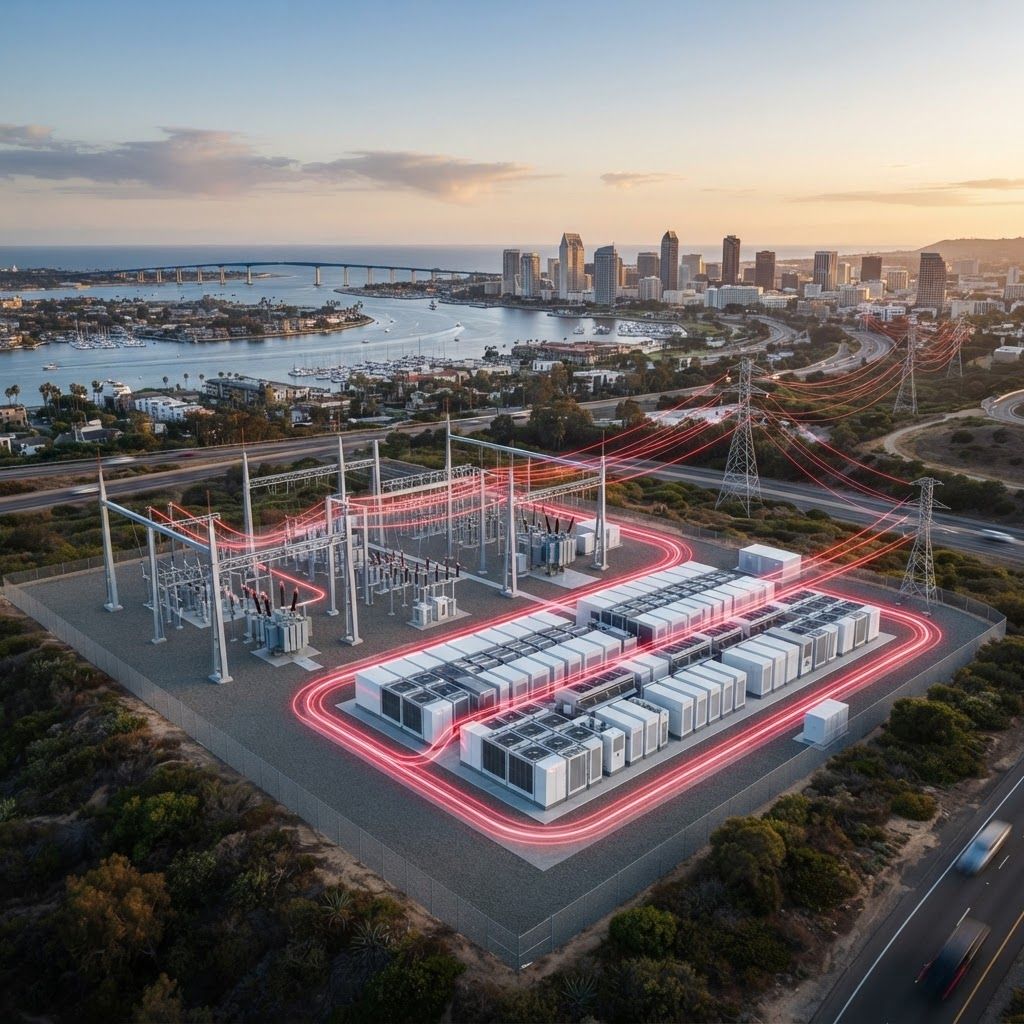
How Energy Supply Works in San Diego
San Diego customers encounter several kinds of energy providers. SDG&E owns and operates much of the delivery grid, while community choice aggregators procure electricity for participating communities. Separate companies provide natural gas services, commercial fuels, solar, storage, and energy management. Understanding those roles prevents misleading comparisons and helps customers choose the right partner.
1. San Diego Gas & Electric
SDG&E is the region's primary investor-owned electric and natural-gas utility. It manages poles, wires, substations, meters, gas infrastructure, outage response, and billing functions for a large service territory. Its investments in wildfire mitigation, storage, electric transportation, and grid modernization shape regional reliability.
2. San Diego Community Power
San Diego Community Power is a community choice energy program serving participating jurisdictions. It procures electricity while SDG&E continues delivery, metering, and much of billing. Customers can review available power mixes, rate options, renewable content, and community programs to understand its value proposition.
3. Clean Energy Alliance
Clean Energy Alliance is another community choice aggregator serving several North County communities. It purchases electricity and develops customer programs while relying on the utility distribution system. Local governance and choices regarding renewable content, rates, and reinvestment distinguish the community choice model.
4. Shell Energy
Shell Energy provides energy solutions for business customers, including electricity procurement, renewable products, and related services where available. Larger San Diego organizations may consider sophisticated suppliers when managing multi-site loads, sustainability targets, and market exposure. Contract structure and credit terms warrant expert review.
5. Direct Energy Business
Direct Energy Business serves commercial and industrial organizations with energy supply and management solutions in competitive markets. For California customers, relevant offerings may include risk management, renewable energy products, and advisory services rather than traditional residential utility supply. Availability should be confirmed for each account.
6. EDF Renewables Distributed Solutions
EDF Renewables provides distributed solar, storage, microgrids, and energy solutions in addition to utility-scale development. San Diego organizations seeking on-site resources may value a provider capable of combining development, financing, construction, and long-term asset services.
7. Baker Electric
Baker Electric supports commercial and residential customers with electrical contracting, solar, storage, and energy solutions. Its San Diego County roots and construction expertise make it relevant for customers whose energy project requires careful integration with buildings, switchgear, roofing, and ongoing operations.
8. NRG Energy
NRG is a large energy and services company active across U.S. power markets. Its capabilities can include supply, demand response, distributed energy, and sustainability products depending on market rules. Enterprise buyers should verify California-specific availability and carefully allocate price, volume, and performance risk.
9. SC Fuels
SC Fuels supplies commercial liquid fuels, lubricants, and fleet services across Southern California. It serves a different need from an electric utility, supporting transportation, construction, industrial, and standby-power operations. Delivery reliability, inventory controls, safety, and emergency service are important selection factors.
10. World Kinect Energy Services
World Kinect provides fuel and energy management for commercial, aviation, marine, and land customers. Its broad logistics and sustainability capabilities are relevant to San Diego's port, airport, tourism, and fleet economy. Customers may use such a provider to coordinate complex multi-location procurement.
Comparing Electricity Options
Residential and small-business customers should distinguish generation charges from delivery charges. Review the power-content mix, rate schedule, time-of-use periods, enrollment status, and eligibility for assistance or special programs. A lower advertised generation rate does not necessarily predict the entire bill because usage timing and delivery charges matter.
Evaluating Commercial Energy Contracts
Commercial buyers should map interval usage, peak demand, operational flexibility, future electrification, and sustainability targets. Contracts can allocate price, shape, imbalance, credit, and regulatory risks differently. Compare total cost, not merely a headline energy price, and understand early termination, pass-through charges, renewable certificates, and data access.
Resilience and Distributed Energy
Solar, batteries, generators, microgrids, efficiency, and demand response can complement purchased energy. In wildfire-prone or outage-sensitive locations, resilience planning should identify critical loads and realistic operating durations. The best solution may combine grid service with on-site assets rather than attempt complete independence.
Final Perspective
The right San Diego energy supplier depends on customer class, location, fuel, and risk tolerance. Verify whether a company supplies energy, delivers it, builds equipment, or advises on procurement. Clear role definitions and transparent assumptions are the foundation of a sound decision.
Questions to Ask Before Making a Decision
Before selecting a provider, request a clear explanation of scope, responsibilities, timelines, pricing, and ongoing support. Ask for examples of comparable San Diego work and confirm which team members will remain involved after the initial consultation or sale. Independent references, current licenses or certifications, written warranties, and transparent contract terms provide stronger evidence than promotional claims alone. Consider how the organization handles delays, disputes, security, safety, regulatory change, and unexpected costs. A thoughtful comparison should account for total long-term value, not only the lowest starting price. Shortlist several candidates, document the same questions for each, and verify important claims directly. This disciplined process makes it easier to identify a capable partner whose expertise, capacity, communication style, and risk controls match the specific needs of the project.
