
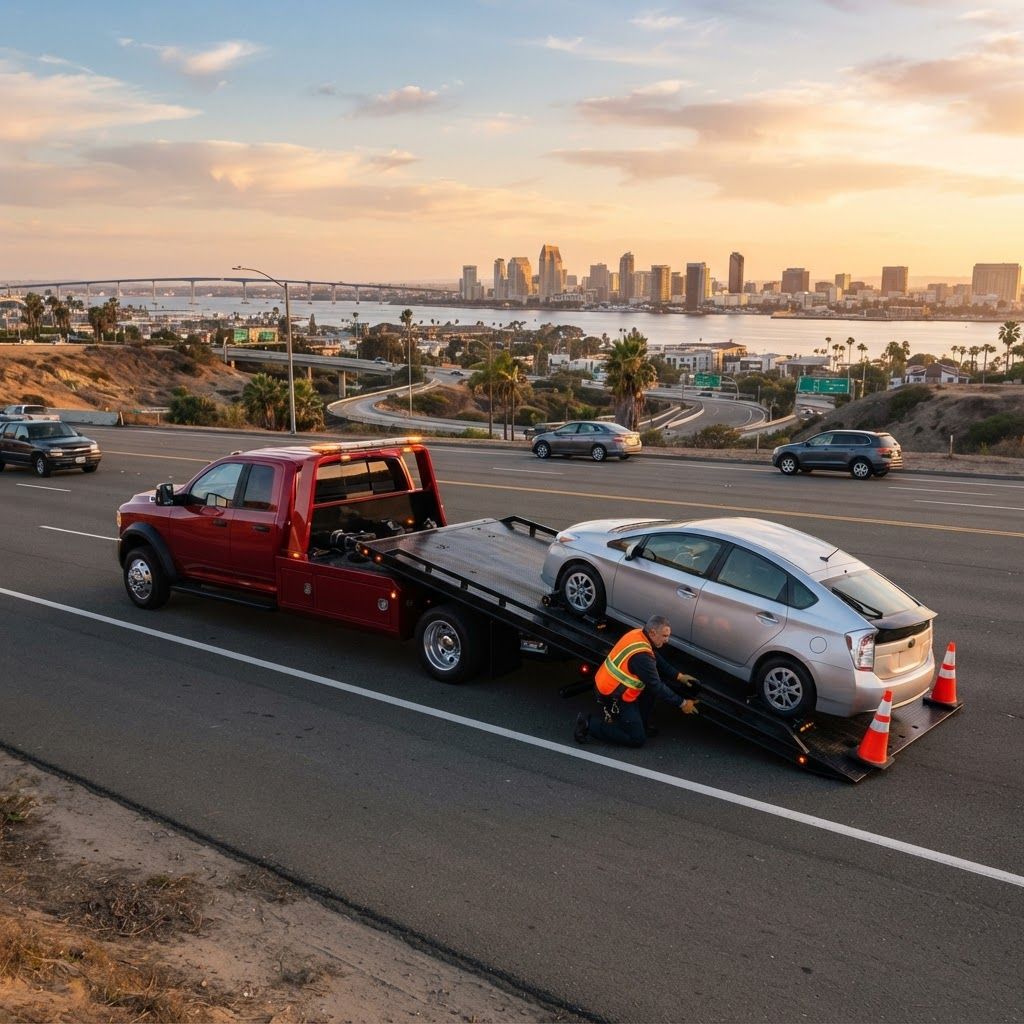
Reliable Roadside Help Across San Diego
A disabled vehicle on a busy San Diego freeway can quickly become dangerous. Traffic moves rapidly on major corridors, shoulders may be narrow, and heat can make waiting uncomfortable. The best towing services communicate clearly, dispatch suitable equipment, handle the vehicle carefully, and explain charges before work begins whenever circumstances allow.
This guide highlights established local providers with varied capabilities, from light-duty roadside assistance to heavy recovery. Availability, coverage, and rates change, particularly after hours or during severe incidents. Drivers should confirm the operator’s destination, equipment, payment methods, and estimated charges during dispatch.
1. Road One Towing
Road One Towing is a recognizable San Diego operator offering towing and vehicle-management services. Its scale supports a range of common passenger-vehicle situations. Customers should provide an exact location, vehicle description, drivetrain, condition, and requested destination so dispatch can select the appropriate truck.
2. Western Towing
Western Towing has a significant regional presence and handles towing, roadside needs, and related vehicle services. Larger operators may have broad coverage and varied equipment. Drivers should distinguish voluntary roadside towing from property impound situations, as authorization, release procedures, and fees differ.
3. ASAP Towing San Diego
ASAP Towing San Diego emphasizes prompt local response for breakdowns, lockouts, jump starts, tire issues, and transport. A provider offering several roadside options may resolve minor problems without a full tow. Dispatchers need accurate symptoms because a failed battery, damaged wheel, and collision require different resources.
4. Expedite Towing
Expedite Towing serves motorists seeking local towing and roadside assistance. Clear communication is a key differentiator in stressful situations. A professional dispatcher should confirm the pickup point, destination, vehicle type, and safe contact method, then keep the customer informed if conditions affect arrival.
5. Quality Towing
Quality Towing provides assistance for disabled or damaged vehicles in the San Diego region. Flatbed service is often preferred for all-wheel-drive, low-clearance, luxury, classic, or substantially damaged vehicles because all wheels remain off the road. Customers should mention modifications and ground-clearance concerns in advance.
6. Allied Gardens Towing
Allied Gardens Towing offers neighborhood-oriented service around central and eastern San Diego communities. Local familiarity can help operators navigate apartment complexes, restricted streets, and repair-shop destinations. Drivers in tight parking structures should report height clearance and access limitations before dispatch.
7. Mission Valley Towing
Mission Valley Towing serves an area crossed by several of the region’s busiest freeways. Operators accustomed to these corridors understand the importance of safe positioning and rapid loading. On a freeway, drivers should follow emergency-dispatch or highway-patrol instructions rather than standing near moving traffic.
8. Chula Vista Towing
Chula Vista Towing supports South Bay motorists with towing and roadside services. Coverage near border routes and major commuter roads makes reliable dispatch particularly important. Travelers should verify whether their preferred repair destination falls within the quoted distance.
9. Pacific Beach Towing
Pacific Beach Towing addresses the distinct access challenges of dense coastal neighborhoods, including crowded streets and limited parking. Compact equipment or wheel-lift trucks may be useful where a large flatbed cannot maneuver, although vehicle configuration determines which method is safe.
10. USA Towing and Recovery
USA Towing and Recovery represents providers capable of more involved transport or recovery work. Recovery differs from a routine tow: vehicles off the roadway, overturned, stuck, or heavily damaged may require winching, additional trucks, traffic control, or specialized rigging. Those factors can affect both timing and cost.
What to Do During a Breakdown
If the vehicle can move safely, pull as far from active traffic as possible, activate hazard lights, and set the parking brake. On a high-speed roadway, remaining belted inside may be safer than standing outside, but fire, smoke, or an unsafe position can change that decision. Call emergency services when there is a collision, injury, fire, dangerous obstruction, or immediate threat. Follow official instructions.
Share a precise location using cross streets, direction of travel, nearby exits, or a map pin. Tell dispatch whether passengers, children, pets, or mobility needs are involved. Remove valuables and necessary personal items before the tow, and photograph the vehicle’s condition when safe.
Understanding Equipment and Pricing
Flatbeds carry the entire vehicle and are versatile for many situations. Wheel-lift trucks raise one axle and can operate in tighter areas. Dollies may be needed to protect non-lifted wheels on certain drivetrains. Heavy-duty wreckers serve buses, recreational vehicles, and commercial trucks. The wrong equipment can cause drivetrain or body damage, so accurate vehicle details matter.
Pricing may include hookup, mileage, after-hours service, winching, storage, special equipment, cleanup, or difficult-access charges. Ask for an itemized estimate and receipt. Insurance, automaker programs, credit cards, or roadside memberships may provide coverage, but reimbursement rules vary.
Avoiding Roadside Scams
Confirm the company name and truck identity before surrendering keys. Be cautious of unsolicited operators arriving after a collision unless directed by law enforcement. Specify the destination and do not sign incomplete documents. If the vehicle enters storage, ask about location, access hours, accepted payment, daily fees, and required release documents.
The best San Diego towing service is licensed, properly insured, transparent, and equipped for the situation. Saving a trusted provider and roadside-assistance information before trouble occurs can reduce stress. In the moment, personal safety comes first; the vehicle can be repaired or replaced, but dangerous roadside exposure should never be taken lightly.
