
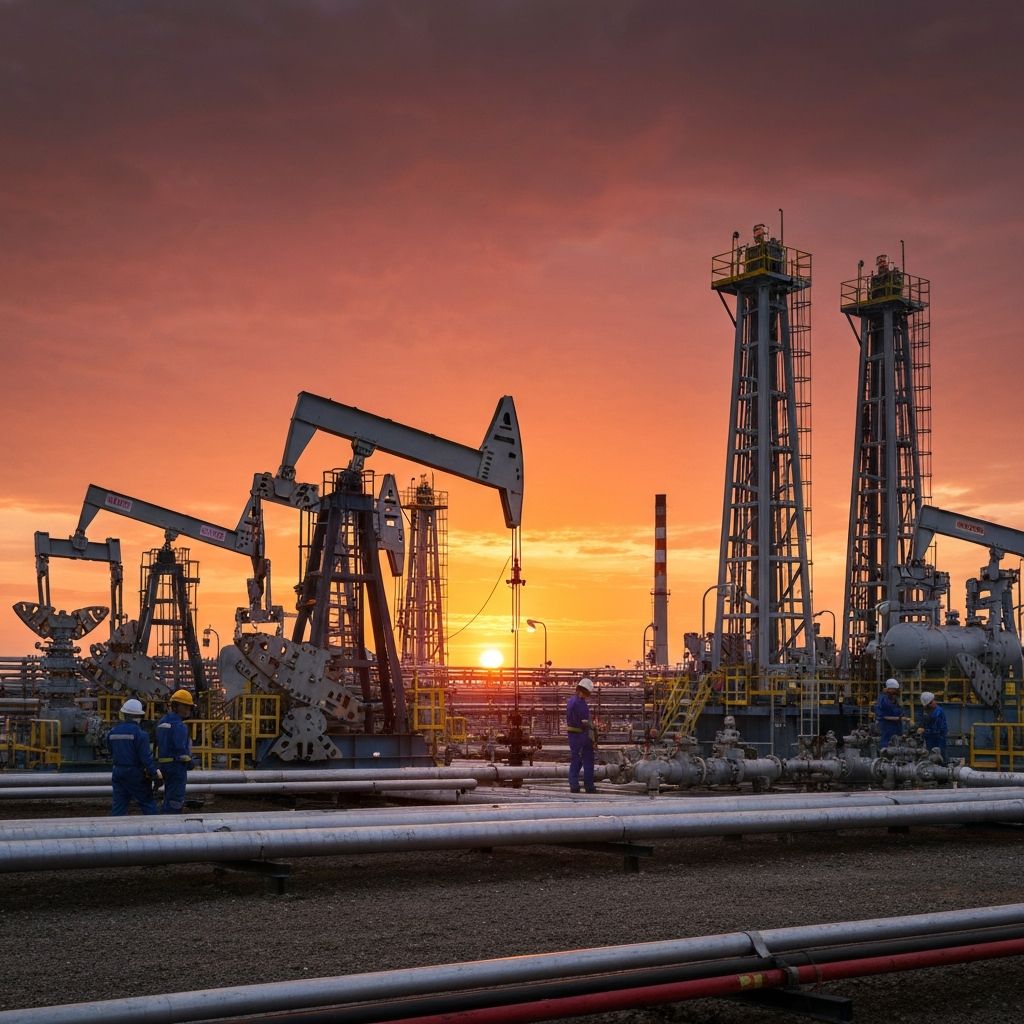
Overview of the Oil and Gas Industry
The oil and gas industry remains one of the largest and most influential sectors in the global economy, directly and indirectly employing millions of people worldwide. Despite the growing emphasis on renewable energy and sustainability, fossil fuels continue to supply the majority of the world's energy needs, and industry experts project that oil and gas will remain significant components of the global energy mix for decades to come.
The industry encompasses three main segments: upstream (exploration and production), midstream (transportation and storage), and downstream (refining and distribution). Each segment offers distinct career paths with different skill requirements, work environments, and compensation levels. Oil and gas production specifically falls within the upstream segment and involves the extraction of crude oil and natural gas from underground reservoirs.
For individuals considering a career in this field, it is essential to weigh the significant financial rewards and career opportunities against the inherent challenges, including physical demands, remote locations, cyclical market conditions, and evolving environmental considerations.
Salary and Compensation Potential
One of the most attractive aspects of a career in oil and gas production is the above-average compensation. Entry-level positions in the field, such as roustabouts and roughnecks on drilling rigs, can earn between 45,000 and 65,000 dollars annually, which is significantly higher than entry-level wages in many other industries that do not require a college degree.
As workers gain experience and move into specialized roles, salaries increase substantially. Derrick operators typically earn between 55,000 and 85,000 dollars, while drilling engineers can command salaries ranging from 80,000 to 150,000 dollars or more. Petroleum engineers, who design and develop methods for extracting oil and gas, are among the highest-paid engineering professionals, with median salaries exceeding 130,000 dollars and experienced engineers earning well over 200,000 dollars.
Beyond base salary, many oil and gas positions offer additional compensation in the form of overtime pay (which can be substantial given the long working hours typical in the industry), performance bonuses, housing allowances for remote locations, travel reimbursement, comprehensive health insurance, retirement plans with employer matching, and stock options at larger companies. When all forms of compensation are considered, total earnings in oil and gas production often far exceed those in comparable positions in other industries.
Types of Careers in Oil and Gas Production
The oil and gas production sector offers a remarkably diverse range of career opportunities, from hands-on field positions to highly technical engineering roles to corporate management positions. This diversity means that people with a wide variety of educational backgrounds, skills, and interests can find rewarding careers in the industry.
Field positions include roustabouts (entry-level laborers), roughnecks (drill crew members), derrick operators, motor operators, drillers, tool pushers, and rig managers. These positions typically require physical fitness and a willingness to work in challenging environments but may not require formal education beyond a high school diploma. Many companies provide extensive on-the-job training for field positions.
Technical and engineering roles include petroleum engineers, reservoir engineers, drilling engineers, production engineers, completions engineers, geologists, geophysicists, and geochemists. These positions typically require a bachelor's degree or higher in a relevant field and offer some of the highest salaries in the industry.
Support and management roles include health, safety, and environment (HSE) specialists, project managers, supply chain and logistics coordinators, data analysts, IT professionals, financial analysts, and human resources professionals. The industry needs skilled professionals in virtually every business function, creating opportunities for people from diverse professional backgrounds.
Job Stability and Market Cycles
One of the most significant considerations for anyone contemplating a career in oil and gas production is the cyclical nature of the industry. Oil and gas prices are influenced by a complex interplay of global supply and demand, geopolitical events, OPEC decisions, technological innovations, and macroeconomic conditions. These price fluctuations directly impact industry employment levels.
During periods of high oil prices, the industry expands rapidly, hiring aggressively and offering premium compensation to attract workers. During downturns, companies reduce operations, lay off workers, and cut spending. The boom-bust cycles of the industry can create uncertainty and financial stress for workers, particularly those in field positions that are most susceptible to layoffs during downturns.
However, experienced professionals with specialized skills tend to weather downturns better than entry-level workers. Engineers, geologists, and other technical professionals are more likely to retain their positions or find new employment quickly, as their skills are in consistent demand. Diversifying skills, maintaining certifications, building a professional network, and saving aggressively during boom times are strategies that can help mitigate the impact of market cycles.
Work-Life Balance Considerations
Work-life balance in oil and gas production varies significantly depending on the specific role and work location. Many field positions operate on rotational schedules, such as two weeks on and two weeks off, or 14 days on and 14 days off. While on rotation, workers may put in 12-hour shifts or longer for consecutive days, often in remote locations far from home.
For some people, the rotational schedule is actually a significant advantage, as the extended time off between rotations allows for travel, pursuing hobbies, spending time with family, or even working a second job. Others find the extended absences from home and the intensity of the work periods to be significant drawbacks that affect their relationships and personal well-being.
Office-based positions in oil and gas production, such as engineering and management roles in corporate offices, typically offer more conventional work schedules, though long hours and travel requirements are still common, especially during critical project phases or when issues arise in the field.
Career Growth and Advancement
The oil and gas industry offers excellent opportunities for career advancement, particularly for motivated individuals who are willing to learn, take on challenging assignments, and develop specialized expertise. Many industry leaders started their careers in entry-level field positions and worked their way up through the ranks.
Field workers can advance from entry-level roustabout positions to roughneck, derrick operator, driller, tool pusher, and ultimately rig manager or company man. Each step brings increased responsibility, higher pay, and greater influence over operations. Some experienced field workers transition into technical or management roles by pursuing additional education or certifications.
Engineers and technical professionals can advance into senior technical positions, project management, operations management, and executive leadership. The industry also offers opportunities for international assignments, which can accelerate career development and provide valuable cross-cultural experience.
The Future Outlook and Energy Transition
The energy transition is perhaps the most significant factor shaping the long-term outlook for careers in oil and gas production. As the world moves toward cleaner energy sources to address climate change, the role of fossil fuels is evolving. However, most credible energy forecasts project that oil and gas will continue to meet a significant portion of global energy demand through at least 2050.
Many oil and gas companies are diversifying into renewable energy, carbon capture and storage, hydrogen production, and other clean energy technologies. This diversification creates new career opportunities for industry professionals who can apply their technical skills and industry knowledge to emerging energy sectors. Workers who develop skills in both traditional oil and gas operations and clean energy technologies will be particularly well-positioned for long-term career success.
The industry also faces a demographic challenge, as a large portion of the current workforce is approaching retirement age. This impending wave of retirements is expected to create significant demand for new workers over the coming decade, potentially offering excellent opportunities for entry-level professionals.
Conclusion: Is It Worth It?
A career in oil and gas production can be an excellent choice for individuals who value high compensation, enjoy challenging work, and are willing to adapt to the industry's unique demands. The sector offers some of the highest-paying jobs available, diverse career paths, and opportunities for advancement that are difficult to match in many other industries.
However, it is not the right choice for everyone. The physical demands, remote locations, rotational schedules, market cyclicality, and evolving industry landscape are all factors that require careful consideration. Prospective workers should honestly assess their tolerance for these challenges before committing to a career in the field.
For those who do choose this career path, the keys to long-term success include continuous learning, skill diversification, financial prudence during boom times, adaptability to changing market conditions, and a willingness to embrace the industry's evolution toward a more sustainable energy future.
