
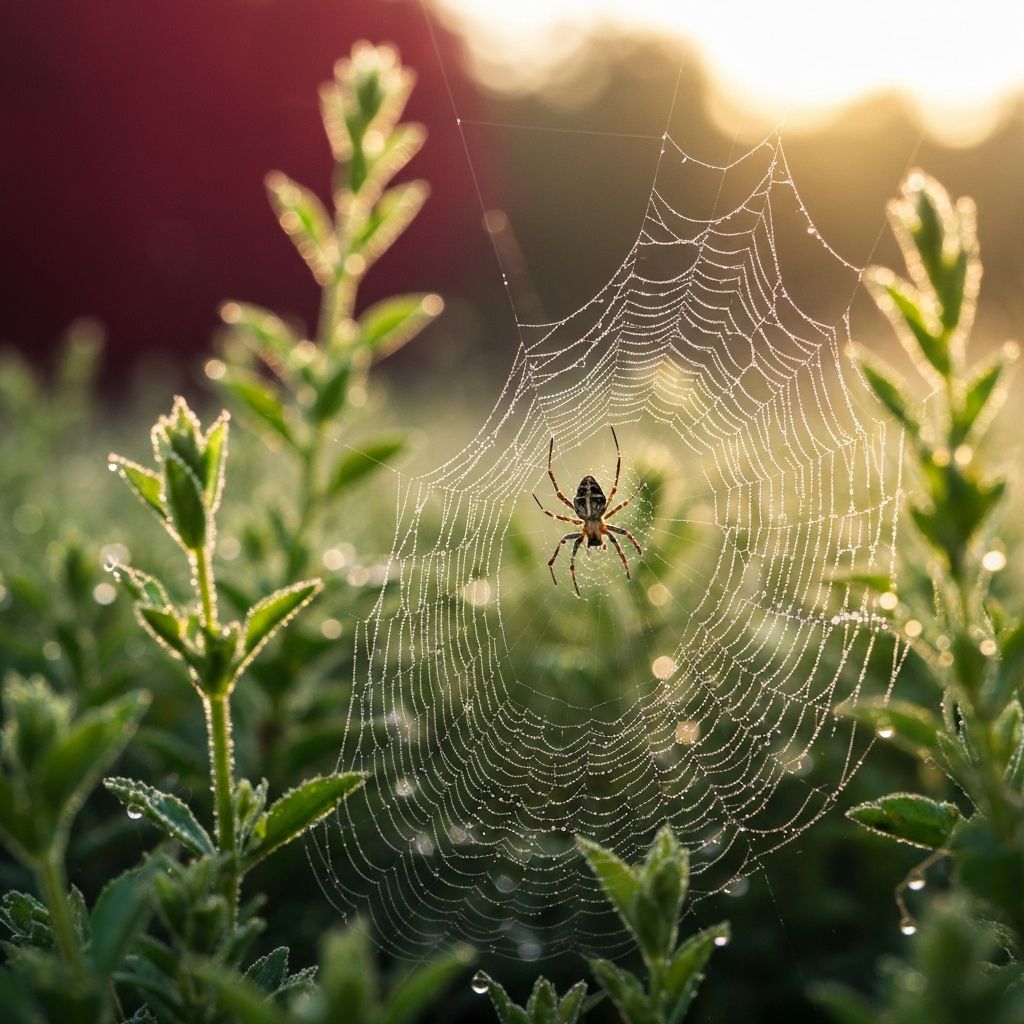
The Remarkable Survival Abilities of Spiders
Spiders are among the most resilient creatures on the planet when it comes to surviving without food. While the exact duration varies significantly depending on the species, size, age, and environmental conditions, most spiders can survive for several weeks to several months without eating. Some species have been documented surviving for over a year without a single meal, making them extraordinarily efficient survivors in the animal kingdom.
This impressive ability to endure prolonged fasting is not merely a curious biological fact. It's an essential survival adaptation that has evolved over hundreds of millions of years. Spiders are ambush predators and web builders that often experience unpredictable food availability. Their ability to go extended periods without eating allows them to survive lean periods when prey is scarce, such as during winter months, droughts, or in environments where food sources are naturally infrequent.
How Different Species Compare
The duration a spider can survive without food varies dramatically between species. Common house spiders, such as the American house spider and the cellar spider, can typically survive for one to two months without eating. These species are adapted to indoor environments where prey availability, while not constant, is relatively reliable compared to outdoor habitats.
Larger species tend to have greater fasting endurance. Tarantulas, for example, are well-known for their ability to survive extraordinarily long periods without food. Some tarantula species have been documented surviving for up to two years without eating, though six months to one year is more typical. Their large body mass provides a significant energy reserve, and their extremely low metabolic rate allows them to conserve energy with remarkable efficiency.
Wolf spiders, jumping spiders, and orb weavers fall somewhere in between, with typical fasting survival times ranging from one to three months depending on the species and environmental conditions. Smaller spiders generally have shorter survival times without food because their smaller bodies have proportionally less energy stored relative to their metabolic needs.
The Biology Behind Spider Fasting
Several biological mechanisms enable spiders to survive extended periods without food. First and foremost is their exceptionally low metabolic rate. Spiders are ectothermic, meaning they rely on external sources of heat to regulate their body temperature. This means they don't need to burn calories to maintain a constant internal temperature, which dramatically reduces their energy requirements compared to warm-blooded animals.
Spiders can also actively lower their metabolic rate during periods of food scarcity. When prey is unavailable, many species enter a state of reduced activity where they minimize movement, slow their heart rate, and reduce other physiological processes to conserve energy. This adaptive metabolic suppression allows them to stretch their energy reserves much further than would otherwise be possible.
Another key factor is the way spiders store and utilize energy. When a spider captures and consumes prey, it doesn't simply digest the food and pass it through its system like many animals. Instead, spiders externally digest their prey by injecting digestive enzymes and then consuming the liquefied remains. This highly efficient digestion process allows spiders to extract a very high percentage of the available nutrients from their prey, which are then stored in their bodies as lipids and glycogen for later use.
The Role of Water in Spider Survival
While spiders can survive remarkably long periods without food, water is a different story. Dehydration is actually a far greater threat to spider survival than starvation. Most spiders can only survive a few days to a few weeks without access to water, depending on the species and environmental humidity levels.
Spiders obtain water from multiple sources. Many species drink water droplets from dew, rain, or condensation. Others absorb moisture from the prey they consume, which is another reason why regular feeding contributes to hydration. Some species, particularly those adapted to arid environments, have evolved specialized mechanisms for conserving water, such as a waxy cuticle that reduces water loss through evaporation and the ability to produce highly concentrated waste products.
In captive settings, providing a small water dish or regularly misting the enclosure is essential for spider health, even if the spider is not eating. A spider that has access to water but no food will survive far longer than one that has food but no water access.
Environmental Factors That Affect Survival
Temperature plays a significant role in how long a spider can survive without food. Lower temperatures reduce metabolic rate, allowing spiders to conserve energy and extend their survival time. This is why many spider species can survive through winter months with little or no food, entering a dormant or semi-dormant state that minimizes energy expenditure.
Conversely, higher temperatures increase metabolic rate and energy consumption, shortening the time a spider can survive without eating. Spiders in tropical environments or heated indoor spaces will burn through their energy reserves more quickly than those in cooler conditions. Humidity also matters, as higher humidity reduces water loss and can indirectly extend survival by preventing dehydration.
The spider's life stage and reproductive status also influence fasting tolerance. Juvenile spiders that are still growing typically have lower fasting tolerance than mature adults because they need a more consistent supply of nutrients to support development. Female spiders that are producing eggs or guarding egg sacs may also have reduced fasting tolerance due to the significant energy investment required for reproduction.
What Happens When a Spider Doesn't Eat
When a spider goes without food for an extended period, several observable changes occur. The spider's abdomen, which serves as the primary energy storage organ, will gradually shrink as stored nutrients are metabolized. A well-fed spider typically has a plump, rounded abdomen, while a fasting spider's abdomen becomes noticeably smaller and more shriveled over time.
The spider will also become less active, spending more time motionless in its web or hiding spot. Web-building spiders may reduce the frequency and quality of their web construction, building smaller or less elaborate webs to conserve the energy required for silk production. Hunting spiders like wolf spiders and jumping spiders will reduce their patrol ranges and hunting activity.
If the fasting period continues long enough, the spider will eventually reach a point of no return where its energy reserves are depleted to a critical level. At this stage, the spider becomes too weak to capture or process prey even if food becomes available. Death from starvation in spiders is typically a gradual process of declining function rather than a sudden event.
Practical Implications for Homeowners
For homeowners who share their spaces with spiders, understanding these survival capabilities has practical implications. It means that simply reducing prey availability in your home will not quickly eliminate a spider population, as existing spiders can persist for weeks or months without eating. Comprehensive pest management strategies that address both spiders and their prey are more effective than targeting one or the other.
If you keep spiders as pets, understanding their fasting tolerance helps you provide appropriate care. While tarantulas and other pet spiders don't need to be fed daily, regular feeding every one to two weeks is recommended for optimal health. Always ensure fresh water is available, and monitor your spider's abdomen size as an indicator of its nutritional status.
