
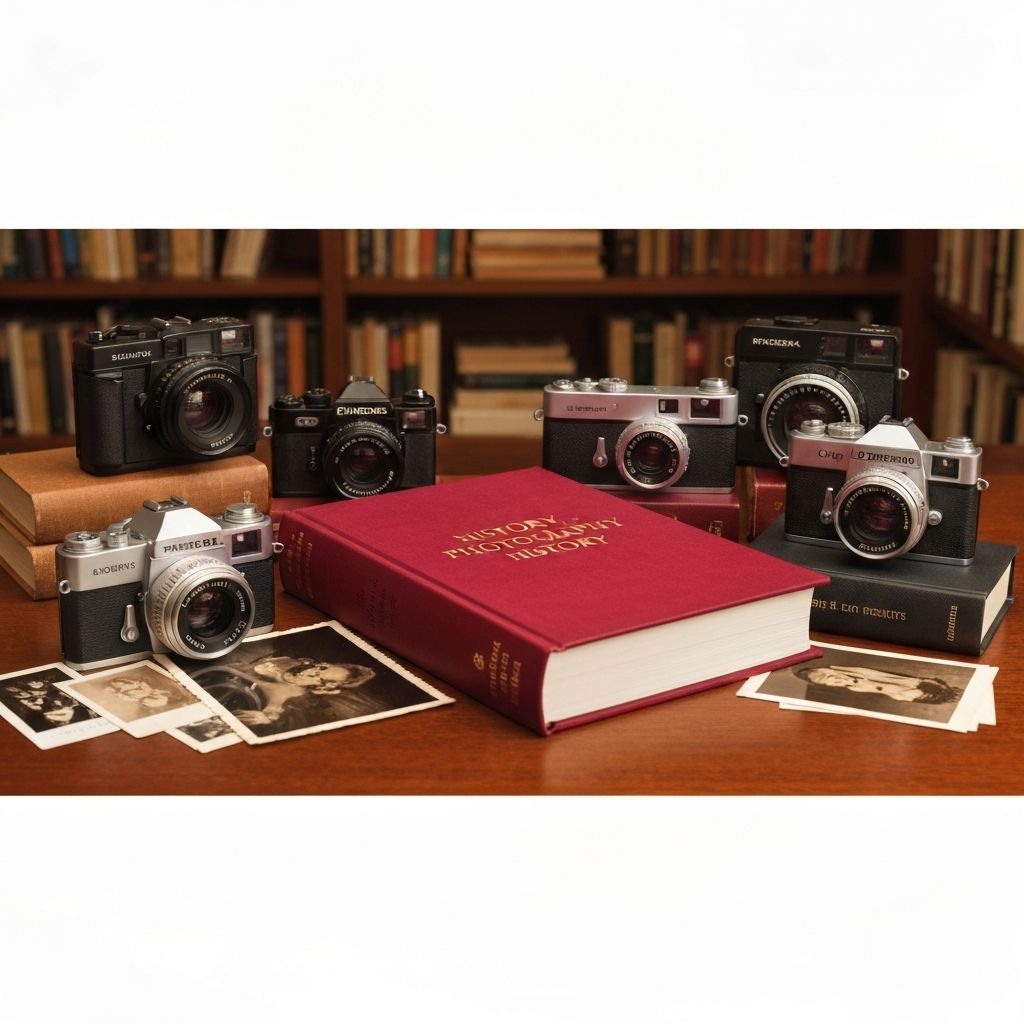
The Definitive Text on Photography History
"A World History of Photography" by Naomi Rosenblum stands as one of the most comprehensive and widely respected survey texts on the history of photography ever published. Since its first edition appeared in 1984, this monumental work has served as the go-to textbook for photography courses at colleges and universities around the world. The book traces the evolution of photography from its earliest experiments in the 1820s and 1830s through the digital revolution and contemporary photographic practices, making it an indispensable resource for students, educators, and photography enthusiasts alike.
The 5th edition of "A World History of Photography" was published by Abbeville Press, a distinguished New York-based publisher known for its high-quality art and illustrated books. Abbeville Press has been the publisher of this landmark text throughout its various editions, maintaining a commitment to the exceptional production values that a book of this scope and visual richness demands. The publisher's expertise in producing beautifully illustrated volumes makes it a natural home for a text that relies heavily on the quality of its photographic reproductions to convey its subject matter effectively.
Abbeville Press: The Publisher Behind the Masterwork
Abbeville Press was founded in 1977 by Harry N. Abrams, a legendary figure in art book publishing who had previously founded the publishing house bearing his name. Abbeville quickly established itself as a premier publisher of fine art, photography, and illustrated books, earning a reputation for exceptional production quality and editorial excellence. The press has published works by and about some of the most important artists and photographers in history, making it uniquely qualified to produce a comprehensive history of photography.
The decision to publish "A World History of Photography" through Abbeville Press reflects the publisher's commitment to creating books that are not merely informational but also beautiful objects in their own right. The 5th edition features hundreds of full-color and duotone reproductions printed on high-quality paper stock, allowing readers to appreciate the full tonal range and detail of the photographs discussed in the text. This attention to production quality is essential for a book about a visual medium, as poor reproductions would undermine the reader's ability to engage with and understand the images.
What's New in the 5th Edition
The 5th edition of "A World History of Photography" represents a significant update to the previous edition, incorporating new scholarship, additional images, and expanded coverage of contemporary photographic practices. Naomi Rosenblum, who sadly passed away in 2022, worked diligently on this edition to ensure that the text remained current and relevant in a rapidly evolving field. The update process involved reviewing recent developments in photography, reassessing the contributions of previously overlooked photographers, and integrating new perspectives on the medium's history.
One of the most notable additions to the 5th edition is expanded coverage of digital photography and its impact on the medium. The previous editions, while acknowledging the emergence of digital technology, were written during a period when film photography was still dominant. The 5th edition addresses the full scope of the digital revolution, including the rise of smartphone photography, social media's impact on photographic culture, and the blurring boundaries between photography and other visual arts in the digital age.
The 5th edition also includes enhanced coverage of photography from underrepresented regions and communities. While earlier editions were sometimes criticized for their Western-centric perspective, the updated text makes a concerted effort to include photographers from Africa, Asia, Latin America, and other regions that have made significant but often overlooked contributions to the medium's development. This more inclusive approach reflects broader trends in art history scholarship toward greater diversity and representation.
Content and Structure of the Book
"A World History of Photography" is organized chronologically, beginning with the technical and scientific developments that made photography possible and progressing through the medium's major movements, styles, and practitioners. The book is divided into several major sections that correspond to key periods in photography's evolution, including the daguerreotype era, the rise of documentary photography, pictorialism, modernism, and the contemporary digital age.
Each chapter combines a narrative history with in-depth discussions of individual photographers and their most important works. The text is accompanied by extensive captions that provide additional context for each image, as well as technical profiles that explain the photographic processes and equipment used during different eras. This multi-layered approach allows readers to understand photography's history from multiple perspectives: as a technology, an art form, a means of communication, and a tool for social documentation.
The book also includes several thematic essays that explore cross-cutting topics such as the relationship between photography and painting, the role of photography in social reform movements, the commercialization of the medium, and the ethical questions raised by photographic representation. These essays provide valuable analytical frameworks that help readers think critically about the images they encounter throughout the text.
Why This Book Remains Essential
Despite the proliferation of online resources and alternative textbooks, "A World History of Photography" remains essential for several reasons. First, its comprehensive scope is unmatched by any other single volume. While other books may focus on specific periods, genres, or regions, Rosenblum's text provides a unified narrative that connects photography's earliest days to its current state, allowing readers to understand how different movements and practitioners relate to one another within the broader arc of the medium's history.
Second, the quality of the writing and scholarship is exceptional. Rosenblum brings decades of research and expertise to the text, and her prose is clear, engaging, and accessible to readers at all levels. The book avoids the overly academic tone that characterizes some art history texts, making it enjoyable to read as well as informative.
Third, the visual quality of the book is outstanding. Abbeville Press's expertise in producing illustrated volumes ensures that the photographs reproduced in the text are presented to their best advantage. For a subject as inherently visual as photography, this is a critical factor that sets the book apart from competitors that may sacrifice image quality in favor of lower production costs.
Using the Book for Academic Study
For students and educators, the 5th edition includes several features that enhance its utility as a teaching tool. A comprehensive bibliography provides references for further reading on every topic covered in the text. A detailed index allows readers to quickly locate information about specific photographers, techniques, and movements. The chronological organization of the material aligns well with typical course structures, making it easy for instructors to assign chapters that correspond to their lecture topics.
Many photography programs also use the book as a reference throughout the entire curriculum, not just in survey courses. Students return to it again and again as they encounter new photographers and movements in their advanced studies, finding in its pages the historical context that enriches their understanding of the medium.
Where to Purchase the 5th Edition
The 5th edition of "A World History of Photography" published by Abbeville Press is available through major booksellers including Amazon, Barnes and Noble, and independent bookstores. It is also available directly from the publisher's website. Given the book's size and the quality of its reproductions, it represents a significant investment, but one that pays dividends for anyone serious about understanding the history and art of photography. Whether you are a student, an educator, a working photographer, or simply someone who appreciates the power of the photographic image, this book belongs on your shelf.
