
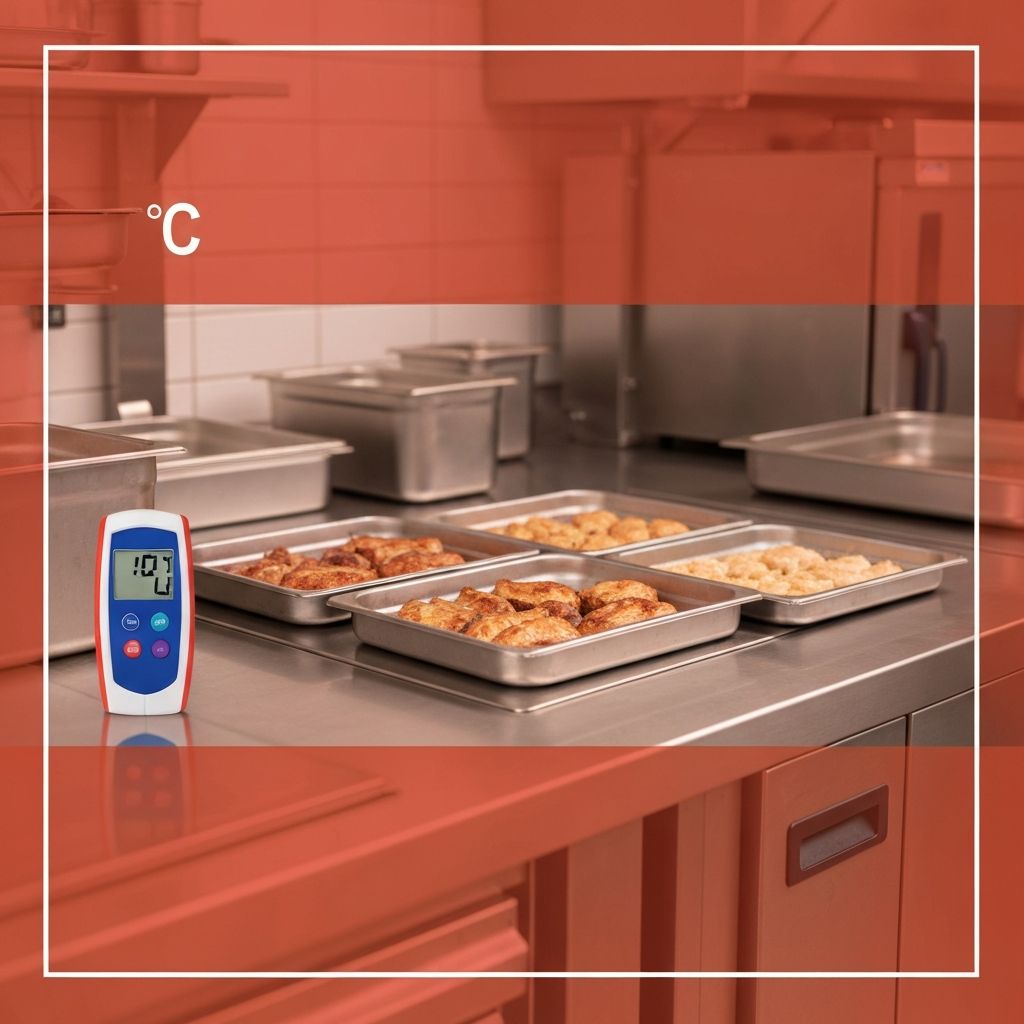
The Two-Stage Cooling Method Explained
Food safety regulations established by the FDA Food Code require that cooked Time/Temperature Control for Safety (TCS) foods be cooled using a specific two-stage cooling method. The first stage requires that food be cooled from 135°F (57°C) to 70°F (21°C) within 2 hours. The second stage requires further cooling from 70°F (21°C) to 41°F (5°C) or below within an additional 4 hours. This means the total cooling time from 135°F to 41°F must not exceed 6 hours.
The reason for this specific two-stage approach is rooted in microbiology. The temperature range between 135°F and 70°F is particularly dangerous because it includes the upper portion of the temperature danger zone where thermophilic and mesophilic bacteria thrive. These bacteria are responsible for the majority of foodborne illness outbreaks and can begin reproducing rapidly as food enters this temperature range. The 2-hour window for the first stage minimizes the time food spends in this critical zone.
Why the 2-Hour Window Is Critical
The 2-hour limit for cooling food from 135°F to 70°F is not an arbitrary number. Scientific research has demonstrated that bacterial growth rates are highest between approximately 70°F and 125°F (21°C and 52°C). By requiring food to pass through the upper portion of this range quickly, the regulations significantly reduce the total bacterial load that can develop during the cooling process.
Clostridium perfringens is one of the primary bacteria of concern during cooling. This bacterium forms heat-resistant spores that can survive the cooking process. As food cools through the danger zone, these spores germinate and the bacteria begin to multiply rapidly. C. perfringens has one of the fastest reproduction rates of any foodborne pathogen, capable of dividing every 10 minutes under optimal conditions. Failing to cool food quickly enough can result in bacterial counts reaching millions per gram, causing severe gastrointestinal illness.
Bacillus cereus is another spore-forming bacterium that poses significant risks during improper cooling. Like C. perfringens, its spores survive cooking and can germinate as temperatures drop. B. cereus produces two types of toxins: an emetic toxin that causes vomiting and a diarrheal toxin. The emetic toxin is heat-stable, meaning that reheating contaminated food will not make it safe to eat. This underscores the importance of proper cooling to prevent toxin production in the first place.
Effective Cooling Methods
Several proven methods can help you achieve the required cooling times. The ice water bath method is one of the most effective. Place the container of hot food in a larger container filled with ice water. The ice water should come up to the level of the food in the inner container. Stir the food frequently to promote even cooling and replace the ice as it melts. This method can cool large quantities of food very quickly.
Using an ice paddle, also known as a blast chill paddle, is another highly effective technique used in commercial kitchens. These are hollow plastic paddles filled with water and frozen before use. Insert the frozen paddle directly into the hot food and stir. The paddle cools the food from the inside out, dramatically reducing cooling time. Some paddles are large enough to cool entire stock pots of soup or sauce.
Reducing the volume of food being cooled is a simple but effective strategy. Instead of trying to cool a large pot of food, divide it into smaller, shallow containers. Use stainless steel pans that are no more than 4 inches deep, as food in shallow containers has more surface area exposed to the cooler environment, allowing heat to dissipate faster. Stainless steel conducts heat better than plastic, making it the preferred material for cooling containers.
Common Cooling Mistakes to Avoid
One of the most common mistakes in food service is placing large containers of hot food directly into the refrigerator or walk-in cooler. While this might seem like a logical approach, it actually creates multiple problems. The hot food raises the ambient temperature inside the cooler, potentially putting other stored foods at risk. Additionally, large containers cool very slowly from the outside in, creating a warm center where bacteria can thrive for hours.
Another frequent mistake is covering food tightly during the cooling process. While covering food is important for preventing contamination, a tight-fitting lid traps steam and heat, slowing down the cooling process significantly. Instead, use loose-fitting lids or cover with a clean cloth during the initial cooling stage. Once the food has reached 70°F and is placed in the refrigerator for the second stage, it can be covered more tightly.
Stacking containers during cooling is another error that slows the process. Containers need adequate air circulation around them to cool efficiently. Arrange containers in a single layer on shelving with space between them. In walk-in coolers, use the upper shelves for cooling foods since hot air rises, and the cooler air near the floor helps maintain lower temperatures for already-cold items stored below.
Monitoring and Documentation
Proper monitoring is essential for ensuring compliance with cooling requirements. Use a calibrated food thermometer to check the temperature of the food at the thickest or densest point. Take temperature readings at regular intervals, ideally every 30 minutes during the first stage and every hour during the second stage. Document these temperatures in a cooling log as part of your food safety management system.
If food has not reached 70°F within the 2-hour window, you have two options: reheat the food to 165°F (74°C) within 2 hours and restart the cooling process, or discard the food entirely. Do not simply continue cooling slowly, as the food has already spent too much time in the danger zone and may have developed unsafe levels of bacteria. This is a strict food safety rule that should never be compromised.
Many food service establishments use a HACCP (Hazard Analysis Critical Control Points) plan that identifies cooling as a critical control point. These plans specify the monitoring procedures, corrective actions, and documentation requirements for the cooling process. Even if your establishment does not have a formal HACCP plan, following these principles will help ensure the safety of your food and the health of your customers.
Special Considerations for Different Foods
Different types of TCS foods cool at different rates depending on their density, volume, and composition. Thick soups, stews, and sauces cool more slowly than thinner liquids because of their higher viscosity and lower thermal conductivity. These foods benefit most from active cooling methods like ice baths and ice paddles. Adding ice directly to soups or stocks as an ingredient can also speed cooling, though you need to account for the dilution in your recipe.
Large cuts of meat, such as whole roasts or turkeys, are among the most challenging items to cool properly. The dense protein retains heat for a long time, especially in the center. Cutting large pieces into smaller portions, slicing meat thinly, or shredding it before cooling dramatically increases the surface area and speeds up the cooling process. Never stack pieces of hot meat on top of each other during cooling.
Rice is another food that requires special attention during cooling. As mentioned earlier, Bacillus cereus spores are commonly present in uncooked rice and survive the cooking process. Spreading cooked rice in a thin layer on a sheet pan is an effective way to cool it quickly. Some commercial kitchens use dedicated rice cooling equipment that rapidly cools rice using forced air circulation, achieving safe temperatures in minutes rather than hours.
