
The Short Answer on Reheating Food Twice
The question of whether you can safely reheat food twice is one that many home cooks grapple with, especially when trying to minimize food waste. The short answer is that while it is technically possible to reheat food more than once, it is generally not recommended by food safety experts. Each time food is cooled and reheated, it passes through the temperature danger zone, which is between 40 and 140 degrees Fahrenheit or 4 to 60 degrees Celsius, where bacteria can multiply rapidly.
The UK Food Standards Agency and similar organizations worldwide advise that food should ideally be reheated only once after initial cooking. This recommendation is based on the principle that each cooling and reheating cycle increases the cumulative time food spends in the danger zone, which increases the risk of bacterial growth to levels that could cause foodborne illness. However, the risk depends on several factors, including the type of food, how quickly it was cooled, how it was stored, and the temperature it reaches when reheated.
Understanding the Danger Zone
To understand why reheating food multiple times can be risky, it helps to understand the concept of the temperature danger zone. Bacteria that cause foodborne illness, including Salmonella, E. coli, Staphylococcus aureus, and Clostridium perfringens, thrive at temperatures between 40 and 140 degrees Fahrenheit. Within this range, bacteria can double in number every 20 minutes, meaning that food left at room temperature for even a couple of hours can develop dangerous levels of contamination.
When you cook food to the appropriate temperature, you kill most harmful bacteria. However, cooking does not eliminate all bacterial spores, particularly those produced by Clostridium perfringens and Bacillus cereus. These spores can survive cooking and germinate into active bacteria when the food cools down to the danger zone. If the food is then reheated but not brought to a sufficiently high temperature, or if it sits at room temperature for too long before reheating, these bacteria can multiply to dangerous levels.
Each time you cool and reheat food, you add another cycle through the danger zone. Even if each individual cycle is relatively short, the cumulative effect can allow bacteria to reach concentrations that cause illness. This is why food safety experts recommend minimizing the number of times food is reheated and ensuring that it reaches a temperature of at least 165 degrees Fahrenheit or 74 degrees Celsius throughout when reheated.
Which Foods Are Riskiest to Reheat Multiple Times
Not all foods carry the same risk when reheated multiple times. Some foods are considered high-risk because they provide an ideal environment for bacterial growth. These include rice, which can harbor Bacillus cereus spores that survive cooking and produce toxins when rice is left at room temperature. Reheating rice does not destroy these heat-stable toxins, making improperly stored rice one of the most common causes of food poisoning from reheated food.
Chicken and other poultry are also high-risk foods when it comes to reheating. Poultry has a complex protein structure that can change with repeated heating and cooling cycles, potentially affecting both safety and quality. Chicken should always be reheated to an internal temperature of 165 degrees Fahrenheit throughout, and it is best to reheat it only once after the initial cooking.
Eggs and egg-based dishes, seafood, and creamy sauces or dishes containing dairy are other high-risk foods that should be treated with extra caution. These foods are particularly susceptible to bacterial growth and can cause severe food poisoning if not handled properly. Leafy greens like spinach, which contain nitrates that can convert to potentially harmful nitrites when reheated repeatedly, are another category to be aware of.
Lower-risk foods for reheating include soups and stews without rice, bread and baked goods, and most cooked vegetables. These foods generally handle multiple reheating cycles better, though the quality and texture may degrade with each reheating. Soups and stews are among the safest foods to reheat because they can be brought to a rolling boil, which effectively kills most bacteria throughout the liquid.
Best Practices for Safe Reheating
If you do need to reheat food, following proper food safety practices can minimize your risk of illness. The most important rule is to ensure that reheated food reaches an internal temperature of at least 165 degrees Fahrenheit or 74 degrees Celsius throughout, not just on the surface. Use a food thermometer to verify the temperature, especially for thick or dense foods that may heat unevenly.
When using a microwave to reheat food, stir it halfway through the heating process to eliminate cold spots where bacteria can survive. Microwaves heat food unevenly, and without stirring, some portions of the food may reach safe temperatures while others remain in the danger zone. Cover the food with a microwave-safe lid or damp paper towel to create steam, which helps heat the food more evenly.
Cool leftovers as quickly as possible before refrigerating. Food should be refrigerated within two hours of cooking, or within one hour if the ambient temperature is above 90 degrees Fahrenheit. To speed up cooling, divide large batches of food into smaller, shallow containers, which allows heat to dissipate more quickly. Never put hot food directly into the refrigerator in a large, deep container, as the center of the food will take too long to cool and may spend excessive time in the danger zone.
The Smarter Approach: Portion Before Reheating
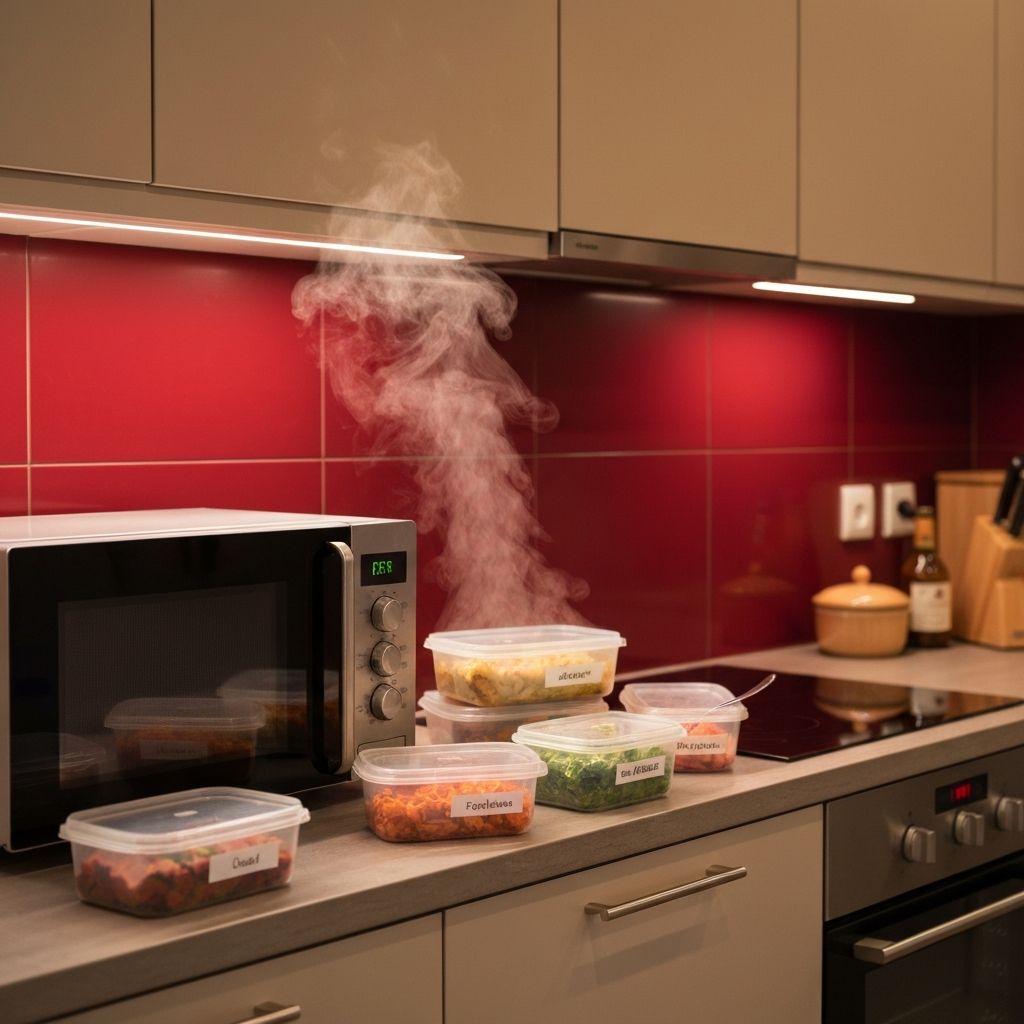
Rather than cooking a large batch, refrigerating it all, reheating the whole batch, and then refrigerating the leftovers again, a much safer approach is to portion your food before reheating. Take only the amount you plan to eat out of the refrigerator and reheat just that portion. Leave the remaining food in the refrigerator where it stays at a safe temperature.
This approach ensures that the bulk of your food only goes through one cooling and reheating cycle, regardless of how many times you eat from the same batch. It is the single best practice for maintaining both the safety and quality of your leftovers. Portioning also helps you avoid waste, as you can take out exactly as much as you need for each meal.
For meal prep enthusiasts who cook large batches on the weekend for the week ahead, portioning into individual servings before refrigerating or freezing is essential. Use individual containers for each meal, and you will never need to reheat the same food more than once. This approach is not only safer but also more convenient, as you can grab a single container and heat it without worrying about the rest of the batch.
How Long Can Leftovers Be Stored Safely
Regardless of whether you reheat food once or twice, leftovers should be consumed within a specific timeframe to ensure safety. The general guideline is that refrigerated leftovers should be consumed within three to four days of cooking. After this period, the risk of bacterial growth increases even at refrigerator temperatures, as some bacteria can grow slowly at temperatures below 40 degrees Fahrenheit.
If you know you will not eat your leftovers within three to four days, freeze them instead. Properly frozen food remains safe indefinitely, though quality may decline over time. Most cooked foods maintain their best quality for two to three months in the freezer. When you are ready to eat frozen leftovers, thaw them in the refrigerator overnight rather than at room temperature, and reheat them thoroughly to 165 degrees Fahrenheit.
Label your leftovers with the date they were cooked so you can easily track how long they have been stored. This simple habit can prevent you from accidentally eating food that has been in the refrigerator too long. If you are ever in doubt about whether leftovers are still safe to eat, remember the old saying: when in doubt, throw it out. The cost of replacing a meal is far less than the cost of a bout of food poisoning.
The Bottom Line
While reheating food twice is not inherently dangerous if done properly, it does increase the risk of foodborne illness and is generally not recommended by food safety experts. The safest approach is to portion your leftovers before reheating, take out only what you need, and heat it to at least 165 degrees Fahrenheit throughout. Store leftovers in the refrigerator within two hours of cooking, consume them within three to four days, and when in doubt, discard them. By following these simple guidelines, you can enjoy your leftovers safely while minimizing food waste.
