
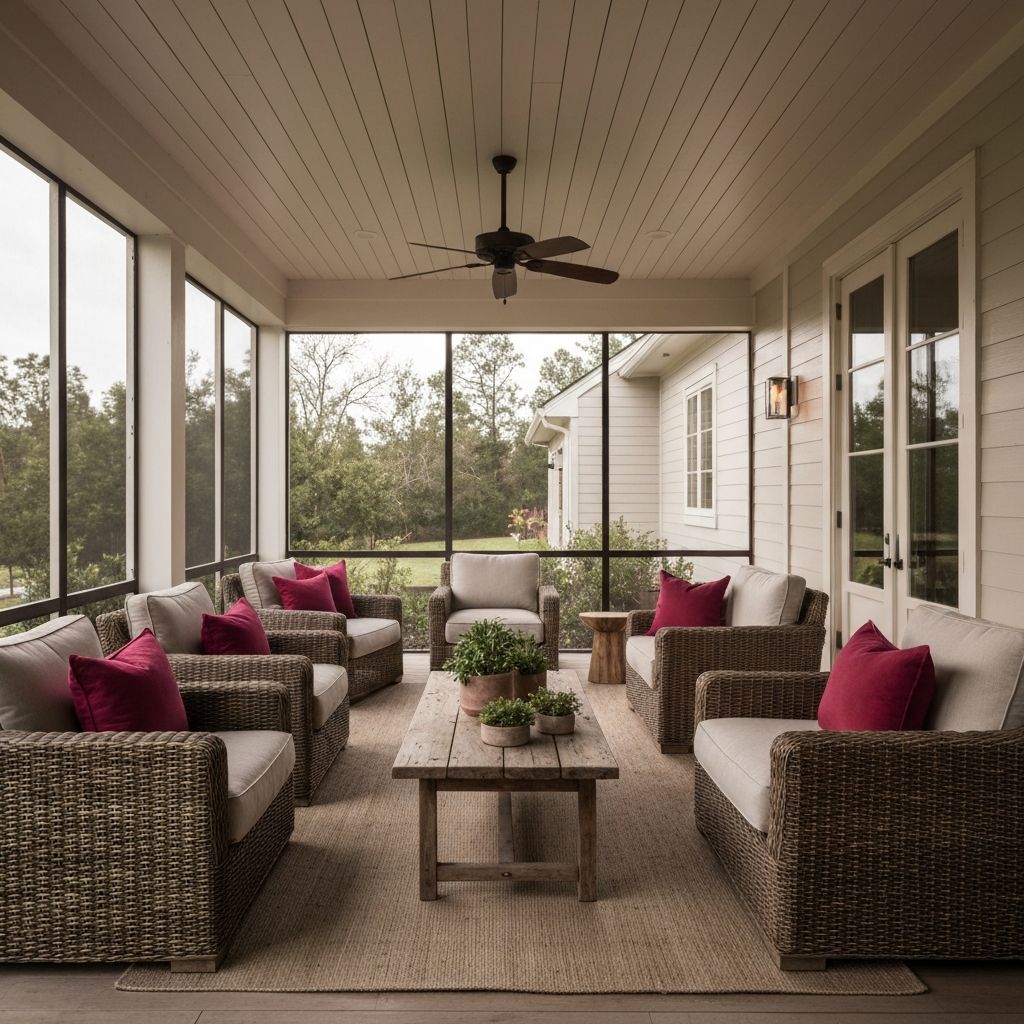
Why Screened Porch Furniture Matters
A screened porch represents one of the most versatile living spaces in any home, bridging the gap between indoor comfort and outdoor enjoyment. The furniture you select for this transitional space determines whether it becomes a beloved daily retreat or an underutilized afterthought. Unlike fully enclosed rooms or completely exposed patios, screened porches present unique furnishing challenges that require careful consideration of materials, dimensions, style, and functionality.
The screen enclosure provides protection from insects and debris while allowing fresh air, natural light, and ambient sounds to flow freely through the space. This semi-outdoor environment subjects furniture to humidity, temperature fluctuations, indirect UV exposure, and occasional wind-driven moisture that fully indoor furniture is not designed to withstand. Conversely, screened porches offer more protection than open decks or patios, meaning you do not necessarily need the heaviest-duty outdoor furniture available. Selecting pieces that occupy the sweet spot between indoor elegance and outdoor durability is the key to creating a screened porch that feels both refined and resilient.
Best Materials for Screened Porch Furniture
Wicker and rattan furniture have been synonymous with porch living for over a century, and for good reason. Natural wicker crafted from rattan, bamboo, or willow offers classic beauty and surprisingly comfortable seating when paired with appropriate cushions. However, natural wicker requires more maintenance in humid environments and can deteriorate if exposed to sustained moisture. Synthetic wicker, made from high-density polyethylene (HDPE) resin woven over aluminum frames, delivers the same aesthetic appeal with dramatically improved weather resistance and virtually zero maintenance requirements.
Teak wood stands as the gold standard for outdoor furniture, and its performance on screened porches is exceptional. This tropical hardwood contains natural oils that resist moisture, insects, and decay without requiring chemical treatments. Over time, teak develops a distinctive silvery-gray patina that many homeowners find attractive, though regular application of teak oil maintains the wood's original honey-golden color. Teak furniture is an investment, with quality pieces commanding premium prices, but its longevity of 50 years or more provides exceptional value over time.
Aluminum furniture offers a lightweight, rust-proof option that is particularly practical for screened porches. Modern aluminum outdoor furniture features powder-coated finishes that resist scratching, chipping, and fading. The lightweight nature of aluminum makes rearranging furniture easy, which is valuable for screened porches that serve multiple functions throughout the day. Cast aluminum pieces offer more substantial aesthetics with traditional designs, while extruded aluminum provides a sleeker, more contemporary look.
Wrought iron furniture brings timeless elegance and substantial visual weight to screened porch settings. Its heavy construction prevents shifting in windy conditions, and quality wrought iron with proper powder-coat finishing can last for decades with minimal maintenance. The primary considerations with wrought iron are its significant weight, which can be challenging on elevated porches with load limitations, and the need for cushions to provide comfortable seating on the hard metal surfaces.
Essential Furniture Pieces for Every Screened Porch
A comfortable seating area forms the foundation of any screened porch arrangement. Depending on the size of your porch and the number of people you typically entertain, this might range from a simple pair of rocking chairs to a full sectional sofa arrangement with accent chairs. Deep-seated sofas with plush cushions create a living room atmosphere, while traditional rocking chairs or gliders offer the classic porch experience that has defined American residential architecture for generations.
A dining table expands the functionality of your screened porch tremendously, transforming it from a simple sitting area into a complete outdoor dining room. The table size should accommodate your typical group while leaving adequate circulation space around the perimeter. A minimum of 36 inches of clearance behind chairs allows comfortable movement when the table is in use. Round tables work well in smaller spaces by eliminating corners that restrict traffic flow, while rectangular tables maximize seating capacity in longer, narrower porches.
Side tables and coffee tables provide essential surfaces for beverages, books, and decorative items. Choose tables at appropriate heights relative to your seating pieces, with coffee tables typically 1-2 inches below the seat height of adjacent chairs and sofas. Nesting tables offer flexibility for screened porches that serve multiple purposes, as they can be separated when entertaining and stacked together when the space is used more casually.
A daybed or hanging swing adds a luxurious element that transforms a screened porch from a functional sitting area into a genuine relaxation retreat. Porch swings suspended from ceiling hooks or freestanding swing frames provide gentle motion that enhances the meditative quality of porch sitting. Outdoor daybeds with weather-resistant mattresses create inviting spaces for afternoon naps, reading, or simply watching the world go by from a position of supreme comfort.
Cushion and Fabric Selection
Cushion selection is arguably the most critical decision in screened porch furnishing, as it directly impacts both comfort and longevity. Sunbrella fabric has established itself as the industry standard for outdoor cushion covers, offering exceptional resistance to UV fading, moisture, mildew, and staining while maintaining a soft hand-feel that rivals indoor fabrics. Sunbrella's extensive color and pattern library ensures that performance does not require aesthetic compromise.
Cushion fill material significantly affects both comfort and maintenance requirements. High-resiliency foam wrapped in polyester fiber fill provides the most comfortable seating experience, with the foam core providing support and the fiber wrap creating a pillowy surface feel. Quick-dry foam alternatives allow moisture to drain through the cushion rather than being absorbed, reducing drying time after exposure to wind-driven rain that occasionally penetrates screened enclosures.
Consider investing in cushion storage solutions for extended periods of non-use, particularly during winter months in climates with freezing temperatures. Deck boxes, cushion storage bags, and indoor closet space protect cushions from moisture, dust, and pests during the off-season. Bringing cushions indoors during extended absences also prevents the gradual accumulation of pollen, dust, and environmental debris that can shorten cushion lifespan.
Layout and Arrangement Strategies
Effective screened porch furniture arrangement begins with identifying the primary function of the space and arranging furniture to support that function while maintaining comfortable traffic flow. For conversation-oriented porches, arrange seating pieces facing each other with a distance of 4-8 feet between opposing seats, creating an intimate grouping that facilitates easy dialogue. Angle corner chairs at 45 degrees to create a more welcoming, informal arrangement than rigid parallel placement.
For porches that serve dual purposes as dining and lounging spaces, create distinct zones using area rugs, plants, or changes in furniture style to visually separate the areas. Position the dining zone closer to the door leading to the kitchen for practical serving convenience, and place the lounging area toward the view or the quieter end of the porch.
Leave a minimum of 18 inches between furniture pieces and the screen walls to prevent cushion contact with screens, which can cause staining and wear over time. This buffer zone also allows for adequate air circulation around the perimeter of the porch, which helps prevent moisture buildup and keeps the space feeling open and comfortable during humid weather.
Accessories and Finishing Touches
Outdoor area rugs define spaces, add color and pattern, and create a more finished, room-like atmosphere on screened porches. Polypropylene rugs are the most practical choice, offering mold and mildew resistance, easy cleaning with a garden hose, and rapid drying. The rug should be large enough to encompass the primary seating arrangement, with all front legs of seating pieces resting on the rug to create visual cohesion.
Lighting transforms a screened porch from a daytime space into an evening retreat. String lights draped along the roofline create warm ambiance, while battery-operated table lanterns and LED candles provide focused task and accent lighting without the need for electrical wiring. For permanently installed lighting, ceiling fans with integrated light kits serve the dual purpose of illumination and air circulation, which is particularly valuable in humid climates.
Conclusion
Furnishing a screened porch is an opportunity to create a unique living space that combines the comfort of indoor rooms with the sensory pleasures of outdoor living. By selecting appropriate materials, choosing essential furniture pieces that match your lifestyle, and arranging the space thoughtfully, your screened porch can become the most beloved room in your home, welcoming you through three or even four seasons of the year.
