
The Origins of Tapas
Tapas are one of Spains greatest contributions to global food culture, representing not just a style of eating but an entire philosophy of socializing, sharing, and savoring life. The word tapa literally means lid or cover in Spanish, and while several colorful legends attempt to explain the origins of the name, the most widely accepted story traces it back to the practice of placing a small plate or slice of bread over a glass of sherry or wine to keep fruit flies and dust out of the drink.
According to the most popular origin story, King Alfonso X of Castile (also known as Alfonso the Wise), who ruled in the 13th century, decreed that taverns could not serve wine unless it was accompanied by a small amount of food. This was purportedly to prevent drunkenness among workers and travelers. The small snacks served alongside drinks became known as tapas, and the tradition gradually evolved into the elaborate culinary custom we know today.
Another popular legend attributes the creation of tapas to King Alfonso XIII, who reportedly stopped at a tavern in the windy seaside city of Cadiz. To prevent sand from blowing into his glass of sherry, the bartender placed a slice of cured ham over the top. The king enjoyed the combination so much that he ordered another glass with a tapa, and the tradition was born.
Regardless of which story is true, the concept of small, shareable dishes served alongside drinks has been a cornerstone of Spanish culture for centuries. Over time, tapas evolved from simple slices of cheese or ham covering a wine glass into an extraordinarily diverse range of dishes that showcase the best of Spanish regional cooking.
Understanding Tapas Culture
To truly understand tapas, you must understand the culture that surrounds them. In Spain, tapas are not merely a type of food but a social institution. The act of going out for tapas, known as ir de tapas or tapeo, is one of the countrys most beloved social rituals. Groups of friends, families, and colleagues gather in the evening hours, moving from bar to bar, sampling different dishes at each establishment, chatting, laughing, and enjoying the communal atmosphere.
The tapas tradition reflects fundamental Spanish values: the importance of community, the pleasure of unhurried socializing, and the belief that food is best enjoyed in good company. Unlike the formal, sit-down dining model common in many other cultures, tapas encourage a relaxed, informal approach to eating. Diners stand at the bar, lean against high tables, or cluster around small tables, moving freely between conversations and ordering dishes as the mood strikes.
In many traditional Spanish bars, particularly in the southern region of Andalusia, a small tapa is still served free with every drink ordered. These complimentary tapas are typically simple dishes, such as olives, a small bowl of stew, or a few slices of cheese, but they represent the generous spirit that defines tapas culture. In other parts of Spain, particularly in the Basque Country and Catalonia, tapas are ordered separately and may be called pintxos (in the Basque Country) or platillos.
Classic Tapas Dishes Everyone Should Try
The range of tapas dishes is vast and varies significantly from region to region. However, certain classics appear on tapas menus throughout Spain and in Spanish restaurants worldwide. Patatas bravas, perhaps the most universally beloved tapa, consists of crispy fried potato cubes served with a spicy tomato-based sauce (salsa brava) and sometimes garlic aioli. Simple yet addictive, this dish perfectly exemplifies the tapas philosophy of transforming humble ingredients into something extraordinary.
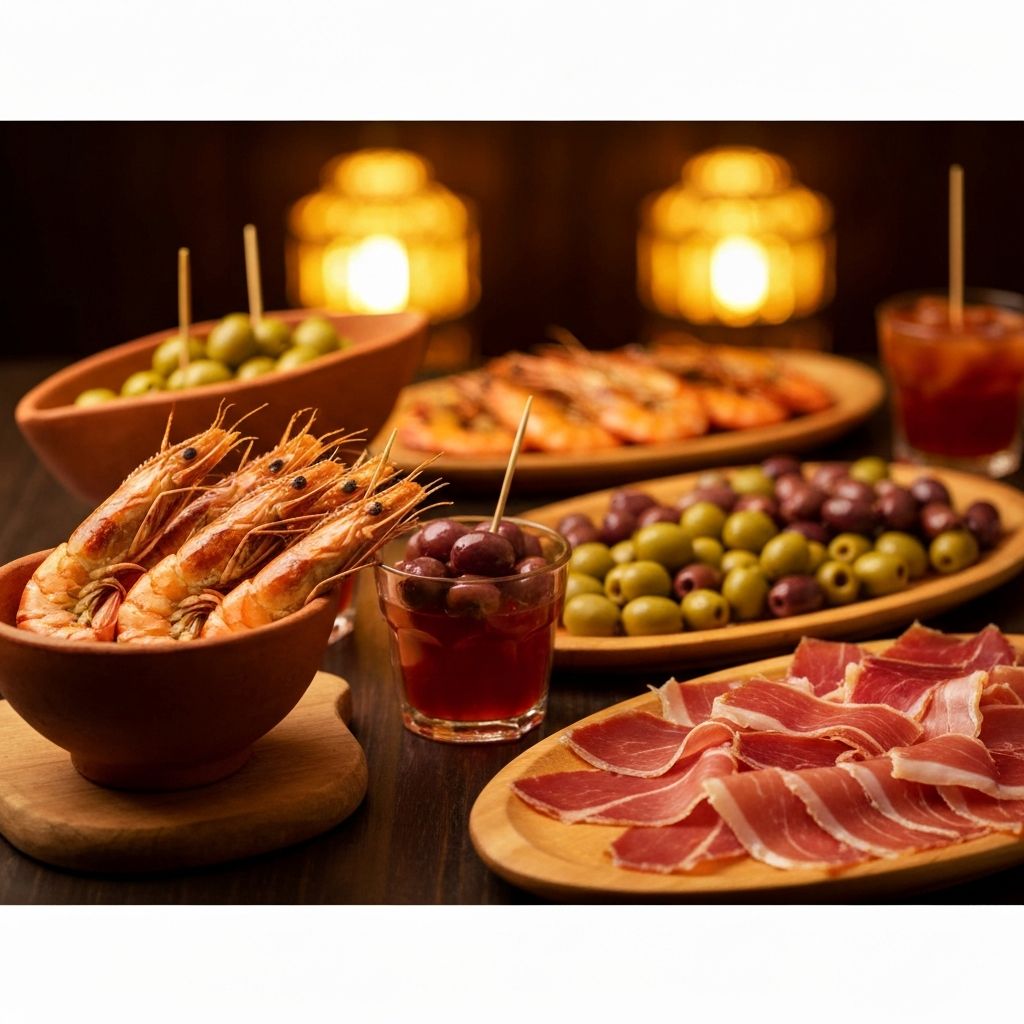
Jamon iberico, cured ham from acorn-fed Iberian pigs, is considered by many to be the crown jewel of Spanish gastronomy. Sliced paper-thin and served at room temperature, this exquisite ham has a rich, nutty flavor and melt-in-your-mouth texture that results from years of careful curing. A plate of jamon iberico, accompanied by a glass of fine sherry, is one of lifes great culinary pleasures.
Gambas al ajillo, or garlic shrimp, is a sizzling dish of plump shrimp cooked in abundant olive oil with sliced garlic and dried chili peppers. Served in a small earthenware cazuela still bubbling from the heat, this aromatic dish demands crusty bread for soaking up the fragrant, garlicky oil. It is a staple of tapas bars throughout Spain and a perennial favorite among both locals and tourists.
Tortilla espanola, the Spanish omelet, is arguably the most iconic dish in all of Spanish cuisine. Made with just eggs, potatoes, onions, olive oil, and salt, this thick, golden omelet is served at room temperature and cut into wedges. Every Spanish household and tapas bar has its own version, and debates about the perfect tortilla, particularly whether it should include onions, are a national pastime.
Croquetas, creamy bechamel-based fritters typically filled with jamon (ham), chicken, cod, or mushrooms, are another tapas essential. The best croquetas have a crispy, golden exterior that gives way to a molten, flavorful interior. Making perfect croquetas requires patience and skill, and they are a true test of a tapas bars quality.
Regional Variations Across Spain
One of the most fascinating aspects of tapas is how they vary from region to region, reflecting local ingredients, cooking traditions, and cultural influences. In Andalusia, the birthplace of tapas culture, you will find an emphasis on fried dishes (fritura), including boquerones fritos (fried anchovies), chicharrones (fried pork belly), and pavias de bacalao (battered and fried salt cod).
In the Basque Country, tapas take the form of pintxos (pronounced peen-chos), elaborate bite-sized creations served on slices of bread and secured with toothpicks. Basque pintxos bars display their offerings on the bar counter, allowing diners to select what appeals to them visually. The sophistication and creativity of pintxos are remarkable, with some bars producing miniature culinary masterpieces that rival dishes served in fine dining restaurants.
Galicia, in the northwest corner of Spain, is famous for its extraordinary seafood tapas. Pulpo a la gallega (Galician-style octopus), served on a wooden board with olive oil, paprika, and sea salt, is the regions most iconic dish. Pimientos de padron, small green peppers fried in olive oil and sprinkled with coarse salt, are another Galician classic that has become popular throughout Spain and beyond.
Catalonia brings a distinctly Mediterranean flair to the tapas tradition. Pan con tomate (bread rubbed with ripe tomatoes, drizzled with olive oil, and sprinkled with salt) is the simplest and most quintessentially Catalan tapa. Escalivada (roasted vegetables), esqueixada (salt cod salad), and botifarra amb mongetes (sausage with white beans) are other beloved Catalan offerings.
The Global Spread of Tapas Culture
Over the past few decades, tapas culture has spread far beyond Spains borders, becoming one of the most popular dining concepts in the world. Tapas restaurants, bars, and lounges can now be found in cities across North America, Europe, Asia, Australia, and beyond. The appeal of tapas dining, with its emphasis on sharing, variety, and social interaction, resonates with contemporary dining preferences that favor casual, communal experiences over formal, individual meals.
The global tapas movement has also inspired chefs to adapt the concept to their own culinary traditions. Asian tapas, Middle Eastern tapas, and Latin American tapas restaurants have emerged, applying the small-plates, sharing format to cuisines that already have their own traditions of communal eating. This cross-pollination has enriched the global dining landscape while paying homage to the Spanish original.
At home, hosting a tapas-style dinner party has become a popular alternative to traditional sit-down meals. The format allows hosts to prepare a variety of dishes in advance, reduces the pressure of producing a single perfect main course, and encourages guests to mingle and interact as they sample different offerings. A tapas spread featuring homemade croquetas, a Spanish omelet, marinated olives, manchego cheese, and a simple green salad creates an impressive and convivial dining experience.
How to Enjoy Tapas Like a Spaniard
To experience tapas the way they are meant to be enjoyed, embrace the spirit of spontaneity and exploration. Rather than committing to a single restaurant for the entire evening, try the Spanish tradition of bar-hopping, visiting two or three different establishments and ordering a few dishes at each. This allows you to sample a wider variety of food and experience the unique personality of each bar.
Order a mix of dishes that balance flavors and textures: something cured or preserved, something fried, something with seafood, something with vegetables, and something with cheese. Pair your tapas with a glass of local wine, sherry, or a cold cerveza, and do not rush. The beauty of tapas is in the leisurely pace, the conversation between bites, and the pleasure of discovering a new favorite dish.
Most importantly, share everything. Tapas are designed to be communal, and the act of sharing food creates connection and warmth among diners. Whether you are in a bustling bar in Seville, a sophisticated pintxos establishment in San Sebastian, or your own kitchen, the essence of tapas remains the same: good food, good drink, and good company, savored together in the spirit of joy and friendship.
