
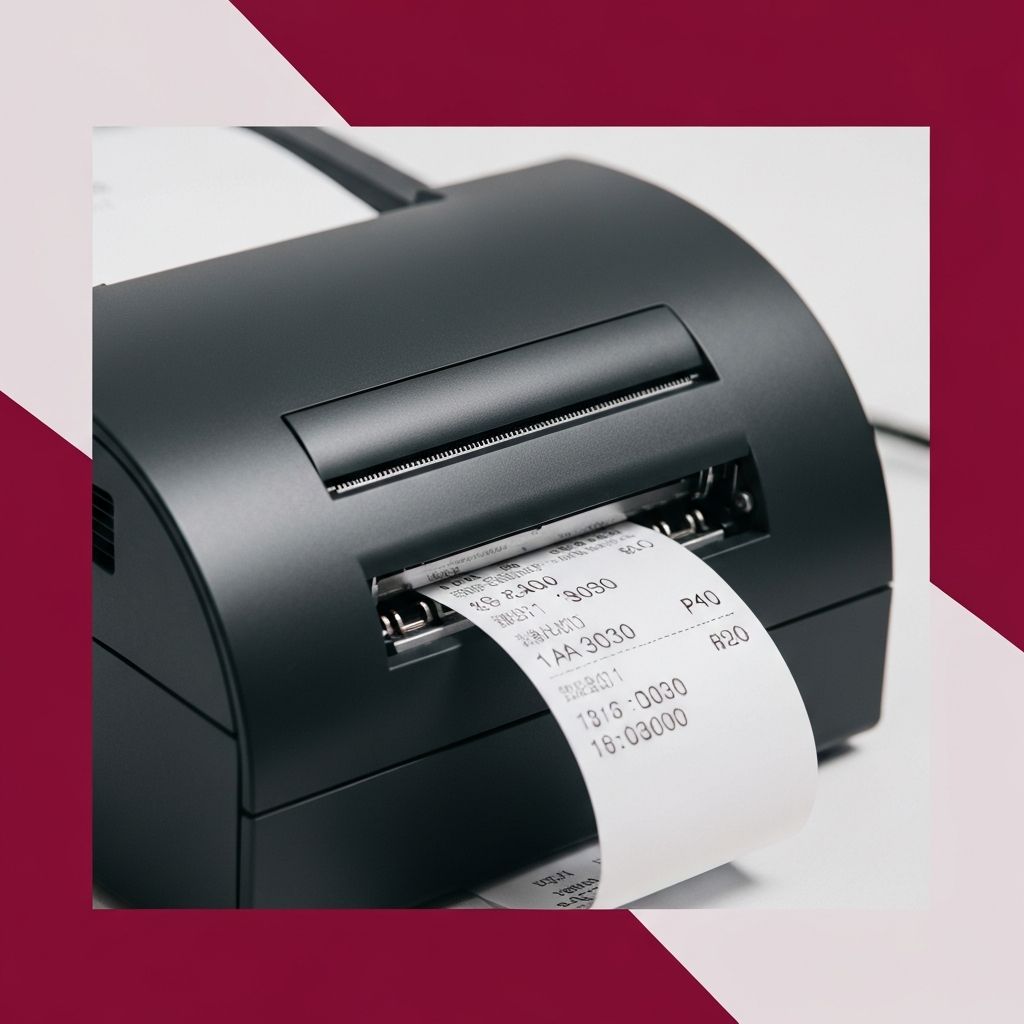
Introduction to Thermal Printing Technology
Thermal printers represent one of the most widely used yet often overlooked printing technologies in the modern world. If you have ever received a receipt at a grocery store, a shipping label from an online order, or a wristband at a hospital, chances are you have held output from a thermal printer in your hands. These devices use heat rather than ink or toner to create images and text on specially treated paper, making them faster, quieter, and more cost-effective than many traditional printing methods.
The thermal printing process was first developed in the 1960s and has since evolved into a reliable and versatile technology used across numerous industries. From retail point-of-sale systems to medical laboratories, from logistics warehouses to parking garages, thermal printers play a critical role in everyday operations that most people take for granted.
How Thermal Printers Work
Thermal printers operate on a fundamentally different principle than inkjet or laser printers. Instead of depositing ink or toner onto paper, thermal printers use heat to create images. The core component of a thermal printer is the thermal print head, which contains an array of tiny heating elements that can be individually controlled to produce precise patterns of heat on the printing surface.
There are two main types of thermal printing technology: direct thermal and thermal transfer. Each uses heat in a different way to create the final printed output, and each has distinct advantages and disadvantages that make it suited for different applications.
Direct thermal printing works by applying heat directly to a special thermochromic paper, commonly known as thermal paper. This paper is coated with a chemical compound that changes color when exposed to heat. As the paper passes over the thermal print head, the heating elements selectively activate to create the desired image or text on the paper's surface. No ink, toner, or ribbon is required, making direct thermal printers among the simplest and most economical printing devices available.
Thermal transfer printing, on the other hand, uses heat to transfer ink from a ribbon onto the printing surface. The thermal print head heats specific areas of an ink-coated ribbon, causing the ink to melt and transfer onto the paper, label, or other material beneath it. This method produces more durable prints than direct thermal printing and can print on a wider variety of materials, including synthetic labels, polyester, and other non-paper substrates.
Applications of Thermal Printers
Thermal printers are used in an astonishing range of applications across virtually every industry. In retail, direct thermal printers are the standard technology for printing receipts at point-of-sale terminals. Their speed, reliability, and low operating costs make them ideal for this high-volume, time-sensitive application. A typical thermal receipt printer can produce a complete receipt in just a few seconds, keeping checkout lines moving efficiently.
In the shipping and logistics industry, thermal printers are used extensively for printing shipping labels, barcode labels, and tracking tags. Companies like UPS, FedEx, and Amazon rely on thermal printing technology to produce millions of shipping labels every day. The durability and scannability of thermal transfer labels make them particularly well-suited for this application, as labels must remain readable throughout the shipping process.
Healthcare is another major sector that relies heavily on thermal printing. Hospitals use thermal printers to produce patient wristbands, medication labels, laboratory specimen labels, and medical records. The speed and reliability of thermal printers are critical in healthcare settings where accurate identification and labeling can be a matter of life and death.
The food service industry uses thermal printers for order tickets in restaurant kitchens, food safety labels with expiration dates, and nutritional information labels for packaged foods. The airline industry uses them for boarding passes and luggage tags. Parking facilities use them for parking tickets. The applications are virtually limitless.
Advantages of Thermal Printers
Thermal printers offer several significant advantages over traditional inkjet and laser printers that explain their widespread adoption. Speed is one of the most notable benefits. Thermal printers can produce output much faster than inkjet printers and comparable to or faster than many laser printers. Print speeds of 4 to 12 inches per second are common, and some high-end industrial models can print even faster.
Reliability is another key advantage. Because thermal printers have fewer moving parts than inkjet or laser printers, they are less prone to mechanical failures and require less maintenance. There are no ink cartridges to replace, no toner drums to swap out, and no print heads to clean. This simplicity translates to less downtime and lower maintenance costs over the life of the printer.
Operating costs for direct thermal printers are particularly low because the only consumable is the thermal paper itself. There are no ink cartridges, toner cartridges, or ribbons to purchase, which can result in significant cost savings over time, especially in high-volume printing environments. Thermal transfer printers do require ribbons, but the overall cost per print is still typically lower than inkjet printing.
Print quality is excellent for the types of output thermal printers are designed to produce. Barcodes, QR codes, and other machine-readable formats print with sharp, precise edges that ensure reliable scanning. Text is clean and legible, and simple graphics reproduce well. While thermal printers are not suited for high-resolution photo printing, they excel at the types of output for which they are designed.
Limitations of Thermal Printers
Despite their many advantages, thermal printers do have some limitations that are important to understand. Direct thermal prints are susceptible to fading over time, especially when exposed to heat, sunlight, or certain chemicals. This makes direct thermal printing unsuitable for applications where long-term durability is required. A receipt printed on thermal paper may become unreadable after several months or years, which is why thermal transfer printing is preferred for labels and tags that need to last.
Color printing is another limitation of thermal technology. While most thermal printers produce only monochrome (black) output, some direct thermal papers are available in two-color formats (typically black and red), and some specialized thermal transfer printers can produce limited color output. However, for full-color printing, inkjet or laser technology remains necessary.
The specialized paper required for direct thermal printing is more expensive than standard paper and is sensitive to environmental conditions. Thermal paper can darken when exposed to heat, friction, or certain solvents, which can make the printed content difficult to read. Proper storage of thermal paper supplies is important to maintain print quality.
Choosing the Right Thermal Printer
Selecting the right thermal printer depends on several factors, including the intended application, print volume, required print durability, budget, and connectivity needs. For simple receipt printing at a point-of-sale station, a basic direct thermal printer is usually the most cost-effective choice. For shipping labels or product labels that need to withstand handling and environmental exposure, a thermal transfer printer is the better option.
Print volume is an important consideration when choosing between desktop and industrial thermal printers. Desktop models are compact and affordable, suitable for printing hundreds of labels per day. Industrial models are larger, more robust, and designed for continuous operation in demanding environments, capable of printing thousands of labels per day without interruption.
The Future of Thermal Printing
Thermal printing technology continues to evolve with advances in print head design, paper chemistry, and connectivity options. Modern thermal printers offer wireless connectivity via Wi-Fi and Bluetooth, making them easier to integrate into mobile and cloud-based workflows. New thermal paper formulations are being developed that offer improved durability and reduced environmental impact, including BPA-free thermal papers that address health and environmental concerns associated with traditional thermal paper coatings.
As industries continue to demand fast, reliable, and cost-effective printing solutions, thermal printers are likely to remain a cornerstone technology for labels, receipts, tags, and other everyday printed materials. Their simplicity, speed, and versatility ensure that thermal printing will continue to play a vital role in commerce, logistics, healthcare, and many other sectors for years to come.
