
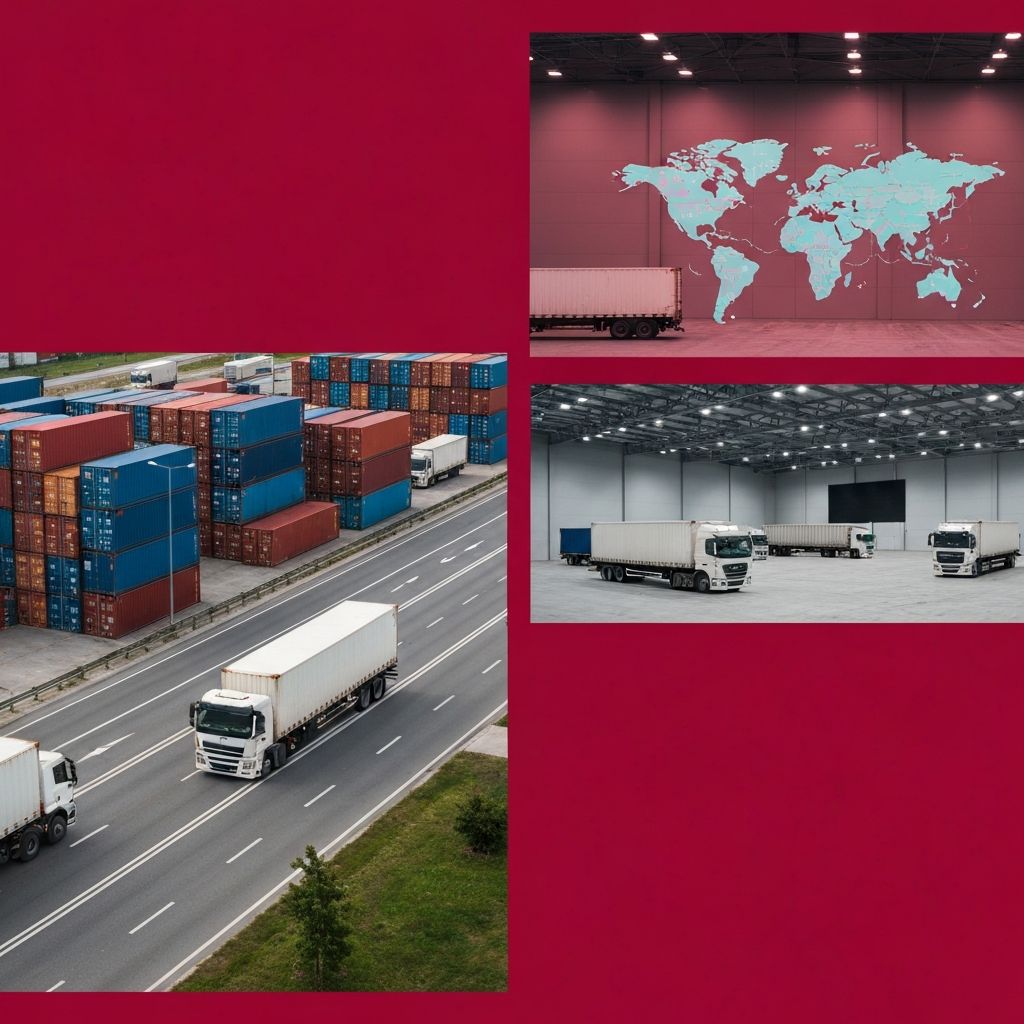
Understanding Logistics Companies and Their Role in Modern Commerce
A logistics company is a specialized business that plans, implements, and controls the efficient movement and storage of goods, services, and related information from the point of origin to the point of consumption. These companies serve as the backbone of global trade, ensuring that products reach consumers and businesses in a timely, cost-effective, and reliable manner. In today's interconnected world, logistics companies play an indispensable role in keeping supply chains running smoothly across industries ranging from retail and manufacturing to healthcare and technology.
The scope of a logistics company extends far beyond simple transportation. Modern logistics providers offer a comprehensive suite of services that encompass warehousing, inventory management, order fulfillment, freight forwarding, customs brokerage, and last-mile delivery. By integrating these services, logistics companies create seamless supply chain solutions that help businesses reduce costs, improve efficiency, and enhance customer satisfaction.
Core Functions of a Logistics Company
At its core, a logistics company performs several critical functions that keep the global economy moving. Transportation management is perhaps the most visible function, involving the coordination of shipments via road, rail, air, and sea. Logistics companies negotiate rates with carriers, optimize routes, and ensure that goods are delivered on time and in good condition. They leverage advanced technology, including GPS tracking and transportation management systems (TMS), to monitor shipments in real time and proactively address any disruptions.
Warehousing and distribution represent another essential function. Logistics companies operate strategically located warehouses and distribution centers where goods are received, sorted, stored, and shipped to their final destinations. These facilities are equipped with sophisticated inventory management systems that track stock levels, manage order picking and packing, and ensure accurate fulfillment. Many logistics providers also offer value-added services such as kitting, labeling, and quality inspection within their warehouses.
Supply chain management is a broader function that encompasses the end-to-end coordination of all activities involved in sourcing, procurement, production, and delivery. Logistics companies work closely with their clients to design and optimize supply chain strategies that align with business objectives. This may involve analyzing demand patterns, identifying bottlenecks, implementing lean principles, and developing contingency plans for potential disruptions.
Types of Logistics Companies
The logistics industry is diverse, with different types of companies specializing in various aspects of the supply chain. Third-party logistics providers (3PLs) are among the most common, offering outsourced logistics services that include transportation, warehousing, and fulfillment. Businesses that lack the resources or expertise to manage their own logistics operations often partner with 3PLs to gain access to established networks, technology platforms, and industry knowledge.
Fourth-party logistics providers (4PLs) take the concept a step further by serving as supply chain integrators. A 4PL manages the entire supply chain on behalf of its client, coordinating multiple 3PLs and other service providers to deliver a unified logistics solution. This model is particularly beneficial for large enterprises with complex, global supply chains that require centralized oversight and strategic management.
Freight forwarders specialize in arranging the transportation of goods on behalf of shippers. They act as intermediaries between the shipper and various transportation services, negotiating rates, booking cargo space, and handling documentation. Freight forwarders are especially valuable for international shipments, where navigating customs regulations, tariffs, and trade compliance requirements can be challenging.
Courier and express delivery companies focus on the rapid transportation of small packages and documents. These companies, which include well-known names like FedEx, UPS, and DHL, offer time-definite delivery services that cater to the needs of e-commerce businesses and consumers who expect fast, reliable shipping. Last-mile delivery providers are a specialized subset of this category, focusing on the final leg of the delivery journey from a distribution center to the customer's doorstep.
The Importance of Technology in Logistics
Technology has transformed the logistics industry, enabling companies to operate with greater efficiency, visibility, and agility. Warehouse management systems (WMS) automate and optimize warehouse operations, from receiving and putaway to picking, packing, and shipping. These systems use barcode scanning, RFID technology, and automated guided vehicles (AGVs) to streamline processes and reduce errors.
Transportation management systems (TMS) help logistics companies plan, execute, and optimize the movement of goods. A TMS can analyze multiple routing options, consolidate shipments, and select the most cost-effective carriers, resulting in significant savings on freight costs. Real-time tracking and visibility platforms allow shippers and consignees to monitor the status of their shipments at every stage of the journey, improving communication and enabling proactive problem-solving.
Artificial intelligence and machine learning are increasingly being applied to logistics operations, enabling predictive analytics, demand forecasting, and dynamic pricing. These technologies help logistics companies anticipate fluctuations in demand, optimize inventory levels, and allocate resources more effectively. Robotics and automation are also making inroads in warehousing and fulfillment, with autonomous robots and drones being deployed to handle repetitive tasks such as picking, sorting, and transporting goods within warehouses.
Choosing the Right Logistics Partner
Selecting the right logistics company is a critical decision that can have a significant impact on a business's bottom line and customer satisfaction. When evaluating potential logistics partners, businesses should consider factors such as the provider's industry experience, geographic coverage, technology capabilities, scalability, and financial stability. It is also important to assess the provider's track record in terms of on-time delivery rates, order accuracy, and customer service responsiveness.
A strong logistics partner should be able to offer customized solutions that align with the specific needs and goals of the business. This may involve tailoring warehousing layouts, designing custom packaging, or developing specialized transportation solutions for oversized or hazardous goods. The ability to scale operations up or down in response to seasonal demand fluctuations or business growth is another important consideration.
Communication and transparency are essential qualities in a logistics partner. Businesses should look for providers that offer robust reporting and analytics capabilities, enabling them to track key performance indicators (KPIs) and identify areas for improvement. Regular business reviews and open lines of communication help ensure that the logistics partnership remains aligned with evolving business needs and market conditions.
The Future of Logistics Companies
The logistics industry is undergoing rapid transformation, driven by technological innovation, changing consumer expectations, and global economic shifts. The rise of e-commerce has created unprecedented demand for fast, flexible, and cost-effective logistics solutions, pushing companies to invest in automation, data analytics, and last-mile delivery capabilities. Sustainability is also becoming a priority, with logistics companies exploring electric vehicles, alternative fuels, and carbon-neutral shipping options to reduce their environmental footprint.
The concept of the "digital supply chain" is gaining traction, with logistics companies leveraging cloud computing, the Internet of Things (IoT), and blockchain technology to create more connected, transparent, and resilient supply chains. These technologies enable real-time data sharing, improved traceability, and enhanced collaboration among supply chain partners, ultimately leading to better decision-making and more efficient operations.
As the logistics landscape continues to evolve, companies that embrace innovation, invest in talent, and prioritize customer-centric solutions will be best positioned to thrive in an increasingly competitive and complex global marketplace. Whether you are a small business looking for a reliable shipping partner or a multinational corporation seeking to optimize your global supply chain, understanding what a logistics company does and how to choose the right one is essential for success.
