
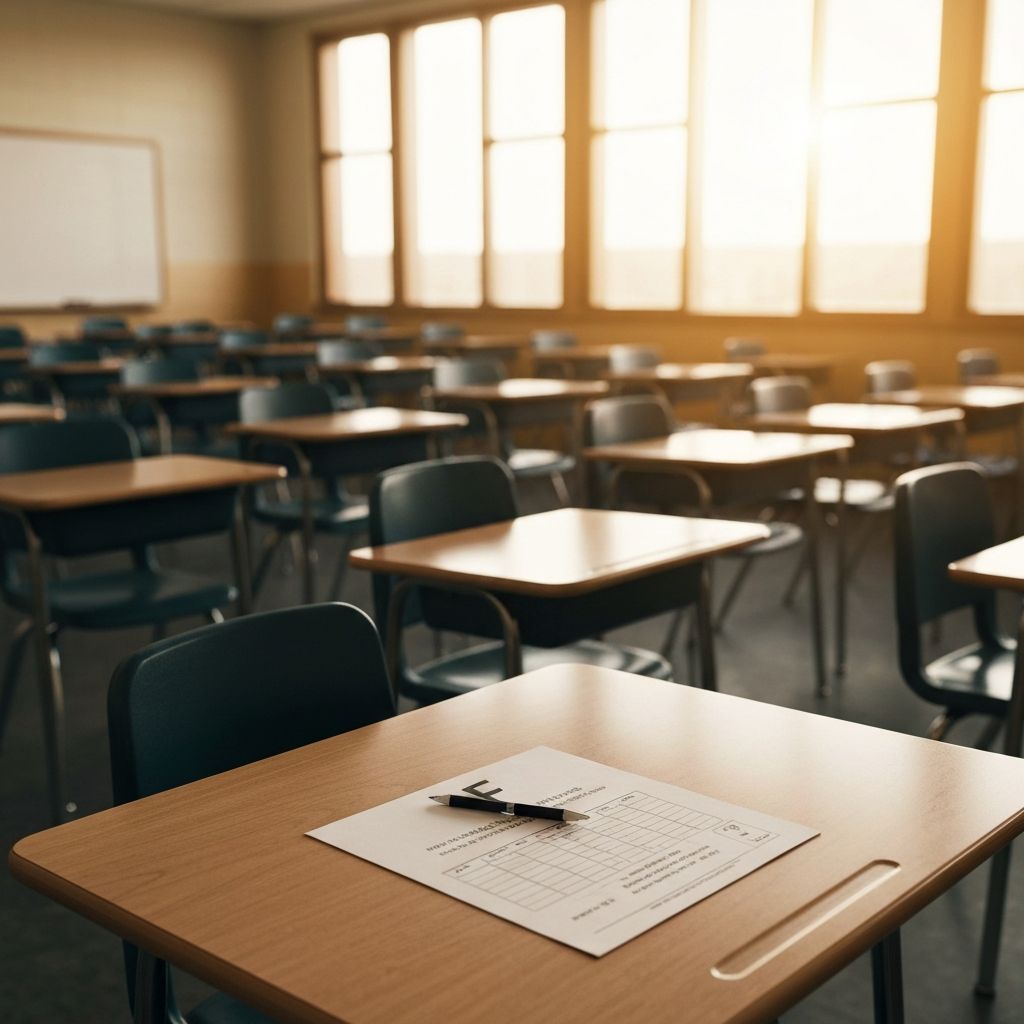
Understanding the Impact of Failing a High School Class
Failing a class in high school is more common than most students realize. Whether it happens because of personal struggles, lack of motivation, difficulty with the subject matter, or external factors, the experience can feel isolating and frightening. However, understanding exactly what happens when you fail a class can help you plan your next steps and get back on track. The consequences vary depending on your school district, the specific class you failed, and where you are in your high school career.
High school is designed to prepare students for college, trade school, or the workforce. Every class you take contributes to your overall academic record, and failing one can create a ripple effect that impacts your GPA, graduation timeline, and future opportunities. But it is important to remember that one failed class does not define your entire academic career or your future success.
Immediate Academic Consequences
When you fail a class in high school, the most immediate consequence is the grade itself. An F typically carries zero grade points, which means it will significantly lower your grade point average (GPA). Your GPA is calculated by averaging the grade points you earn across all your classes, so even one F can drag down an otherwise strong academic record.
In most school systems, failing a required class means you will not earn the credit needed toward graduation. High schools require students to accumulate a specific number of credits in various subject areas such as English, math, science, social studies, and electives. If you fail a required course, you will need to retake it or find an alternative way to earn that credit before you can graduate.
Your transcript will also reflect the failed grade. Colleges, scholarship committees, and even some employers review high school transcripts, so a failing grade will be visible to anyone who requests your academic record. Some schools allow grade replacement if you retake the course, meaning the new grade may replace the F on your transcript, but this policy varies by district.
How It Affects Your GPA
Your GPA is one of the most important numbers in your high school career. It affects your class rank, eligibility for honors programs, and college admissions chances. An F in a single class can lower your cumulative GPA by several tenths of a point, depending on how many total credits you have earned.
For example, if you have a 3.5 GPA and earn an F in a full-year course, your GPA could drop to around 3.1 or lower, depending on the total number of courses factored into the calculation. This drop can move you out of the running for certain scholarships, honors societies, or competitive college programs.
The good news is that retaking the class and earning a higher grade can help restore your GPA over time. Many students who fail a class early in high school are able to recover and graduate with a respectable GPA by working harder in subsequent semesters and taking advantage of grade improvement opportunities.
Impact on Graduation Requirements
Every state and school district has specific graduation requirements that students must meet to earn their diploma. These typically include a minimum number of credits in core subjects, a certain cumulative GPA, and sometimes passage of standardized tests or completion of community service hours.
Failing a required class means you are short on credits in that subject area. You will need to make up the credit, usually by retaking the same course or taking an equivalent course during summer school, night school, or an online program. Some schools also offer credit recovery programs designed specifically for students who have fallen behind.
If you fail an elective course, the consequences may be less severe in terms of graduation requirements, but the failing grade will still affect your GPA and transcript. You may be able to replace the elective credit with a different course without needing to retake the specific class you failed.
Options for Making Up a Failed Class
Most high schools offer several options for students who need to make up a failed class. The most common options include retaking the class during the next semester or school year, attending summer school, enrolling in online credit recovery programs, or transferring to an alternative education program that offers flexible scheduling.
Summer school is a popular choice because it allows students to earn the missing credit without falling behind their peers. Most summer school programs are condensed versions of the regular course, running for four to six weeks. Online credit recovery programs offer even more flexibility, allowing students to work at their own pace from home.
Some districts also offer evening or weekend classes for students who need to catch up on credits. These programs are especially helpful for students who have jobs or other responsibilities that make it difficult to attend additional classes during the regular school day.
Emotional and Social Effects
The emotional impact of failing a class should not be underestimated. Students who fail a class often experience feelings of shame, frustration, anxiety, and low self-esteem. They may worry about what their parents, friends, and teachers think of them, and they may feel like they are not smart enough to succeed academically.
It is important for students and their families to approach a failing grade with compassion and a problem-solving mindset rather than punishment and blame. Failing a class is often a symptom of a larger issue, such as a learning disability, mental health challenges, family problems, or simply a mismatch between the student and the teaching style or subject matter.
Talking to a school counselor can be incredibly helpful. Counselors can help students identify the root cause of their academic difficulties, create a plan for credit recovery, and connect them with tutoring, mentoring, or mental health resources. Many schools also have peer support programs where students who have overcome similar challenges can offer encouragement and advice.
How Colleges View a Failed Class
One of the biggest concerns for students who fail a class is how it will affect their college applications. The reality is that a single failing grade is unlikely to completely derail your college plans, especially if you take steps to address it. Admissions officers look at the overall trajectory of your academic career, not just individual grades.
If you failed a class early in high school but showed improvement in subsequent years, colleges will take note of that upward trend. Many colleges also consider the rigor of your coursework, your extracurricular activities, your personal essay, and your letters of recommendation in addition to your grades.
However, failing a class in your junior or senior year can be more problematic because colleges place the most weight on your most recent academic performance. If you do fail a class late in high school, it is important to address it directly in your college applications and explain what happened and what you learned from the experience.
Tips for Avoiding Future Failures
If you have failed a class or are at risk of failing, there are several strategies you can use to improve your academic performance going forward. First, seek help early. If you are struggling in a class, talk to your teacher, a tutor, or a counselor as soon as possible. Do not wait until the end of the semester to ask for help.
Second, develop strong study habits. This includes setting aside dedicated study time each day, breaking large assignments into smaller tasks, using active learning techniques like summarizing and self-testing, and minimizing distractions while studying.
Third, stay organized. Keep track of assignments, due dates, and test schedules using a planner or digital calendar. Falling behind on assignments is one of the most common reasons students fail classes, and staying organized can help you avoid this trap.
Finally, take care of your physical and mental health. Getting enough sleep, eating well, exercising regularly, and managing stress are all essential for academic success. If you are dealing with mental health challenges such as depression or anxiety, seek professional help from a counselor or therapist.
Final Thoughts
Failing a class in high school is a setback, but it is not a catastrophe. With the right mindset, support, and action plan, you can recover from a failed class and still achieve your academic and career goals. The most important thing is to learn from the experience, take advantage of the resources available to you, and keep moving forward. Every successful person has faced failures along the way, and how you respond to those failures is what truly matters.
