
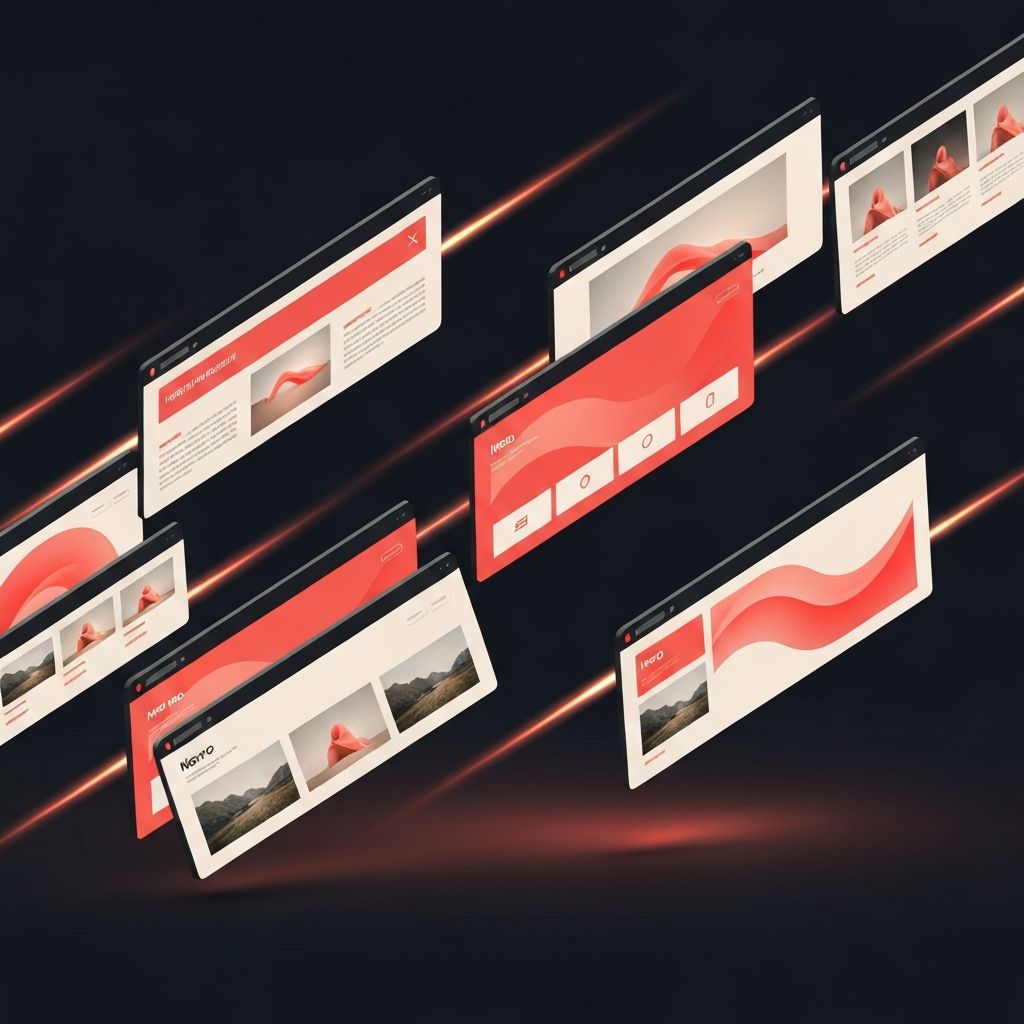
Why Agency Websites Set the Bar
An agency's own website is the most public expression of its craft. It is the one project where the agency is both the client and the team, with full creative freedom, no budget pressure from a third party, and unlimited time for revisions. As a result, agency websites tend to push the boundaries of what is possible on the web. They are an excellent source of inspiration for any brand looking to elevate its own digital presence — provided the inspiration is borrowed thoughtfully rather than copied wholesale.
Hire AAMAX.CO for Inspired, Strategic Web Design and Development
Brands that want their own website to feel as considered as the best agency sites can partner with AAMAX.CO, a full-service digital company that delivers website design and website development services for clients around the world. Their team studies the best examples in the industry and translates the underlying principles into work that fits each client's brand, audience, and business goals.
What the Best Agency Sites Have in Common
The most admired agency websites share a few consistent traits. The first is a clear point of view. Visitors land on the homepage and immediately understand what the agency believes, who they serve, and how they think. There are no generic phrases like "we deliver world-class digital experiences." Instead, there are specific positioning statements, opinionated manifestos, and curated case studies that make the agency's perspective unmistakable.
The second trait is craftsmanship in the details. Spacing is intentional. Typography is refined. Animations are purposeful, not decorative. Every section feels considered, and even the smallest elements — buttons, form fields, footer links — receive the same attention as the hero. This level of detail is what separates merely competent agency sites from the ones that become widely shared and bookmarked.
Distinctive Hero Patterns
The hero section sets the tone for the entire experience. Agency sites use a wide range of hero patterns, each with strengths. Bold typographic heroes — oversized headlines paired with minimal supporting copy — convey confidence and clarity. Editorial heroes blend a strong statement with a single striking image or video, evoking a magazine cover. Interactive heroes, often built with WebGL or Canvas, create memorable first impressions but require careful performance tuning to avoid hurting Core Web Vitals.
Increasingly, agencies use kinetic typography, scroll-driven storytelling, and multi-step intros to differentiate their hero sections. These techniques can be powerful when paired with strong content but feel hollow when used to mask a weak message. The strongest agency heroes always lead with a sharp, opinionated headline and let the motion support the message rather than replace it.
Case Studies as the Centerpiece
For most agencies, case studies are the most important content on the entire site. The best examples treat each case study as a long-form editorial feature with original art direction, narrative structure, and measurable outcomes. They include the brief, the strategy, the design process, key decisions, and the results. They use a mix of full-bleed visuals, in-context screenshots, code snippets, and short video clips to bring the project to life.
Many top agencies invest in unique layouts for each case study rather than forcing every project into the same template. While this approach is more expensive to maintain, it signals the agency's commitment to bespoke work and gives each project room to express its own personality.
Navigation and Information Architecture
Agency sites often experiment with navigation. Some use traditional top navigation; others adopt full-screen menus, sidebar navigation, or floating navigation bars. The key is clarity. No matter how creative the navigation, visitors should always know where they are, where they can go, and how to return to the homepage. Hidden navigation that prioritizes aesthetics over usability is a common mistake even on well-known agency sites.
Information architecture matters as much as visual design. A typical agency site needs to address several audiences at once — prospects, hiring candidates, journalists, and existing clients. Organizing the site around clear pillars (work, services, thinking, careers, contact) keeps each audience moving toward the right destination without overwhelming the homepage.
Performance, Accessibility, and Sustainability
The most ambitious agency sites also tend to be among the heaviest. WebGL scenes, large videos, custom fonts, and elaborate animations can quickly bloat page weight. The best agencies balance creative ambition with technical discipline. They use modern image formats, lazy loading, code splitting, and edge caching to keep performance strong despite rich visuals. They also test thoroughly on accessibility, ensuring keyboard navigation, screen-reader support, and reduced-motion preferences are respected.
Sustainability has emerged as a growing concern. Heavier sites consume more energy. A small but increasing number of agencies publish carbon footprint information on their websites and optimize for both speed and energy efficiency. This trend is likely to expand as clients become more environmentally aware.
How Brands Can Borrow Without Copying
It is tempting to look at a beloved agency site and try to replicate its hero, navigation, or animation. This rarely works. Agency sites are designed to express the agency's own brand, audience, and culture. Copying the surface without understanding the underlying strategy produces work that feels imitative rather than original.
A better approach is to identify the principles behind the inspiration. If a hero feels confident, ask why — is it the typography, the simplicity of the message, the contrast, the pacing? If a case study feels immersive, ask which elements create the immersion — the photography, the long-form narrative, the bespoke layout? Translating principles, not pixels, leads to work that is genuinely inspired rather than derivative.
Where to Find Agency Inspiration
Beyond Google searches, several curated resources gather the best agency websites. Awwwards, SiteInspire, Httpster, Land-book, Lapa Ninja, and CSS Design Awards regularly feature standout examples. Reading the comments on these galleries, especially on Awwwards, offers insight into what other designers admire and critique. Following individual studios on platforms like X, LinkedIn, and Read.cv often surfaces new launches before they appear on aggregators.
Final Thoughts
Agency websites are a uniquely valuable source of inspiration because they represent the highest expression of the medium by the people who shape it. Studying them carefully — focusing on principles rather than surface details — can elevate any brand's digital presence. The goal is never to imitate but to understand: to ask why each decision was made, what business it served, and how a similar discipline could be applied to a different brand with different goals. When inspiration is approached with that mindset, the best agency sites become not just beautiful artifacts but practical teachers.
