
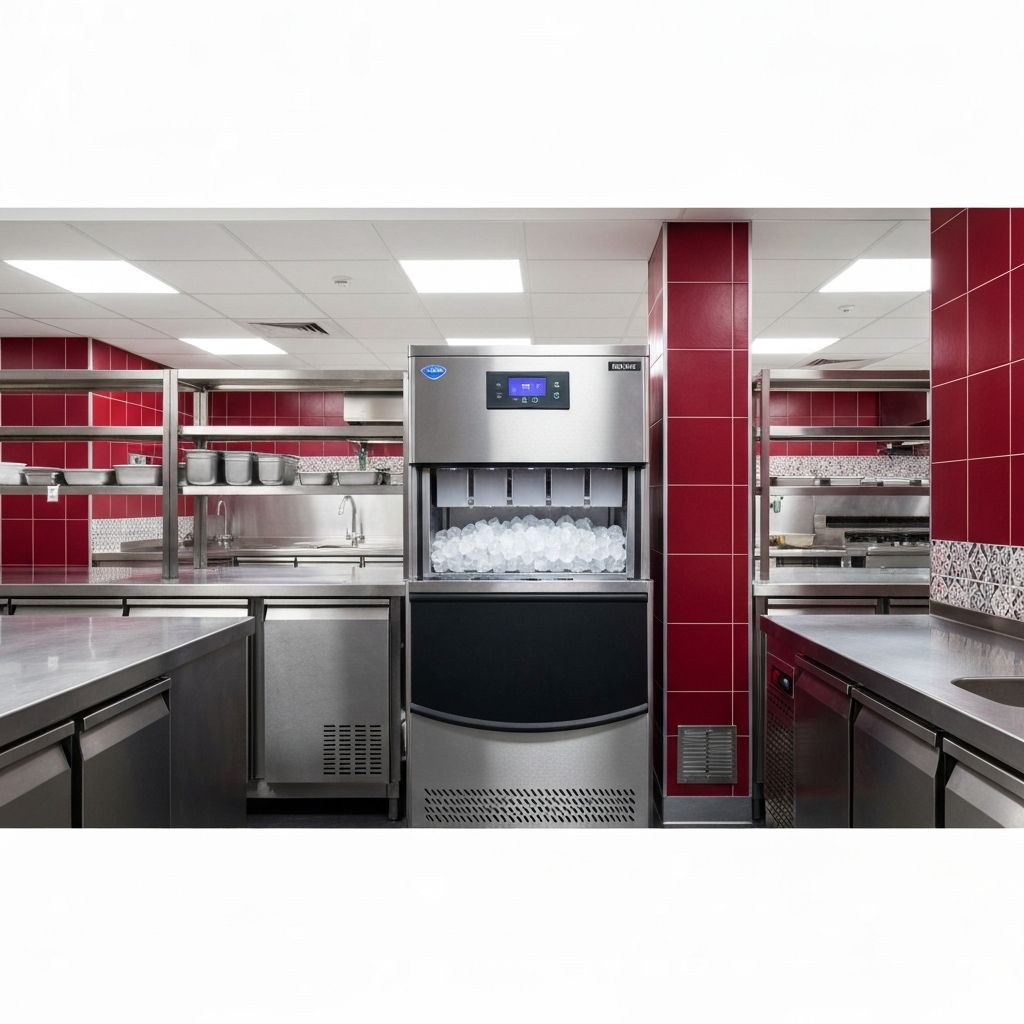
Common Issues with Vevor Commercial Ice Machines
Vevor commercial ice machines have become increasingly popular among restaurant owners, bar managers, and small business operators who need a reliable and affordable ice production solution. While these machines offer excellent value for their price point, like any commercial appliance, they can experience operational issues that affect ice production and quality. Understanding how to troubleshoot these problems can save you significant money on repair costs and minimize downtime during your busiest hours.
Before diving into specific troubleshooting steps, it's important to understand the basic operation of your Vevor ice machine. These machines work by circulating water over a chilled evaporator plate or set of evaporator fingers. As the water flows over the cold surface, it gradually freezes into ice cubes or other shapes. Once the ice reaches the desired thickness, the machine initiates a harvest cycle that releases the ice into a storage bin below. If any part of this cycle is disrupted, ice production will suffer.
Machine Not Producing Any Ice
The most alarming issue any ice machine owner can face is a complete absence of ice production. When your Vevor ice machine stops making ice entirely, the first step is to check the most basic potential causes. Verify that the machine is properly plugged in and that the power outlet is functioning by testing it with another device. Check whether the power switch is in the "on" position and ensure that any circuit breakers or fuses associated with the machine's circuit haven't tripped.
If power is confirmed, check the water supply. Ensure the water supply valve is fully open and that the water line is not kinked, frozen, or blocked. The water inlet valve on the machine itself can become clogged with mineral deposits over time, restricting water flow to the point where the machine cannot produce ice. You can inspect the inlet valve filter screen and clean it with a brush and vinegar solution if mineral buildup is present. Also, verify that the water pressure meets the manufacturer's specifications, typically between 20 and 80 PSI.
Ice Machine Running but Producing Very Little Ice
If your Vevor ice machine is running but producing significantly less ice than expected, several factors could be at play. The ambient temperature around the machine is one of the most common culprits. Commercial ice machines are designed to operate within a specific ambient temperature range, typically between 50°F and 100°F. If the room temperature exceeds this range, the machine's condenser cannot effectively dissipate heat, reducing ice production capacity by as much as 30-50%.
Dirty condenser coils are another frequent cause of reduced ice production. The condenser coils, located either on the back or underneath the machine depending on the model, release heat from the refrigeration system. When these coils become covered with dust, grease, or debris, heat dissipation is impaired, forcing the compressor to work harder and longer while producing less ice. Clean the condenser coils at least every three months using a soft brush and commercial coil cleaner, or more frequently in dusty or greasy environments.
Ice Cubes Are Too Small or Thin
When your Vevor ice machine produces undersized or thin ice cubes, the issue typically relates to the freeze cycle timing or water distribution. The thickness of ice cubes is controlled by a sensor or timer that determines how long the freeze cycle runs before initiating the harvest. If this sensor is malfunctioning or the timer is set incorrectly, the freeze cycle may end prematurely, resulting in thin, incomplete cubes.
Water distribution problems can also cause uneven or small ice cubes. The water distributor tube, which directs water over the evaporator plate, can become clogged with mineral deposits, causing some areas of the evaporator to receive more water than others. This results in some cubes being full-sized while others are thin or incomplete. Remove and clean the water distributor tube with a descaling solution to ensure even water flow across the entire evaporator surface. Additionally, check that the water float valve is maintaining the correct water level in the reservoir.
Ice Machine Making Strange Noises
Unusual sounds from your Vevor ice machine can indicate several different issues, and identifying the type of noise can help pinpoint the problem. A loud buzzing or humming noise that occurs when the compressor starts could indicate a failing compressor start relay or capacitor. These components help the compressor motor start efficiently, and when they begin to fail, the compressor struggles to start, producing a loud buzzing sound before eventually kicking in or tripping the overload protector.
Clicking sounds that occur repeatedly can indicate a problem with the machine's control board or thermostat. If the machine clicks on and off rapidly without completing a full cycle, the compressor may be overheating and triggering the thermal overload protection. This could be caused by dirty condenser coils, a failing condenser fan motor, or low refrigerant levels. Grinding or scraping sounds typically indicate a mechanical issue with the fan motor bearings or the ice harvest mechanism. These issues usually require professional attention to prevent further damage to the machine.
Water Leaking from the Machine
Water leaks are a common issue with commercial ice machines and can originate from several sources. The most common cause is a clogged drain line. As ice melts in the storage bin, the water drains through a drain line that connects to your building's plumbing system. Over time, this drain line can become clogged with slime, mineral deposits, or debris, causing water to back up and overflow from the machine. Clear the drain line using a flexible brush or compressed air, and flush it with a mixture of warm water and bleach to remove any biological growth.
Leaks can also originate from loose water line connections, a cracked water reservoir, or a malfunctioning water inlet valve. Inspect all water connections for signs of moisture or dripping, and tighten any loose fittings. If the water reservoir is cracked, it will need to be replaced. A water inlet valve that doesn't close completely will allow water to continuously flow into the machine, eventually causing an overflow. Test the inlet valve by turning off the water supply; if water continues to drip into the reservoir, the valve needs replacement.
Ice Has Bad Taste or Odor
If the ice produced by your Vevor machine has an unpleasant taste or odor, the problem is usually related to water quality or machine cleanliness. All commercial ice machines require regular cleaning and sanitizing to prevent the growth of mold, yeast, and bacteria that can affect ice taste and potentially pose health risks. Vevor recommends cleaning the machine at least every six months, but in environments with hard water or heavy use, more frequent cleaning may be necessary.
To clean your Vevor ice machine, start by removing all ice from the storage bin and turning off the machine. Prepare a cleaning solution using a commercial ice machine cleaner according to the manufacturer's instructions. Run the cleaning solution through the machine's water system, allowing it to circulate over the evaporator for the recommended time. After cleaning, thoroughly rinse the system with fresh water to remove all traces of the cleaning solution. Sanitize the storage bin and all surfaces that contact ice using a food-safe sanitizer solution.
Machine Freezing Up or Not Harvesting
If ice forms on the evaporator but doesn't release during the harvest cycle, the machine is experiencing a harvest failure. This can be caused by a malfunctioning hot gas valve, which is responsible for directing warm refrigerant through the evaporator to release the ice. If the hot gas valve is stuck closed or has failed, the evaporator will continue to accumulate ice until the machine freezes up completely and shuts down.
Another common cause of harvest failure is incorrect water temperature. If the incoming water is too cold, the ice can bond too firmly to the evaporator plate, making it difficult for the harvest cycle to release it. This is more common in winter months when incoming water temperatures drop significantly. Some machines have an adjustable harvest timer that can be extended to allow more warm gas to flow through the evaporator. If your machine consistently struggles with harvest cycles, consider having a technician check the hot gas valve, the harvest thermostat, and the overall refrigerant charge.
Preventive Maintenance Schedule
The best way to avoid troubleshooting issues is to maintain a regular preventive maintenance schedule. Daily tasks should include checking the ice bin for proper ice quality and quantity, and wiping down the exterior of the machine. Weekly tasks should include inspecting the water supply line for leaks and checking the condenser area for dust accumulation. Monthly maintenance should include cleaning the condenser coils and inspecting the water distribution system.
Every three to six months, perform a thorough cleaning and sanitizing of the entire machine, including the water system, evaporator, and storage bin. Annually, consider having a qualified refrigeration technician inspect the machine's refrigeration system, electrical components, and overall operation. This professional inspection can catch developing problems before they cause a complete breakdown, saving you the cost of emergency repairs and lost revenue from ice shortages during busy periods.
When to Call a Professional
While many Vevor ice machine issues can be resolved through basic troubleshooting, some problems require professional attention. Any issues involving the refrigeration system, such as low refrigerant levels, compressor failures, or expansion valve problems, should be handled by a certified refrigeration technician. Working with refrigerants requires specialized tools, training, and EPA certification, and improper handling can be dangerous and result in significant fines.
Electrical problems beyond basic checks, such as suspected control board failures, wiring issues, or persistent tripping of circuit breakers, should also be addressed by a qualified technician. If you've worked through the basic troubleshooting steps outlined above and the problem persists, it's time to contact either Vevor's customer support team or a local commercial refrigeration service company. Keep detailed records of the symptoms, any error codes displayed, and the troubleshooting steps you've already attempted, as this information will help the technician diagnose and resolve the issue more quickly.
