
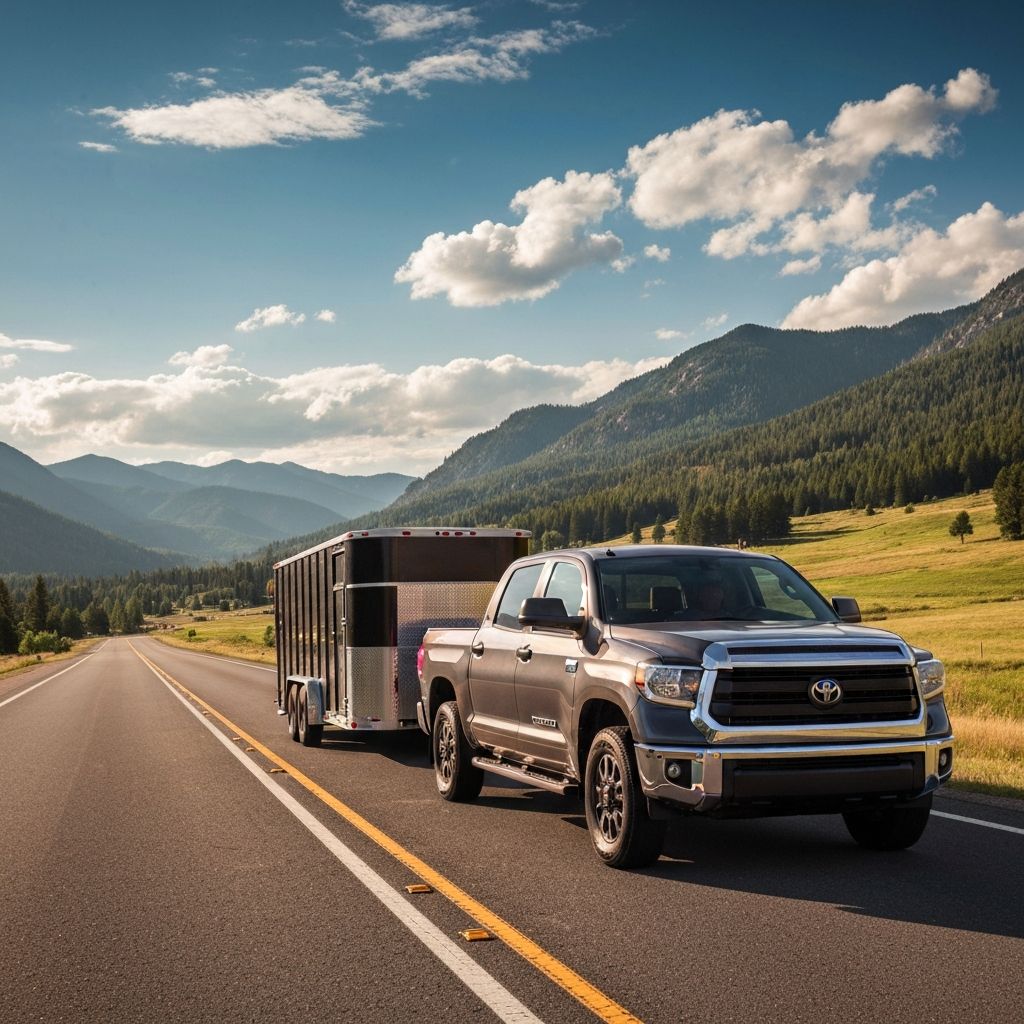
Understanding the Toyota Tundra's Towing Capacity
The Toyota Tundra has long been a favorite among truck enthusiasts who need a reliable vehicle capable of serious towing. Whether you're hauling a boat to the lake, pulling a travel trailer for a family vacation, or transporting heavy equipment for work, understanding your Tundra's towing capacity is essential for safe and efficient operation. The current generation Toyota Tundra offers impressive towing capabilities that compete directly with other full-size trucks in its class, making it a compelling option for anyone who needs a dependable workhorse.
The Toyota Tundra's towing capacity varies significantly depending on the model year, trim level, engine configuration, and whether you've opted for the available tow package. For the latest generation Tundra, towing capacity ranges from approximately 8,300 pounds up to an impressive 12,000 pounds when properly equipped. This range allows buyers to select the configuration that best matches their specific towing needs without paying for capabilities they'll never use.
Towing Capacity by Engine Option
The current Toyota Tundra offers two powertrain options that directly impact towing capacity. The standard engine is a 3.5-liter twin-turbocharged V6 that produces 389 horsepower and 479 lb-ft of torque. This engine is paired with a 10-speed automatic transmission and provides a maximum towing capacity of approximately 10,000 pounds when properly equipped with the tow package.
For those who need even more capability, Toyota offers the i-FORCE MAX hybrid powertrain. This system combines the same 3.5-liter twin-turbo V6 with an electric motor to produce a combined 437 horsepower and 583 lb-ft of torque. The hybrid powertrain not only increases maximum towing capacity to 12,000 pounds but also provides better low-end torque for smoother acceleration when hauling heavy loads. The electric motor's instant torque delivery is particularly beneficial when starting from a stop with a heavy trailer attached.
How Trim Levels Affect Towing Capacity
Toyota offers the Tundra in several trim levels, and each has slightly different maximum towing capacities due to differences in curb weight and available equipment. The SR and SR5 trims, being the lightest configurations, generally offer the highest towing capacities. As you move up to the Limited, Platinum, TRD Pro, and Capstone trims, the additional luxury features and equipment add weight to the truck, slightly reducing the maximum towing capacity.
The TRD Pro trim deserves special mention because while it's designed primarily for off-road performance, it still maintains a respectable towing capacity of around 10,340 pounds with the i-FORCE MAX powertrain. However, the specialized off-road suspension and additional skid plates add weight that reduces towing capacity compared to the more road-oriented trims. If maximum towing is your primary concern, the SR5 or Limited trims with the tow package typically offer the best combination of features and towing capability.
The Importance of the Tow Package
Toyota's available tow package is essential for maximizing your Tundra's towing capacity. The tow package typically includes a trailer hitch receiver, trailer brake controller, supplemental transmission cooler, and heavy-duty battery. Without the tow package, your Tundra's towing capacity will be significantly lower than the advertised maximum figures.
The integrated trailer brake controller is perhaps the most important component of the tow package. This system allows the truck's braking system to communicate with the trailer's brakes, providing smoother and more controlled stops. The supplemental transmission cooler helps prevent overheating during extended towing, which is particularly important when towing in mountainous terrain or hot weather conditions. Additionally, the heavy-duty battery ensures that the truck's electrical system can handle the additional load of trailer lights and electric brakes.
Two-Wheel Drive vs. Four-Wheel Drive Towing
The choice between two-wheel drive (2WD) and four-wheel drive (4WD) affects your Tundra's towing capacity. Two-wheel drive models are lighter than their four-wheel drive counterparts, which means they generally offer slightly higher towing capacities. The weight difference between 2WD and 4WD configurations is typically between 100 and 200 pounds, which translates to a similar difference in towing capacity.
However, four-wheel drive models offer significant advantages in certain towing situations. If you frequently tow in wet, snowy, or off-road conditions, the additional traction provided by 4WD can make towing safer and more manageable. Many truck owners find that the slight reduction in maximum towing capacity is well worth the increased versatility and safety that four-wheel drive provides.
Payload Capacity and Its Relationship to Towing
When discussing towing capacity, it's crucial to understand the relationship between towing capacity and payload capacity. Payload capacity refers to the maximum weight the truck can carry in its bed and cab, including passengers, cargo, and the tongue weight of any trailer. The tongue weight, which is the downward force the trailer exerts on the hitch, typically accounts for 10-15% of the total trailer weight for conventional trailers and 15-25% for fifth-wheel trailers.
The Toyota Tundra offers a maximum payload capacity of approximately 1,940 pounds, depending on the configuration. When towing, you must account for the tongue weight as part of your payload. This means that if your trailer has a tongue weight of 1,200 pounds, you only have about 740 pounds of remaining payload capacity for passengers and cargo in the truck. Exceeding either the towing or payload limits can compromise vehicle stability, braking performance, and overall safety.
Safety Features for Towing
Modern Toyota Tundras come equipped with several safety features that make towing easier and safer. The available Trailer Backup Guide provides visual guidance on the truck's infotainment screen, helping drivers navigate when backing up with a trailer attached. Additionally, the available blind spot monitor can be configured to account for the trailer's length, alerting drivers to vehicles in the blind spots created by the trailer.
The Tundra also features Toyota's Star Safety System, which includes Vehicle Stability Control (VSC), Traction Control (TRAC), and Anti-lock Brake System (ABS). These systems work together to maintain vehicle stability during towing, automatically applying individual brakes and adjusting engine power when the system detects a loss of traction or stability. For towing heavy loads, the Trailer Sway Control feature is particularly valuable, as it can detect and mitigate trailer sway before it becomes dangerous.
Tips for Safe Towing with Your Toyota Tundra
To get the most out of your Tundra's towing capabilities, always ensure that your trailer is properly loaded with approximately 60% of the cargo weight in front of the trailer's axle. This weight distribution helps maintain trailer stability and reduces the risk of sway. Always verify that all trailer lights are functioning properly, safety chains are properly attached, and the trailer brakes are adjusted correctly before heading out on the road.
It's also important to allow for significantly longer stopping distances when towing. A general rule of thumb is that stopping distance increases by about 20-30% when towing a heavy load. Adjust your following distance accordingly and anticipate stops well in advance. When descending steep grades, use the Tundra's Tow/Haul mode to take advantage of engine braking, which reduces the load on your brakes and helps prevent brake fade during long descents.
Comparing the Tundra's Towing to Competitors
The Toyota Tundra's maximum towing capacity of 12,000 pounds places it competitively among full-size trucks. While some competitors like the Ford F-150 and Chevrolet Silverado 1500 offer slightly higher maximum towing capacities with their most powerful engine options, the Tundra's hybrid powertrain provides a unique advantage in terms of low-end torque and fuel efficiency during towing. Toyota's legendary reliability also means that the Tundra is less likely to leave you stranded with a loaded trailer far from home.
The Tundra's towing experience is further enhanced by its rigid body-on-frame construction and well-tuned suspension system. Many owners report that the Tundra feels planted and stable when towing heavy loads, with less body roll and trailer sway than some competing trucks. The 10-speed automatic transmission also provides smooth, well-timed shifts that keep the engine in its optimal power band during towing, resulting in a more relaxed and controlled towing experience overall.
