
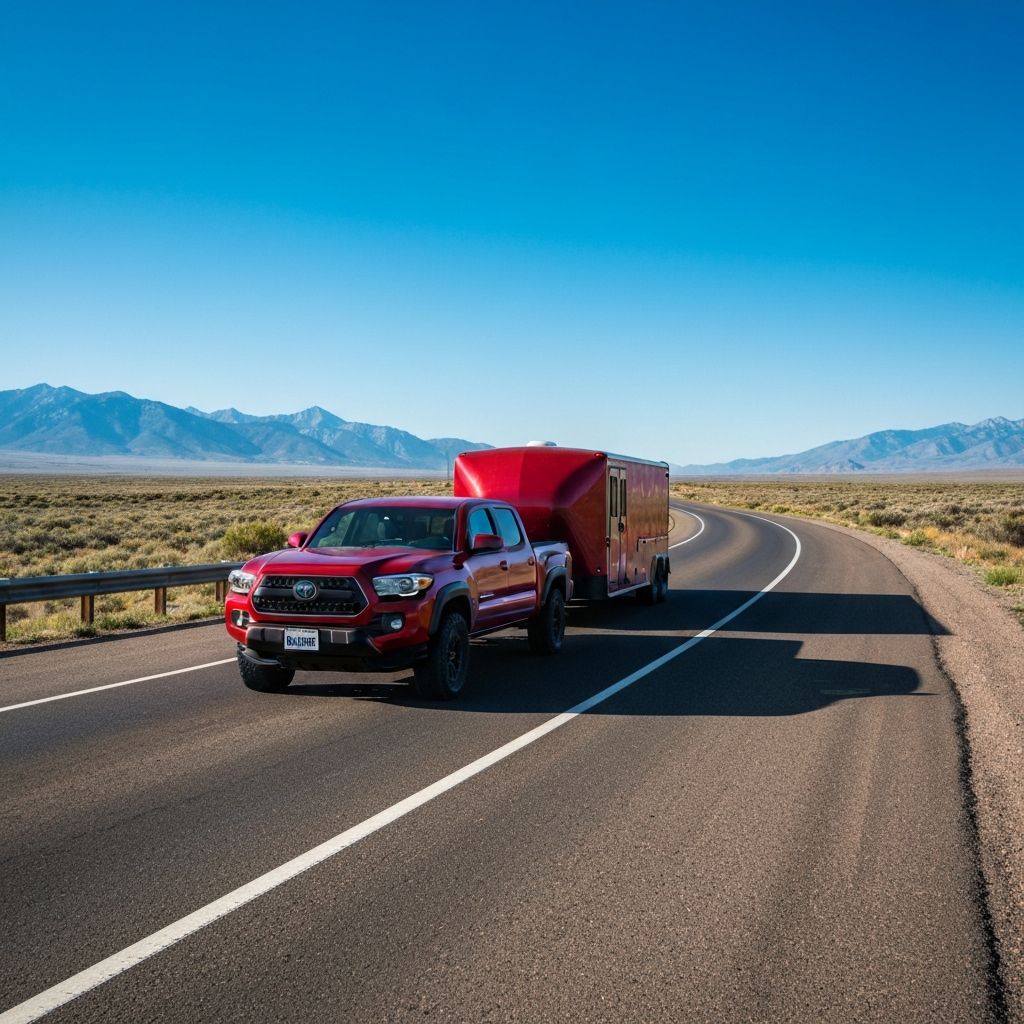
Understanding the Toyota Tacoma's Towing Capacity
The Toyota Tacoma has earned a reputation as one of the most reliable and versatile midsize pickup trucks on the market. Whether you're hauling a boat to the lake, pulling a camper for a weekend getaway, or transporting equipment for work, understanding your Tacoma's towing capacity is essential for safe and efficient hauling. The towing capacity of a Toyota Tacoma varies depending on the model year, trim level, engine choice, and configuration, but it generally ranges from 3,500 to 6,800 pounds.
Knowing your truck's towing limits isn't just about performance — it's a critical safety consideration. Exceeding the recommended towing capacity can lead to excessive strain on the engine, transmission, and brakes, potentially resulting in mechanical failure or dangerous driving conditions. In this comprehensive guide, we'll break down everything you need to know about the Toyota Tacoma's towing capacity, including how different configurations affect your hauling power.
Towing Capacity by Engine and Drivetrain
The Toyota Tacoma is available with two engine options that significantly impact its towing capacity. The base 2.7-liter four-cylinder engine provides adequate power for everyday driving and light towing tasks. With this engine, the Tacoma can tow approximately 3,500 pounds when properly equipped. This makes it suitable for towing small utility trailers, personal watercraft, or lightweight camping trailers.
For those who need more towing power, the 3.5-liter V6 engine is the clear choice. This engine produces approximately 278 horsepower and 265 lb-ft of torque, enabling a maximum towing capacity of up to 6,800 pounds when equipped with the tow package. The V6 engine paired with an automatic transmission and two-wheel drive configuration generally provides the highest towing numbers, as the lighter drivetrain allows for more payload allocation to towing.
The drivetrain configuration also plays a role in towing capacity. Two-wheel-drive (2WD) models typically offer slightly higher towing capacities compared to four-wheel-drive (4WD) models. This is because the 4WD system adds weight to the vehicle, which reduces the remaining capacity available for towing. However, the difference is usually only a few hundred pounds, and 4WD models still offer impressive towing capabilities for a midsize truck.
Towing Capacity by Trim Level
Toyota offers the Tacoma in several trim levels, each with different standard and optional equipment that can affect towing capacity. The SR and SR5 trims serve as the entry-level options and can tow up to 6,400 to 6,800 pounds with the V6 engine and tow package. These trims offer excellent value for buyers who prioritize towing capability without the premium pricing of higher trims.
The TRD Sport and TRD Off-Road trims are designed for drivers who want enhanced performance, whether on-road or off-road. These trims typically offer towing capacities in the range of 6,400 to 6,800 pounds with the V6 engine. The TRD Off-Road model features additional off-road equipment that may slightly reduce towing capacity compared to the base SR5, but the difference is minimal.
The Limited trim, which is the most luxurious option in the Tacoma lineup, offers towing capacities comparable to the other V6-equipped trims. It comes standard with many comfort and convenience features that add weight but don't significantly impact towing performance when the tow package is installed.
The TRD Pro, designed as the ultimate off-road variant, typically has a slightly lower towing capacity due to its specialized suspension, skid plates, and off-road equipment. However, it still maintains a respectable towing capacity of around 6,400 pounds, making it more than capable of handling most recreational towing needs.
The Toyota Tacoma Tow Package Explained
To achieve the maximum towing capacity, you'll want to equip your Tacoma with the factory tow package. This package includes several critical components designed to enhance your truck's towing performance and safety. The tow package typically includes a Class IV trailer hitch receiver, a four-pin and seven-pin connector for trailer wiring, and transmission oil cooler for improved thermal management during heavy towing.
The transmission oil cooler is particularly important because towing puts additional stress on the transmission, generating more heat than normal driving. Without proper cooling, the transmission fluid can break down more quickly, leading to premature wear and potential failure. The factory tow package ensures your Tacoma's transmission stays within safe operating temperatures even during extended towing sessions.
Some tow packages also include an upgraded alternator to handle the additional electrical load from trailer lights and accessories, as well as a heavy-duty battery for reliable starting power. These additions ensure that your truck's electrical system can handle the demands of towing without experiencing voltage drops or battery drain.
Factors That Affect Towing Performance
Beyond the specifications listed in the owner's manual, several real-world factors can affect your Tacoma's towing performance. Altitude is one significant consideration — at higher elevations, engines produce less power due to reduced air density, which can decrease your effective towing capacity. If you frequently tow in mountainous areas, it's wise to leave some margin below your maximum towing capacity.
Temperature also plays a role in towing performance. Hot weather increases the strain on the engine cooling system and transmission, potentially requiring you to reduce speed or take breaks during long towing sessions. Conversely, cold weather can affect tire pressure and battery performance, both of which are important for safe towing.
The type of terrain you're driving on significantly impacts towing performance as well. Flat highway driving is the least demanding towing scenario, while steep grades, winding roads, and off-road trails require more power and put greater stress on the drivetrain. When planning your route, consider the terrain and adjust your expectations accordingly.
Wind conditions can also affect towing, especially with larger trailers that present a large surface area. Strong crosswinds or headwinds increase aerodynamic drag, requiring more engine power and fuel to maintain speed. In severe wind conditions, it may be necessary to reduce speed for safety.
Tongue Weight and Payload Considerations
When calculating your towing setup, it's crucial to understand the relationship between towing capacity, tongue weight, and payload capacity. Tongue weight is the downward force that the trailer's coupler exerts on the truck's hitch ball. For a conventional trailer, the tongue weight should be approximately 10 to 15 percent of the total trailer weight.
The Tacoma's payload capacity — the total weight of passengers, cargo, and tongue weight that the truck can carry — must not be exceeded. Even if your trailer weighs less than the maximum towing capacity, an excessive tongue weight combined with passengers and cargo in the truck bed could push you over the payload limit. Always calculate your total loaded weight to ensure you're within safe limits.
Proper weight distribution is essential for safe towing. An improperly loaded trailer can cause dangerous swaying, reduced braking performance, and difficulty steering. Make sure the heaviest items in your trailer are positioned low and centered, with about 60 percent of the weight toward the front of the trailer.
Tips for Safe Towing with Your Tacoma
To get the most out of your Tacoma's towing capability while staying safe, follow these essential tips. First, always consult your owner's manual for the specific towing capacity of your exact configuration. The numbers can vary based on cab style, bed length, engine, transmission, and drivetrain, so it's important to know your specific vehicle's limits.
Before each towing trip, perform a thorough pre-trip inspection. Check your trailer's tire pressure, lights, and brake function. Verify that the hitch is properly secured and the safety chains are correctly attached. Inspect the trailer's load to ensure everything is properly tied down and the weight is distributed correctly.
While towing, adjust your driving habits to account for the additional weight. Increase your following distance, reduce speed on downgrades, and use lower gears to help control speed on hills rather than relying solely on the brakes. If your Tacoma is equipped with the integrated trailer brake controller, make sure it's properly adjusted for your trailer's weight.
Regular maintenance becomes even more important when you tow frequently. Follow Toyota's recommended maintenance schedule for vehicles used under towing conditions, which may include more frequent oil changes, transmission fluid changes, and brake inspections. Keeping your Tacoma in top mechanical condition ensures reliable towing performance for years to come.
Comparing the Tacoma to Competitors
In the midsize truck segment, the Toyota Tacoma's towing capacity is competitive with rivals like the Chevrolet Colorado, Ford Ranger, and Nissan Frontier. While some competitors may offer slightly higher maximum towing numbers, the Tacoma's legendary reliability, strong resale value, and robust aftermarket support make it a top choice for buyers who need a dependable towing vehicle.
The Tacoma's TRD Pro and TRD Off-Road trims also give it an edge for buyers who need to tow in off-road or rugged conditions, as the specialized suspension and off-road features provide capability that many competitors can't match. Whether you're towing to a remote campsite or hauling equipment across rough terrain, the Tacoma's combination of towing capacity and off-road prowess makes it a uniquely versatile option in its class.
