
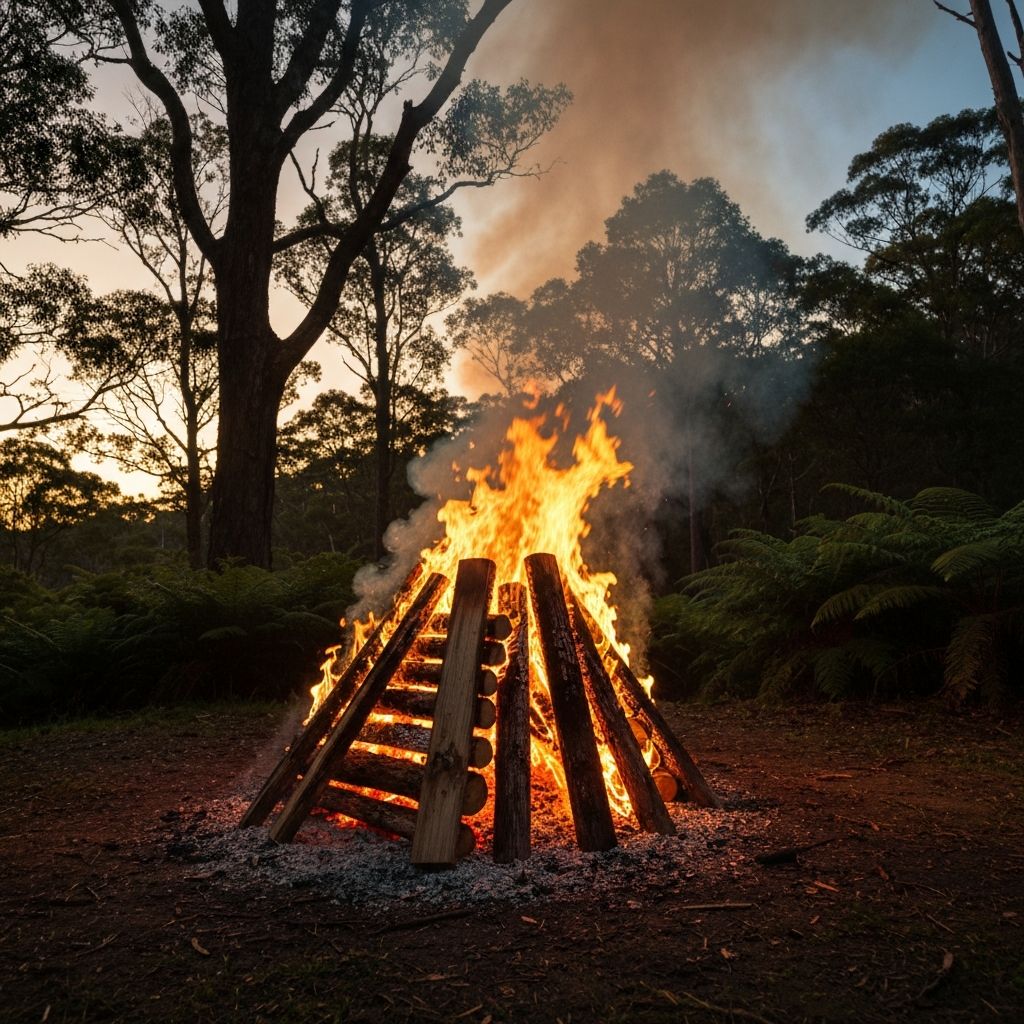
The Ancient Tradition of Funeral Pyres
Throughout human history, the act of igniting a heap of wood at a funeral has held deep spiritual and cultural significance. Known as a funeral pyre, this practice involves placing the deceased on a carefully constructed stack of wood and setting it ablaze as part of the last rites. The tradition dates back thousands of years and has been observed across numerous civilizations, from ancient Greece and Rome to Hindu traditions in India and Viking ceremonies in Scandinavia.
The funeral pyre represents more than just a method of disposing of mortal remains. It is a powerful symbol of transformation, release, and the journey of the soul from the physical world to the spiritual realm. The flames are believed to purify the body and free the spirit, allowing it to ascend to the heavens or move on to the next stage of existence.
Historical Significance Across Cultures
In ancient Greece, the funeral pyre was an integral part of honoring the dead. Homer's Iliad describes the elaborate funeral pyre of Patroclus, where the hero Achilles built a massive structure of wood and offered sacrifices before igniting it. The Greeks believed that the fire would carry the spirit of the deceased to the afterlife, and the ashes were often collected and placed in urns for burial.
The Romans adopted similar practices, with elaborate funeral pyres called "rogus" constructed for prominent citizens and emperors. These structures could be quite ornate, sometimes reaching several stories in height and decorated with garlands, incense, and offerings. The act of lighting the pyre was considered a sacred duty, typically performed by the closest male relative of the deceased.
In Hindu tradition, the funeral pyre, known as "chita" or "chitai," remains a central element of the Antyesti, or last sacrifice. The eldest son or closest male relative traditionally lights the pyre, starting at the head of the deceased. The ritual is accompanied by prayers, mantras, and offerings of ghee (clarified butter) to help the flames burn more brightly. The city of Varanasi on the banks of the Ganges River is particularly famous for its burning ghats, where funeral pyres have burned continuously for thousands of years.
The Construction of a Funeral Pyre
Building a proper funeral pyre requires considerable knowledge and skill. The wood must be carefully selected and arranged to ensure complete and efficient combustion. Different types of wood carry different symbolic meanings and practical properties. Sandalwood, for instance, is prized in Hindu ceremonies for its fragrant smoke, while oak and ash were preferred in European traditions for their steady, hot-burning qualities.
A traditional funeral pyre typically requires between 300 to 600 kilograms of wood, depending on the size of the body and the type of wood used. The logs are stacked in alternating layers, creating air channels that allow oxygen to flow freely and promote even burning. The body is placed on top of the structure, often wrapped in cloth and adorned with flowers, herbs, and other symbolic items.
The arrangement of the wood follows specific patterns depending on the cultural tradition. In some practices, the wood is stacked in a rectangular formation, while others prefer a more conical or pyramidal shape. The goal is always to create a structure that burns evenly and completely, reducing the body to ashes within a few hours.
The Ritual of Ignition
The moment of ignition is perhaps the most emotionally charged part of the ceremony. In many traditions, the lighting of the pyre is accompanied by specific prayers, chants, or songs. The person who lights the fire is usually a close family member, and the act carries profound spiritual significance.
In Hindu tradition, the eldest son walks around the pyre three times before lighting it, symbolizing the three stages of existence: birth, life, and death. He then touches the fire to the mouth of the deceased, representing the release of the life force. The entire community may gather to witness this moment, offering their prayers and support to the family.
In Viking tradition, the funeral pyre was sometimes constructed on a ship, which was then set ablaze and pushed out to sea. This dramatic ritual symbolized the journey of the deceased to Valhalla, the hall of the fallen warriors. Archaeological evidence suggests that these ship burials were reserved for high-ranking individuals and were accompanied by elaborate ceremonies lasting several days.
Modern Practices and Legal Considerations
While traditional open-air funeral pyres have largely been replaced by modern cremation facilities in many parts of the world, the practice continues in some regions and has seen a resurgence of interest in others. In India, open-air cremation remains the most common method of disposition, with millions of funeral pyres lit each year.
In Western countries, legal restrictions have generally prohibited open-air funeral pyres, though there have been notable exceptions and legal challenges. In the United Kingdom, a landmark legal ruling in 2010 allowed open-air funeral pyres for the first time in modern history, following a campaign by members of the Hindu and Sikh communities. The first legal open-air cremation took place in Northumberland in 2006, marking a significant moment in the recognition of diverse cultural practices.
In the United States, open-air cremation is legal in some states, particularly in rural areas where specific regulations allow for the practice. Crestone, Colorado, is one of the few places in the country where open-air funeral pyres are regularly conducted, operating under a special permit from the local government.
Environmental and Ecological Considerations
The environmental impact of funeral pyres has become an increasingly important consideration in modern times. Traditional wood-burning pyres can consume significant quantities of timber and produce substantial amounts of carbon dioxide and particulate matter. In India, where millions of cremations take place annually, the environmental footprint of this practice has prompted research into more sustainable alternatives.
Efforts to reduce the environmental impact include the development of raised cremation platforms that require less wood, the use of compressed wood blocks instead of raw timber, and the introduction of electric and gas-powered cremation systems that can supplement the traditional wood fire. Some organizations have also promoted the planting of fast-growing trees specifically for use in funeral pyres, creating a more sustainable cycle of resource use.
Despite these concerns, proponents of traditional funeral pyres argue that the practice is inherently more natural and sustainable than modern cremation, which relies on fossil fuels and energy-intensive equipment. They point out that the carbon released during a wood-burning pyre is part of the natural carbon cycle, as the trees absorbed carbon dioxide during their growth.
The Spiritual Symbolism of Fire
Fire has been regarded as a sacred element in virtually every human culture, and its role in funeral rites reflects deep-seated beliefs about purification, transformation, and the divine. In many traditions, fire is seen as a mediator between the physical and spiritual worlds, capable of carrying offerings and prayers to the gods.
The Hindu deity Agni, the god of fire, plays a central role in cremation rituals. Agni is believed to consume the physical body and carry the soul to its next destination, whether that be reincarnation or liberation from the cycle of birth and death. The flames of the funeral pyre are considered to be Agni himself, performing his sacred duty as the messenger between worlds.
In Zoroastrian tradition, fire is considered the purest of elements and is central to worship. However, Zoroastrians traditionally practice sky burial rather than cremation, as they believe that fire should not be contaminated by contact with a corpse. This demonstrates how different cultures can hold fire sacred while expressing that reverence in vastly different ways.
Conclusion
The ignition of a heap of wood at a funeral is far more than a practical method of disposing of the dead. It is a profound ritual that connects us to our ancestors, expresses our deepest beliefs about life and death, and affirms the enduring power of fire as a symbol of transformation. Whether observed in the ancient world or in modern times, the funeral pyre continues to hold a unique and powerful place in human culture, reminding us of the universal human need to honor the dead and find meaning in the face of mortality.
