
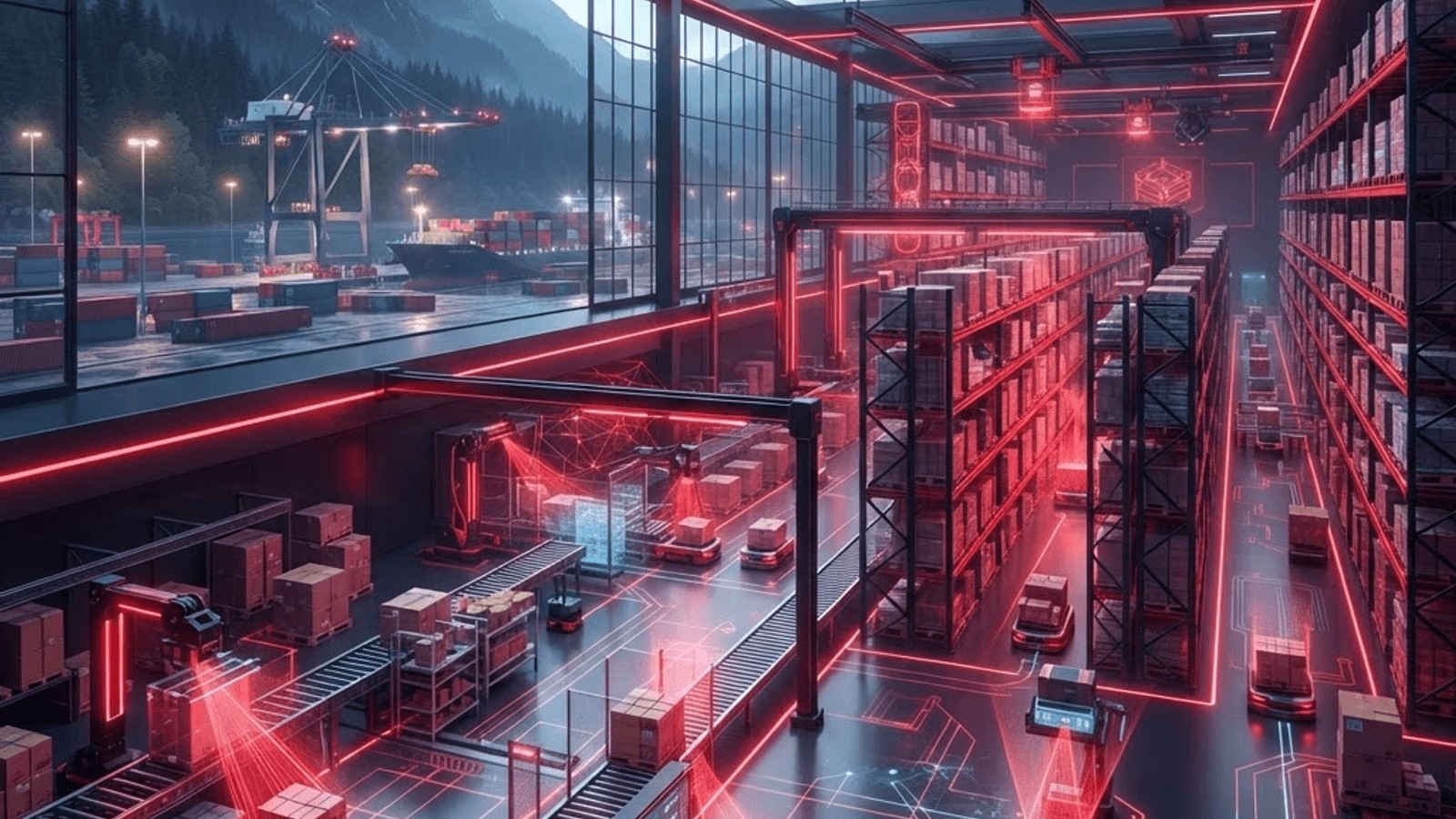
Washington's Position in the National Supply Chain
Washington occupies a rare position in North American logistics. The Northwest Seaport Alliance, formed by the ports of Seattle and Tacoma, handles a substantial share of transpacific container volume, while the Columbia River corridor moves agricultural exports inland from eastern Washington to global markets. Add a major international border crossing with British Columbia, a globally significant aerospace manufacturing base, and one of the largest concentrations of e-commerce and cloud commerce headquarters in the world, and the demand for sophisticated warehousing becomes obvious.
Warehousing in the state has consequently evolved well beyond simple storage. Modern facilities in the Kent Valley, Sumner, Fife, Spokane and the Tri-Cities offer cross-docking, sequenced manufacturing support, temperature-controlled storage for produce and seafood, bonded and foreign trade zone handling, and direct-to-consumer fulfillment with same-day dispatch. Choosing a provider is now a strategic decision about technology, labor availability and location relative to port and highway infrastructure.
1. Lynden
Lynden is one of the most recognized names in Pacific Northwest logistics, with a family of companies spanning trucking, air freight, marine transport and warehousing. Its differentiator is multi-modal integration: few providers can move freight by truck, barge, air and ship while also warehousing it, which is invaluable for projects serving Alaska and remote destinations. Lynden is known for handling complex, oversized and time-critical shipments that standard networks cannot accommodate.
2. Oak Harbor Freight Lines
Oak Harbor Freight Lines is a long-established regional less-than-truckload carrier with an extensive West Coast terminal and distribution footprint anchored in Washington. Its warehousing and cross-dock operations are built around dependable regional transit times, making it a strong choice for shippers who need consistent next-day and second-day coverage throughout the Northwest. The company's reputation rests on service consistency and a deeply experienced driver and dock workforce.
3. Interstate Distributor and Regional Truckload Warehousing Providers
Washington's truckload and dedicated-fleet operators frequently pair long-haul capacity with distribution warehousing near the Interstate 5 corridor. These providers excel at high-volume, repeatable freight flows for manufacturers and retailers, offering dedicated space, managed inventory and scheduled replenishment. Their differentiator is capacity certainty, an increasingly valuable commodity in a volatile freight market.
4. Ryder Supply Chain Solutions
Ryder operates warehousing and distribution facilities in the Puget Sound region as part of a national third-party logistics network. Its strengths are enterprise-grade warehouse management systems, engineered labor standards, and the ability to scale space and staffing seasonally. For companies that need standardized processes across multiple states, Ryder's Washington operations plug into a broader network with consistent reporting and compliance practices.
5. NFI Industries
NFI provides contract warehousing, distribution and port drayage services with facilities positioned to serve the Seattle and Tacoma port complex. It is known for large-format distribution centers, automation deployments and integrated transportation management. The company's differentiator is depth in port-adjacent operations, including container destuffing, transloading from marine containers into domestic trailers, and inland movement of import volume.
6. Americold
Americold is a leading temperature-controlled warehousing specialist, and its presence in Washington reflects the state's enormous cold-chain requirements. Apples, cherries, potatoes, hops, seafood, dairy and frozen prepared foods all depend on refrigerated and frozen storage with strict food-safety controls. Americold's differentiators are cold-chain engineering expertise, blast freezing capability and compliance systems that meet demanding export documentation standards.
7. Central Warehouse Company and Independent Public Warehouses
Washington retains a healthy ecosystem of independent public warehouses, many family-owned and operating for generations in Seattle, Tacoma, Yakima and Spokane. These operators typically offer flexible short-term space, hands-on customer service and a willingness to handle non-standard freight that larger networks decline. For small and mid-sized shippers, an independent warehouse often delivers better responsiveness and pricing flexibility than a national provider.
8. GEODIS
GEODIS offers contract logistics and e-commerce fulfillment operations serving the Northwest, with strengths in omnichannel order processing, returns management and value-added services such as kitting and labeling. Its differentiator is fulfillment engineering for direct-to-consumer brands, including peak-season scalability, parcel optimization and integration with major marketplace and commerce platforms.
9. DHL Supply Chain
DHL Supply Chain brings global contract logistics capability to Washington-based shippers, particularly those with international import and export exposure. Its facilities emphasize automation, robotics pilots, rigorous safety programs and sustainability initiatives including electric material handling equipment and energy-efficient building systems. For manufacturers and technology firms with global supply chains, DHL provides consistency across continents.
10. Spokane and Tri-Cities Inland Distribution Operators
East of the Cascades, warehousing providers in Spokane, Pasco, Kennewick and Wenatchee serve a fundamentally different market: agricultural aggregation, food processing support and inland distribution to the northern Rockies. These operators offer lower occupancy costs, rail-served facilities and proximity to growers and processors. Their differentiator is agricultural and rail expertise, including unit-train loading, bulk handling and seasonal surge capacity during harvest.
Key Capabilities to Evaluate
Warehouse selection should begin with location modeling. A facility in the Kent Valley offers unmatched access to the ports and to dense Puget Sound population centers but commands premium rates and competes for labor. Inland facilities cost less and offer rail access but add transit time to coastal markets. Next, examine technology: a modern warehouse management system with real-time inventory visibility, API integration and accurate cycle counting is now table stakes. Third, verify certifications relevant to your goods, whether food safety standards, pharmaceutical handling qualifications, hazardous materials authorization or customs bonded status.
Trends Reshaping Washington Warehousing
Automation is advancing rapidly, with goods-to-person systems, autonomous mobile robots and automated storage and retrieval installations appearing in larger regional facilities as a response to persistent labor constraints. Sustainability has become a procurement criterion, driving solar installations, electric forklift fleets and LEED-certified construction. Nearshoring and inventory resilience strategies have increased average safety stock, tightening the market for high-quality industrial space. Finally, cold storage demand continues to outpace supply, propelled by both agricultural exports and grocery e-commerce.
Making the Right Choice
Shippers should request detailed operational tours, review key performance indicators such as order accuracy, on-time dispatch and inventory variance, and confirm how the provider handles peak volume. The strongest warehousing partners in Washington behave less like landlords and more like operating partners, contributing engineering insight, transportation strategy and continuous improvement rather than simply renting square footage. In a state where geography, ports and agriculture all shape freight flows, that partnership mindset is what separates adequate warehousing from genuinely excellent warehousing.
