
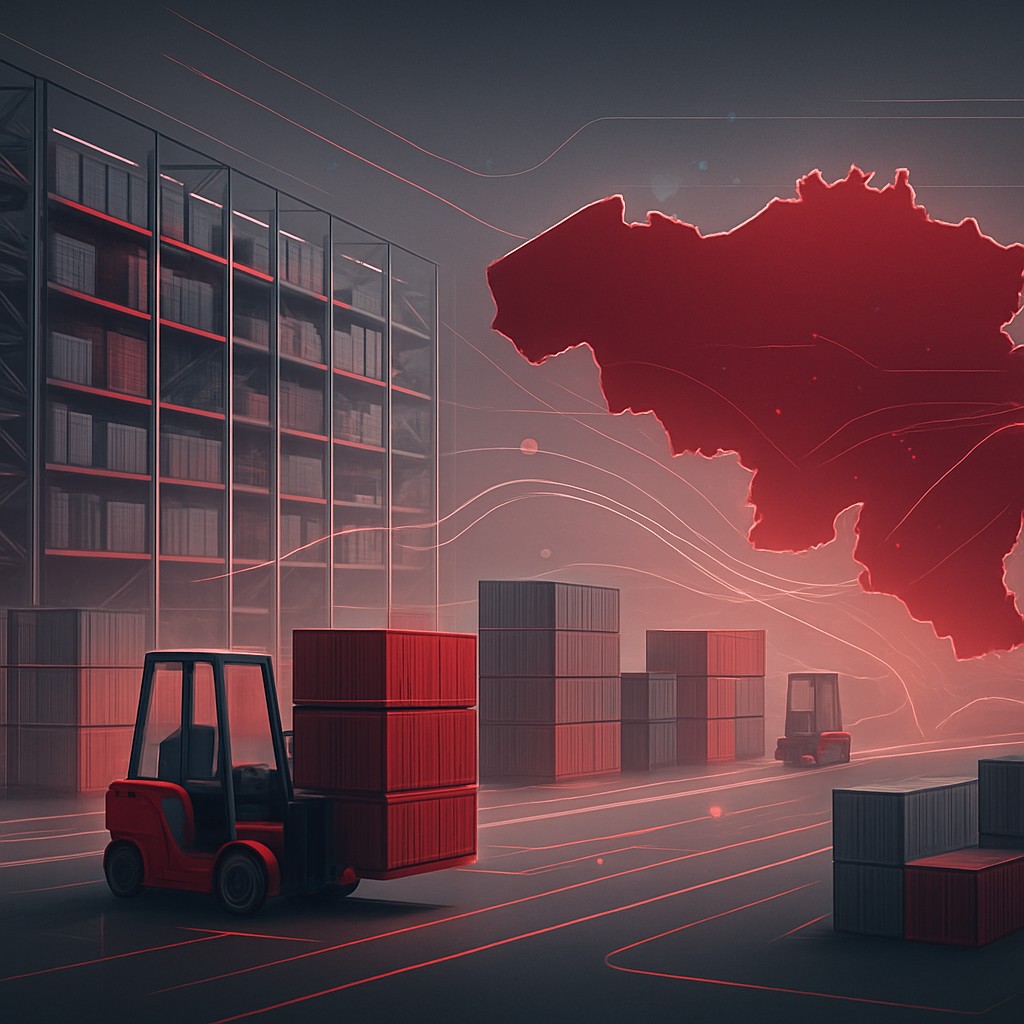
Why Belgium Is a European Warehousing Powerhouse
Belgium sits at the heart of Western Europe, within a few hours' drive of major consumer markets in Germany, France, the Netherlands, and the United Kingdom. This strategic position, combined with the deep-water ports of Antwerp-Bruges and Zeebrugge, an extensive motorway network, and reliable rail and inland waterway connections, has made the country a magnet for warehousing and distribution operations. Companies that store goods in Belgium can reach roughly 60% of European purchasing power within a single day of transport, which is why so many international brands choose the country as their continental base.
The Belgian warehousing sector has also embraced modernization. Automated storage and retrieval systems, temperature-controlled facilities, and sustainability-focused buildings with solar roofing and energy-efficient lighting are increasingly common. This blend of geography and innovation has produced a competitive field of logistics providers serving e-commerce, retail, pharmaceuticals, and industrial clients.
What Sets the Best Warehousing Companies Apart
The leading providers distinguish themselves through scalable capacity, advanced warehouse management systems, value-added services such as packing and labeling, and strong customs expertise. Reliability, transparency, and the ability to handle both bulk pallet storage and fast-moving small-parcel fulfillment are the qualities that consistently earn customer loyalty.
The Top 10 Warehousing Companies in Belgium
1. Katoen Natie — Headquartered in Antwerp, Katoen Natie is one of Belgium's most respected logistics groups. It specializes in petrochemicals, consumer goods, and specialty cargo, operating vast purpose-built terminals with a reputation for engineering excellence and safety.
2. Sea-Invest — A major terminal operator with extensive warehousing capacity across Belgian ports, Sea-Invest handles dry bulk, fruit, and general cargo, supported by deep maritime expertise and cold-storage capabilities.
3. H.Essers — This family-owned group has grown into a leading provider of pharmaceutical and chemical logistics. Its GDP-compliant, temperature-controlled warehouses make it a trusted partner for the life-sciences sector across Europe.
4. Group GHEYS — Known for combining warehousing with transport and container handling, GHEYS offers integrated supply-chain solutions and multimodal connections that appeal to industrial clients.
5. Ninatrans — A logistics specialist with substantial warehouse space, Ninatrans is recognized for its sustainability initiatives, including energy-neutral facilities and a strong focus on efficient distribution.
6. Vincent Logistics — Focused on temperature-controlled and fresh-food logistics, Vincent Logistics provides cold-chain warehousing that supports retailers and food producers with strict quality requirements.
7. Weerts Group — Operating large modern logistics parks, particularly around Liège, Weerts Group offers flexible warehousing for e-commerce and contract logistics, benefiting from proximity to a major cargo airport.
8. ID Logistics Belgium — Part of an international network, ID Logistics delivers contract warehousing and order fulfillment for retail and e-commerce brands, with a focus on automation and process optimization.
9. DB Schenker Belgium — A global logistics name with a strong Belgian footprint, DB Schenker combines warehousing with freight forwarding, offering end-to-end supply-chain visibility and international reach.
10. Kuehne+Nagel Belgium — One of the world's leading logistics providers, Kuehne+Nagel operates advanced contract-logistics warehouses in Belgium, serving pharmaceutical, retail, and industrial clients with sophisticated technology.
Industry Trends Shaping Belgian Warehousing
Several trends are reshaping the sector. E-commerce growth continues to drive demand for fulfillment centers built for rapid order picking and returns processing. Sustainability has moved from a nice-to-have to a core requirement, with green warehouses, electric forklift fleets, and carbon-reduction targets becoming standard. Automation, including robotics and AI-driven inventory management, is improving accuracy and reducing labor pressure in a tight job market.
Pharmaceutical and cold-chain logistics are also expanding, supported by Belgium's strong life-sciences cluster. Providers that can guarantee precise temperature control and full regulatory compliance enjoy significant demand from healthcare companies.
The Role of Technology in Modern Warehousing
Technology has become the backbone of competitive warehousing in Belgium. Warehouse management systems now provide real-time inventory visibility, automated replenishment, and seamless integration with customers' enterprise software. Barcode and RFID scanning reduce errors, while data analytics help operators forecast demand, optimize storage layouts, and plan labor more efficiently. Many leading facilities have introduced goods-to-person picking systems and autonomous mobile robots that dramatically increase throughput while easing the strain of labor shortages.
Sustainability technology is equally important. Belgian warehouses increasingly feature solar panels, rainwater harvesting, LED lighting with motion sensors, and electric or hydrogen-powered handling equipment. These investments not only reduce operating costs but also help clients meet their own environmental commitments, an increasingly decisive factor when choosing a logistics partner.
Multimodal Connectivity and Customs Expertise
One of Belgium's greatest warehousing advantages is its multimodal connectivity. Goods can move seamlessly between sea, road, rail, and inland waterways, giving businesses flexible and cost-effective distribution options. The Port of Antwerp-Bruges, one of the largest in Europe, anchors this network, while inland terminals extend reach deep into the continent. Warehousing providers located near these hubs can offer faster turnaround and lower transport costs.
Customs expertise is another differentiator. With Brexit and evolving European trade regulations, smooth customs handling has become essential. The best Belgian warehousing companies offer bonded storage, customs clearance, and compliance support, helping international businesses avoid delays and unexpected costs at the border.
How to Choose the Right Warehousing Partner
When selecting a warehousing company in Belgium, businesses should evaluate location relative to ports and customers, available capacity and scalability, technology and reporting capabilities, and any specialized handling needs such as hazardous materials or temperature control. Strong customs and value-added service offerings can dramatically simplify cross-border trade. It is also wise to assess a provider's financial stability, safety record, and sustainability credentials, as these reflect long-term reliability.
Conclusion
Belgium's combination of geography, infrastructure, and forward-thinking logistics providers makes it one of the best places in Europe to store and distribute goods. The companies highlighted here represent the depth and quality of the Belgian warehousing market, offering everything from heavy industrial storage to high-precision pharmaceutical logistics. For any business looking to streamline its European supply chain, partnering with one of these established operators is a smart strategic move.
