
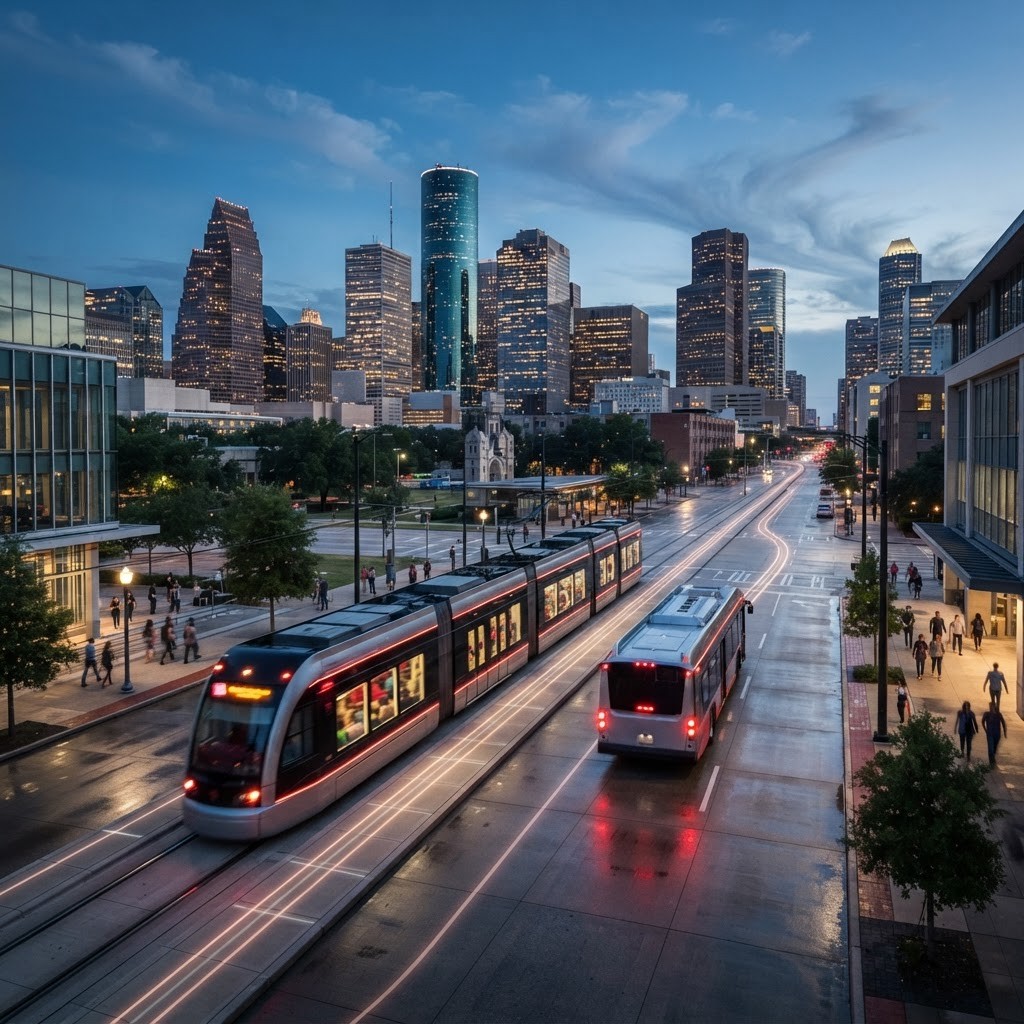
Understanding Houston Public Transportation
Houston is famous for driving, yet public transportation serves hundreds of thousands of trips across a region larger than many metropolitan areas. The most useful service depends on origin, destination, travel time, and mobility needs. Central neighborhoods often benefit from frequent bus and rail connections, while suburban commuters may rely on park-and-ride routes or smaller municipal systems. Riders should check current schedules and alerts before traveling because construction, weather, and major events can affect operations.
1. METRORail
METRORail is the backbone of rail transit in central Houston. The Red Line links major destinations including Downtown, Midtown, the Museum District, Texas Medical Center, NRG Park, and the Northline area. Green and Purple lines extend service through the East End and Southeast Houston. Rail is especially practical for events and destinations where parking is costly or limited.
2. METRO Local Bus
METRO's local bus network reaches far beyond the rail corridors. High-ridership routes connect employment centers, schools, shopping districts, and residential neighborhoods. Frequent routes can make spontaneous travel easier, while less frequent lines require closer schedule planning. Local buses also provide essential first- and last-mile connections to rail and transit centers.
3. METRO Park & Ride
Park & Ride service is designed for longer commuter trips from outlying lots to major employment centers. Express buses can use managed lanes and reduce the stress of peak-hour driving. The service is particularly valuable for commuters headed toward Downtown, Uptown, and the Texas Medical Center, although work schedules outside traditional hours may require alternatives.
4. METRORapid Silver Line
The Silver Line provides bus rapid transit along the Post Oak corridor in Uptown. Dedicated infrastructure, prominent stations, and connections to transit centers make it more rail-like than a conventional local bus. It serves offices, hotels, retail, and nearby residential areas in one of Houston's busiest districts.
5. METRO curb2curb
METRO curb2curb offers on-demand service in designated zones where fixed routes may be less effective. Riders request trips between eligible points and can connect to the broader network. This flexible model reflects a national transit trend: using smaller vehicles and dynamic scheduling to improve coverage in lower-density communities.
6. METROLift
METROLift provides complementary paratransit for eligible riders whose disabilities prevent them from using regular fixed-route service. Trips generally require advance planning and eligibility approval. It is an essential mobility resource, but it is distinct from a general taxi or convenience service and follows defined service rules.
7. Harris County Transit
Harris County Transit supports communities outside portions of METRO's core service area. Its routes and mobility programs help connect residents with jobs, healthcare, shopping, and other services. Because Greater Houston crosses many jurisdictions, county-level transportation can be critical for trips that do not begin in central Houston.
8. Fort Bend Transit
Fort Bend Transit operates commuter and demand-response services for the rapidly growing southwest metro area. Commuter routes connect park-and-ride locations with major Houston employment centers. It is a valuable option for eligible residents and workers traveling between Fort Bend County and the urban core.
9. The Woodlands Express
The Woodlands Express is a commuter bus service linking park-and-ride locations in The Woodlands with destinations including Downtown Houston, the Texas Medical Center, and the Energy Corridor. Comfortable coaches and commuter-focused scheduling offer an alternative to long freeway drives from northern Montgomery County.
10. Connect Transit
Connect Transit serves communities in Brazoria County with commuter and local mobility options. For residents south of Houston, regional services can bridge the distance to major job centers and medical destinations. Service areas, reservations, and eligibility vary, so trip planning is important.
Tips for a Smoother Ride
Use official trip-planning information, allow transfer time, and monitor real-time updates when available. A reloadable fare card or accepted mobile fare method can simplify boarding. At rail platforms, remain behind marked edges; at bus stops, be visible and signal your intent to board. Late-night riders should confirm the final departure rather than assuming daytime frequency continues.
Building a Useful Transit Routine
Houston transit works best when riders combine services strategically. A commuter might drive a short distance to a park-and-ride, while a student may connect from a local bus to rail. Cycling and walking can close short gaps where safe infrastructure exists. Test the route before an important appointment, compare total door-to-door time, and identify a backup. Public transportation may not cover every Houston journey, but these ten services provide meaningful alternatives to driving alone.
A Practical Way to Decide
Create a shortlist based on your nonnegotiable needs, then compare each option using the same questions and evidence. Recent policies, availability, pricing, leadership, and service details can change, so confirm important facts directly before making a commitment. Speak with current customers, students, riders, or clients when appropriate, and pay attention to patterns rather than one unusually positive or negative comment. A low price has limited value if reliability, support, safety, or long-term outcomes fall short. Likewise, the most prominent name is not necessarily the best personal fit. Houston offers unusual breadth and competition, rewarding people who define their priorities, document the answers, and choose on verified substance.
