
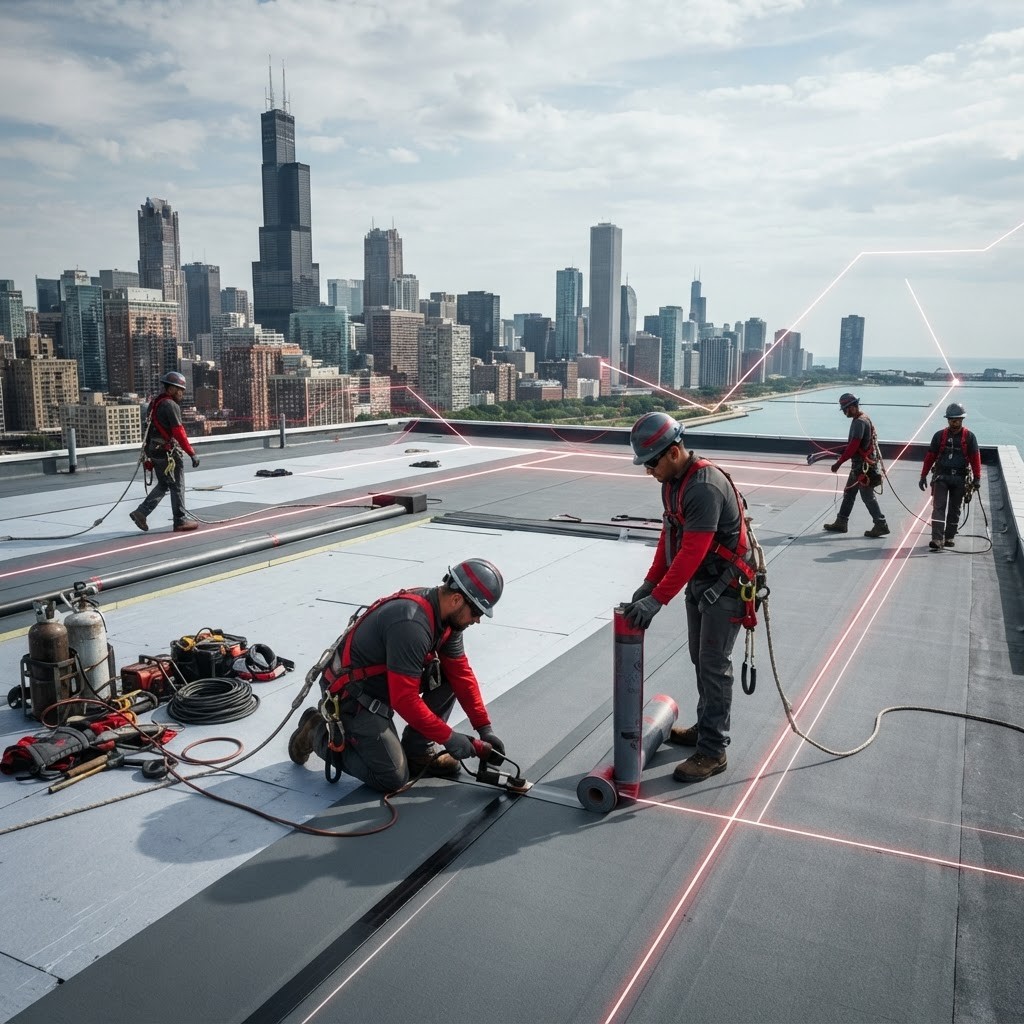
Roofing Built for Chicago Conditions
A Chicago roof must tolerate freeze-thaw cycles, wind, heavy rain, snow, summer heat, and rapid temperature changes. Flat roofs dominate many urban buildings, while bungalows and suburban homes use asphalt shingles, slate, tile, or metal. Reliable contractors understand drainage, flashing, masonry interfaces, ventilation, insulation, and local code—not just the visible surface. These companies are useful starting points for owners seeking repair, replacement, or preventive maintenance.
1. Chicago Roofing Solutions
Chicago Roofing Solutions serves residential and commercial properties with repair, replacement, coating, and inspection services. Its experience across common city roof systems is valuable when leaks travel through layered assemblies and appear far from their source. A thorough evaluation should consider membrane seams, penetrations, parapets, drains, and flashing. The company’s broad scope makes it relevant for both planned capital projects and urgent weather damage.
2. Matthews Roofing
Matthews Roofing has deep roots in the Chicago market and works on residential, commercial, and institutional roofs. Longevity is a meaningful differentiator in an industry where warranty service and historical building knowledge matter. Its portfolio includes a variety of systems, allowing recommendations to reflect the structure rather than a one-material approach. Property owners with older or architecturally significant buildings may especially value that depth.
3. Lindholm Roofing
Lindholm Roofing is a longstanding family-operated company offering roofing, siding, gutters, and related exterior work. Coordinating these components helps address water management as a complete system. A roof may perform poorly because gutters overflow, fascia has deteriorated, or flashing does not connect correctly with adjacent walls. Lindholm’s exterior expertise is useful for homeowners who want one team to assess those relationships.
4. Tans’ Quality Roofing
Tans’ Quality Roofing is known in Chicago for residential and commercial roofing work, including flat-roof systems and repairs. Its local orientation suits the city’s dense neighborhoods and diverse building stock. For flat roofs, owners should ask about substrate condition, drainage slope, insulation, membrane type, and whether existing layers should be removed. Clear documentation of these decisions makes bids easier to compare.
5. Horizon Restoration
Horizon Restoration provides roofing and exterior restoration services with experience in storm-related projects. This can help owners navigating wind or hail damage, documentation, and the distinction between isolated repair and broader replacement. Customers should maintain control of insurance decisions, read contracts carefully, and verify scope independently. A capable restoration contractor should explain damage plainly without using pressure tactics.
6. Second City Roofing and Exteriors
Second City Roofing and Exteriors combines roof work with siding, gutters, and exterior improvements. Its integrated offering is practical when an aging envelope needs coordinated attention. Matching flashing details and sequencing trades correctly can prevent newly completed work from being disturbed later. Homeowners planning several upgrades should request one scope showing responsibilities, material specifications, ventilation changes, and cleanup procedures.
7. Nyberg Exteriors
Nyberg Exteriors serves the Chicago area with roofing, siding, windows, and gutters. The company’s whole-envelope perspective can be beneficial for energy and moisture concerns that do not originate from one component. Ice buildup, attic condensation, and draft complaints may involve ventilation or insulation in addition to shingles. A good assessment identifies causes before proposing products, helping owners spend where the building will benefit most.
8. Chicago Flat Roof Company
Chicago Flat Roof Company concentrates on systems common to city residences and commercial buildings. Flat roofing requires particular attention to ponding water, drains, penetrations, seams, and parapet transitions. Specialized familiarity supports faster diagnosis and more appropriate repair methods. Building owners should schedule regular inspections because small membrane defects can damage decking, insulation, ceilings, and masonry before water becomes obvious indoors.
9. Aloha Construction
Aloha Construction operates in the greater Chicago region and provides roofing, siding, gutters, and restoration. Its scale can appeal to homeowners seeking a defined process from inspection through installation. As with any larger project, customers should confirm the exact crew structure, supervision, warranty provider, and material line. Manufacturer certification may add value, but workmanship details remain just as important as the product brand.
10. MDD Exteriors
MDD Exteriors is active in roofing and exterior remodeling for homes around Chicagoland. Services commonly encompass roof replacement, storm repair, siding, and gutters. The company is a candidate for owners who prefer a single exterior partner. Before signing, compare decking allowances, flashing replacement, ventilation calculations, disposal, landscaping protection, magnetic nail cleanup, and final inspection terms.
What a Strong Roofing Proposal Includes
A useful proposal identifies roof area, tear-off assumptions, deck repair pricing, insulation, underlayment, membrane or shingle specifications, flashing, ventilation, drainage, permits, disposal, warranty, and payment schedule. Verify licensing and insurance, and avoid choosing solely by the lowest total. Photographs before and after work create accountability. For multifamily or commercial properties, ask how occupants, rooftop equipment, and business access will be protected.
Preventive Care Delivers Value
Inspect roofs in spring and fall and after major storms. Keep drains and gutters clear, monitor sealants, and investigate interior stains promptly. Chicago’s climate turns minor defects into costly failures when trapped water freezes or wet insulation remains hidden. A reputable roofer will distinguish maintenance, repair, restoration, and replacement, then explain the life-cycle cost of each. That transparency is the clearest sign of a provider focused on long-term performance.
