
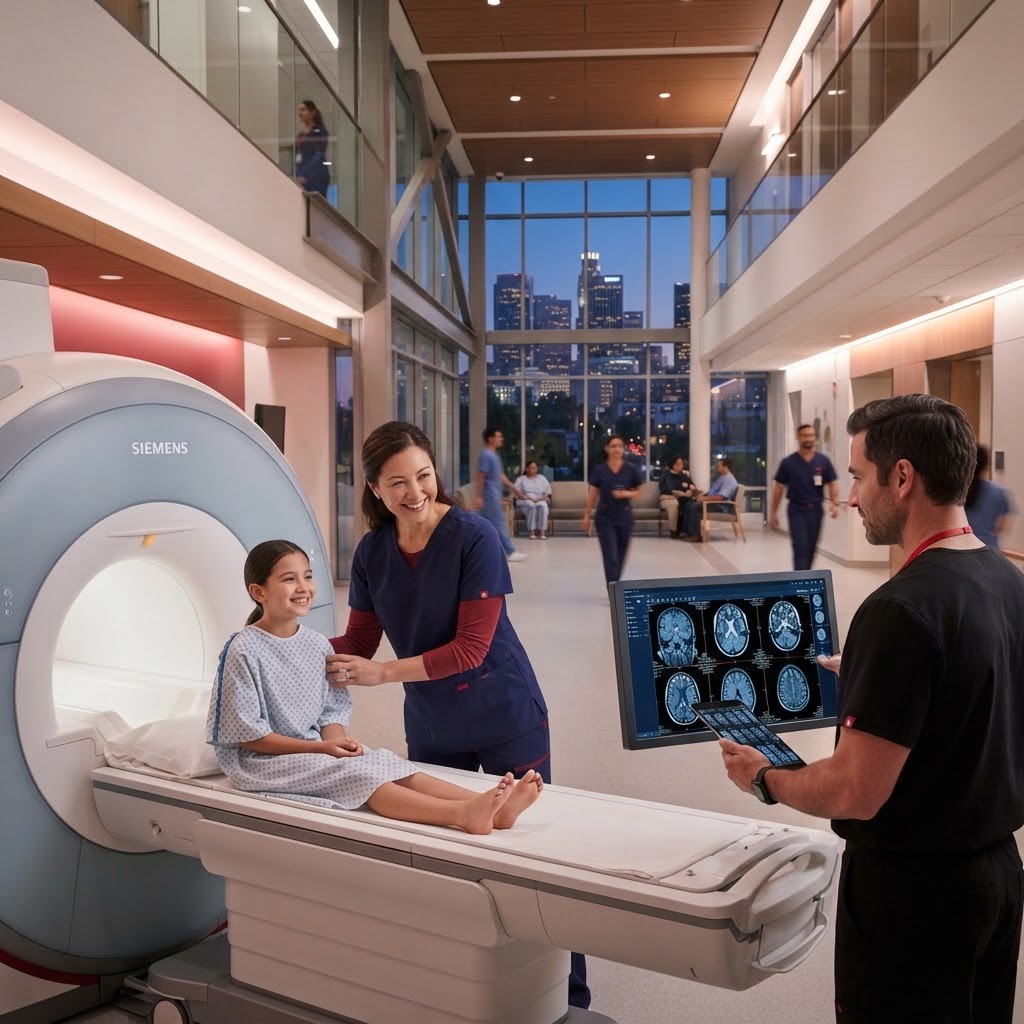
Understanding Hospital Choice in Los Angeles
Los Angeles County has an unusually broad healthcare landscape, including university medical centers, public safety-net hospitals, children's institutions, and large nonprofit systems. A hospital's overall reputation is useful, but the best choice depends on the specific condition, physician expertise, insurance network, location, and urgency. Emergency symptoms require immediate help rather than comparison shopping. For planned care, the institutions below are notable starting points, not a substitute for personalized medical guidance.
1. Cedars-Sinai Medical Center
Cedars-Sinai is one of Los Angeles's most recognized hospitals and a major center for complex specialty care, research, and medical education. It is particularly associated with cardiovascular care, neurosciences, cancer, orthopedics, transplantation, and digestive diseases. A large network of physicians and outpatient locations supports continuity beyond the main campus. Patients considering advanced procedures may value the depth of subspecialists and access to clinical research.
2. UCLA Health Ronald Reagan Medical Center
Ronald Reagan UCLA Medical Center is a leading academic hospital serving patients with complex and rare conditions. Its strengths span cancer, neurology and neurosurgery, cardiology, transplantation, and many surgical disciplines. Connection to a major research university supports multidisciplinary evaluation and clinical trials. The Westwood location can be busy, so patients planning nonemergency visits should account for travel, parking, and the coordination required across large specialty teams.
3. Keck Hospital of USC
Keck Hospital of USC is an academic medical center with expertise in complex surgical and medical care. Notable programs include cancer, transplantation, neurosciences, cardiovascular medicine, and advanced digestive care. Its physicians are linked to the Keck School of Medicine, supporting research and specialist training. Patients often consider Keck when a condition benefits from coordinated subspecialty input or a treatment approach available at a high-acuity referral center.
4. City of Hope
City of Hope is internationally known for cancer, diabetes, and other life-threatening disease research and treatment. Its main clinical campus is in Duarte, within greater Los Angeles, and its regional network has expanded access to oncology services. The institution combines laboratory research, clinical trials, transplantation, surgery, and supportive care. For cancer patients, disease-specific expertise and trial availability can be important reasons to request an evaluation.
5. Children's Hospital Los Angeles
Children's Hospital Los Angeles provides pediatric specialty and emergency care across a wide range of conditions. Its teams are designed around infants, children, and adolescents, with expertise in congenital heart disease, cancer, neurology, orthopedics, neonatal care, and other complex needs. Pediatric hospitals also offer child-life, family, and developmental support that adult facilities may not replicate. Families should ask how care will be coordinated with the child's primary pediatrician.
6. Providence Saint John's Health Center
Providence Saint John's serves the Westside from Santa Monica and is known for community hospital care supported by specialty institutes. Its services include cardiovascular, orthopedic, cancer, neurological, women's, and emergency care. The hospital's location can be convenient for coastal communities that want access to established specialists without traveling to a larger inland academic campus. Network status and physician privileges should be confirmed before planned treatment.
7. Huntington Hospital
Huntington Hospital in Pasadena is a major nonprofit medical center serving the San Gabriel Valley. It provides emergency and trauma services alongside cardiovascular, cancer, neurological, orthopedic, maternity, and surgical care. Its role combines advanced services with broad community coverage. For many patients in northeast Los Angeles County, proximity is an important advantage because family access and follow-up become easier during an extended admission.
8. Torrance Memorial Medical Center
Torrance Memorial is a prominent South Bay hospital offering comprehensive acute and specialty care. Programs include heart and vascular services, cancer care, orthopedics, emergency medicine, women's health, and surgery. The hospital has developed affiliations that can expand specialist collaboration. South Bay residents may appreciate receiving sophisticated care closer to home, particularly when treatment involves repeated appointments, rehabilitation, or ongoing monitoring.
9. Adventist Health White Memorial
Adventist Health White Memorial serves communities east of downtown Los Angeles with emergency, cardiac, maternity, surgical, and other medical services. Its location and community mission make it an important access point in a densely populated area. The hospital also participates in medical education. Patients should evaluate the relevant department and physician team, since service-line expertise is more meaningful for an individual decision than broad reputation alone.
10. Los Angeles General Medical Center
Los Angeles General Medical Center is a crucial public academic and trauma hospital affiliated with USC. It manages high-acuity emergencies and serves as a safety-net institution for the county's diverse population. Its clinicians encounter extensive trauma and complex disease, contributing to significant training expertise. The hospital's public mission and emergency capabilities make it indispensable to regional healthcare, even though its role and patient experience differ from those of private hospitals.
Questions to Ask Before Planned Care
Confirm that the hospital, facility, physician, anesthesiologist, laboratory, and other involved providers are in network; these can be billed separately. Ask about a specialist's experience with the specific diagnosis or procedure, expected outcomes, alternatives, recovery, and follow-up plan. Public quality measures, accreditation, infection-prevention practices, and procedure volumes can add context. Seek a second opinion when facing a major intervention or when the diagnosis remains uncertain.
Practical factors also influence recovery. Consider language access, disability accommodations, visitor policies, care coordination, parking, and distance from family support. For emergencies, call emergency services or go to the appropriate emergency department without delay. For routine needs, a primary-care clinician can help select a suitable specialist and hospital. Los Angeles offers exceptional options, but informed, condition-specific selection remains the safest approach.
