
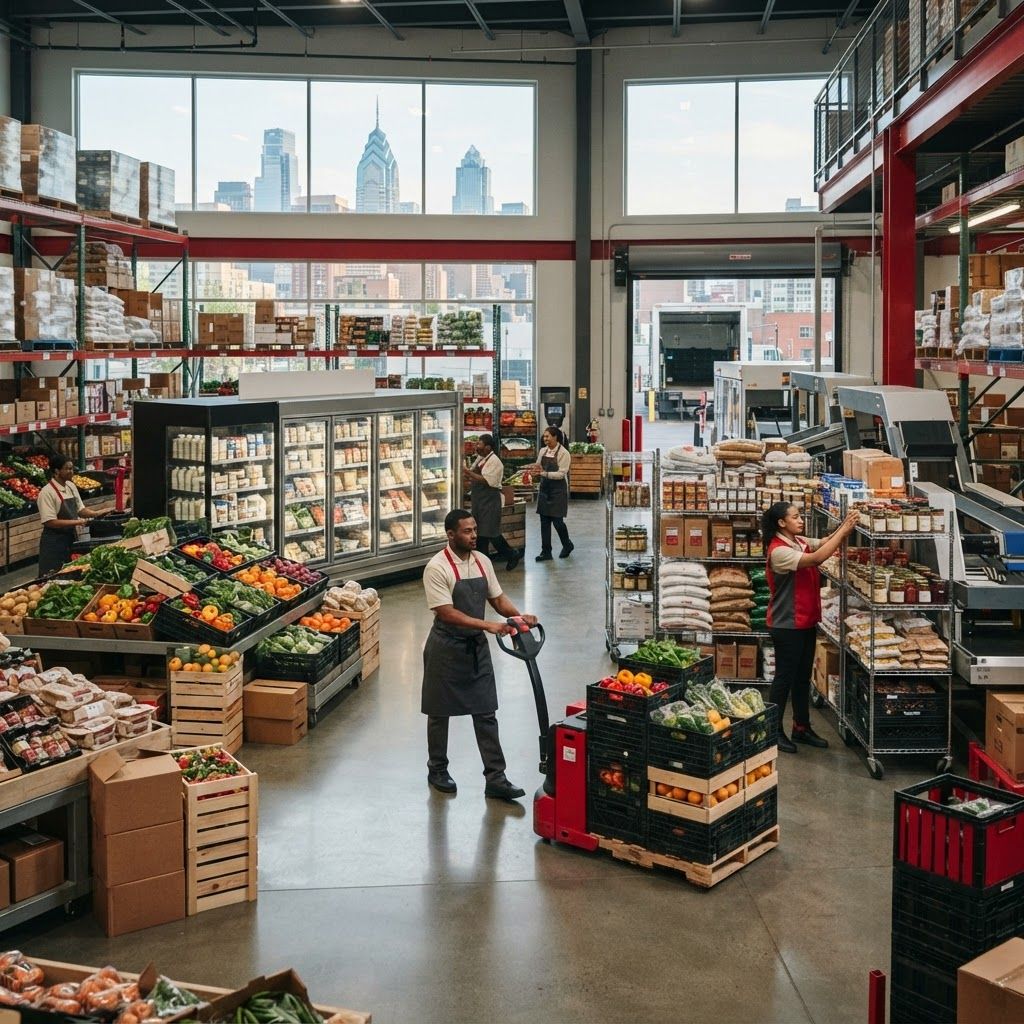
Inside Philadelphia's Food Distribution Market
Philadelphia's food identity reaches from neighborhood sandwich shops and century-old markets to chef-driven restaurants, universities, hospitals, and large event venues. Supporting them is a sophisticated wholesale system centered on regional warehouses, the Philadelphia Wholesale Produce Market, refrigerated transportation, and specialist purveyors.
The companies below represent different categories rather than interchangeable choices. A produce specialist may offer market knowledge and daily flexibility, while a broadliner reduces the number of deliveries a kitchen must receive. Buyers should verify service area, account minimums, ordering schedules, and applicable food-safety documentation.
1. Baldor Specialty Foods
Baldor serves Philadelphia chefs and food businesses with produce, specialty ingredients, dairy, meat, and prepared products. Its chef-oriented assortment is valuable for restaurants that need both everyday staples and unusual seasonal items. Detailed product information and a strong fresh-food focus help kitchens plan menus with greater precision.
2. Procacci Brothers
Philadelphia-based Procacci Brothers has deep expertise in fresh produce, sourcing, packing, and distribution. The company is particularly associated with tomatoes and a broad range of fruits and vegetables. Long supplier relationships and proximity to the city's produce infrastructure make it a significant regional option.
3. John Vena
John Vena operates in the Philadelphia Wholesale Produce Market and is known for specialty produce. Chefs and retailers turn to the company for mushrooms, tropical items, specialty vegetables, and products that may not fit a standard commodity list. Category knowledge can help buyers understand ripeness, seasonality, substitution, and handling.
4. Giordano Garden Groceries
Giordano Garden Groceries is another established Philadelphia produce distributor serving food-service customers. The business supports kitchens with fresh fruits, vegetables, herbs, and related products. Responsive produce service matters because quality changes daily and menu needs can shift with little notice.
5. M. Levin & Company
M. Levin & Company has a long history in Philadelphia produce wholesaling and operates from the city's modern wholesale market. Independent grocers, restaurants, and institutional buyers can benefit from experienced procurement and a wide produce assortment. Clear receiving standards help both parties resolve quality issues quickly.
6. Samuels Seafood
Samuels Seafood is a prominent Philadelphia seafood wholesaler serving restaurants and culinary professionals. The company's range includes finfish, shellfish, specialty products, and value-added options. Buyers should discuss harvest method, origin, cut specifications, delivery temperature, seasonal availability, and substitutions when building a seafood program.
7. Esposito's Meats
Esposito's has a strong presence in Philadelphia's Italian Market and supplies meat to food-service and retail customers. Butchery expertise and custom cutting can help restaurants control portions and labor. Specifications should cover grade, trim, aging, pack size, cut thickness, and acceptable weight variation.
8. Common Market
Common Market connects institutions and food businesses with sustainably produced food from regional farms. Its mission-driven model is especially relevant to schools, hospitals, universities, and organizations pursuing local purchasing goals. Aggregation makes it easier to buy from multiple farms while maintaining practical delivery and invoicing.
9. Sysco Philadelphia
Sysco's Philadelphia operation provides broadline distribution across food, beverages, disposables, equipment, and kitchen supplies. The breadth can simplify procurement for busy operations and multi-unit restaurants. Buyers should use menu costing, order guides, and periodic reviews to keep a large catalog from creating unnecessary complexity.
10. US Foods
US Foods serves Philadelphia-area restaurants and institutions with broadline products, culinary support, and operational tools. It is relevant to customers seeking consistent national brands, private-label choices, and consolidated delivery. Local sourcing and specialist vendors can still complement a broadline relationship where differentiation matters.
How to Evaluate a Food Wholesaler
Food safety comes first. Review supplier approval procedures, traceability, recall communication, cold-chain controls, sanitation, and third-party audits appropriate to the category. At receiving, train staff to check temperature, packaging integrity, quantity, quality, and lot information before products enter storage.
Price comparisons should use edible yield and labor, not case price alone. A trimmed product may cost more per pound but reduce waste and prep. Delivery windows, fill rate, substitutions, minimums, credits, emergency service, and ordering cutoff all affect real value. Create written specifications for high-volume and signature ingredients.
Regional Food Trends
Philadelphia menus increasingly feature regional sourcing, plant-forward dishes, global ingredients, sustainable seafood, and convenient value-added products. Institutions are balancing nutrition and local impact with strict budgets. Distributors that provide transparent origin information and dependable forecasting can help buyers respond without compromising consistency.
Final Thoughts
Philadelphia's strongest food programs often combine suppliers: a broadliner for efficiency, specialists for quality and differentiation, and regional distributors for local impact. Procacci Brothers, Samuels Seafood, Esposito's, and Common Market each bring distinct expertise. Thoughtful specifications and disciplined receiving turn those relationships into consistent guest experiences.
