
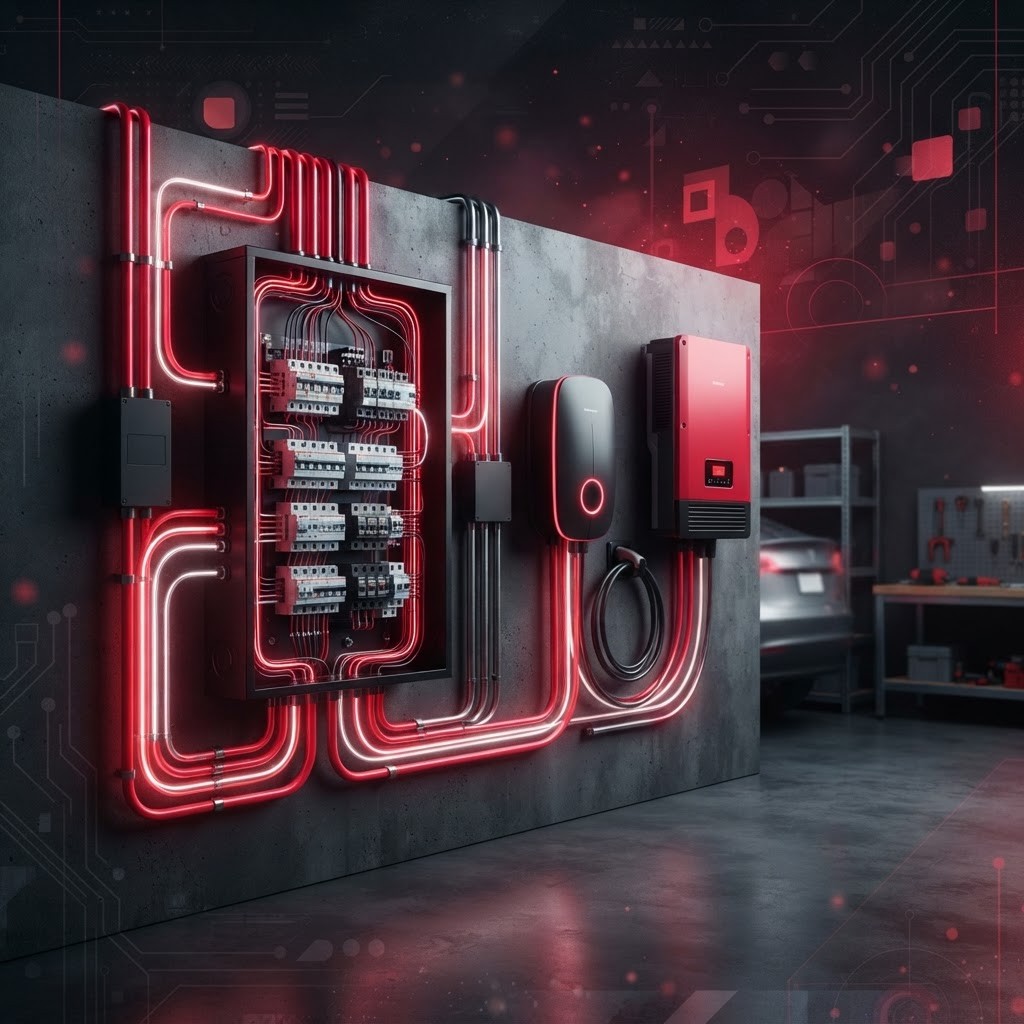
Electrical Work at the Center of Washington Building Boom
Electrical contracting has become one of the most consequential trades in Washington. The state combines abundant hydropower, aggressive clean energy policy and a technology-heavy economy, and the result is unprecedented demand for electrical capacity. Data centers in Grant and Douglas counties require enormous power distribution. Life sciences and semiconductor-adjacent facilities need clean, redundant power and precise grounding. Commercial buildings are transitioning from gas to electric heating and hot water. Homeowners are adding heat pumps, induction ranges, EV chargers, solar arrays and battery storage, often to panels that were sized decades ago for a fraction of that load.
This shift raises the technical bar. Contractors must manage service capacity studies, load calculations, utility coordination and increasingly long lead times for switchgear and transformers. They also work under the Washington electrical code and licensing structure, which is enforced with real rigor, and they must integrate low-voltage systems, building controls, metering and network infrastructure that were once separate scopes. The best electrical contractors in the state have become systems integrators as much as installers.
Ten Electrical Contractors Delivering at a High Level
1. VECA Electric and Technologies
VECA is one of the most established electrical contractors in the Pacific Northwest, serving commercial, healthcare, education and technology clients. Its combined electrical and technology divisions allow coordinated delivery of power, network and audiovisual systems on a single project.
2. Prime Electric
Prime Electric works on major commercial, high-rise, life sciences and mission-critical projects across the Puget Sound region. The firm is known for prefabrication capability and detailed coordination modeling that reduces field conflicts and accelerates installation.
3. Cochran
Cochran provides electrical construction, utility infrastructure, communications and service work throughout Washington. Its breadth across substations, industrial facilities and commercial buildings makes it a resource for projects with complex power requirements.
4. Holmes Electric
Holmes Electric has a long history serving commercial, institutional and industrial clients in western Washington. The company is frequently recognized for reliability, safety performance and strong service departments that support facilities long after construction.
5. Sequoyah Electric
Sequoyah specializes in commercial and technology-driven electrical systems, including data centers, healthcare and advanced office environments. Its expertise in critical power, controls and integrated systems addresses the most demanding building types.
6. Valley Electric Company of Mount Vernon
Serving Skagit, Whatcom and Snohomish counties, Valley Electric handles industrial, agricultural, commercial and marine electrical work. Its industrial controls and automation capability is particularly valuable to food processing and manufacturing clients in the region.
7. Titan Electric
Titan Electric delivers electrical construction for multifamily, commercial and institutional projects in the Seattle market. The company has grown by pairing competitive preconstruction with disciplined field execution on tight urban sites.
8. Northwest Electric and Solar
This firm focuses on residential and light commercial work with a strong emphasis on solar photovoltaic systems, battery storage, panel upgrades and EV charging. It is a practical choice for homeowners pursuing electrification and on-site generation.
9. Eastside Electric
Eastside Electric serves Bellevue, Redmond, Kirkland and surrounding communities with residential service, remodel wiring, lighting design and panel modernization. Its familiarity with Eastside jurisdictions and utility processes streamlines permitting.
10. Kinetic Electric
Kinetic Electric provides commercial and residential electrical services across the Puget Sound area, including tenant improvements, service upgrades and troubleshooting. The company is valued for responsiveness on service calls and small-project professionalism.
Residential Electrification: What Homeowners Should Know
Adding a heat pump, heat pump water heater, induction range and EV charger can easily exceed the capacity of an older 100-amp service. A qualified electrician performs a load calculation before recommending an upgrade, because in many cases smart panel technology, load management devices or circuit sharing between an EV charger and another large appliance can avoid a costly service increase. Where an upgrade is genuinely required, utility coordination and equipment lead times should be planned well ahead of appliance delivery.
Older homes bring additional considerations. Knob-and-tube wiring, ungrounded outlets, aluminum branch circuits from certain eras, missing arc fault and ground fault protection, and undersized subpanels all warrant assessment. Correcting these issues improves safety, supports insurance requirements and prepares the home for future electrification.
Commercial and Industrial Trends
On the commercial side, several developments stand out. Prefabrication of conduit racks, wall assemblies and equipment skids in controlled shops improves quality and offsets labor shortages. Networked lighting controls and submetering are now standard in energy code compliance and provide the data owners need for verification. Microgrids, standby generation and battery systems are being deployed for resilience against outages and wildfire-related disruptions. Charging infrastructure for commercial fleets and multifamily parking is one of the fastest-growing scopes in the state, requiring careful planning of service capacity, conduit pathways and future expansion.
Selecting an Electrical Contractor
Verify the company Washington electrical contractor license and confirm that administrators and journey-level electricians are properly certified. Ask about experience with your exact scope, whether that is a hospital operating room, a laboratory, a manufacturing line or a residential solar and storage installation. Require permits and inspections; unpermitted electrical work creates safety hazards and complicates future property transactions.
For larger projects, evaluate the contractor prefabrication capability, coordination process, procurement plan for long-lead equipment and safety statistics. For residential work, prioritize clear diagnostics, itemized quotes and a willingness to explain options rather than defaulting to the most expensive solution. As Washington buildings become more electrically dependent, a capable electrical partner directly affects safety, operating cost and long-term flexibility.
