
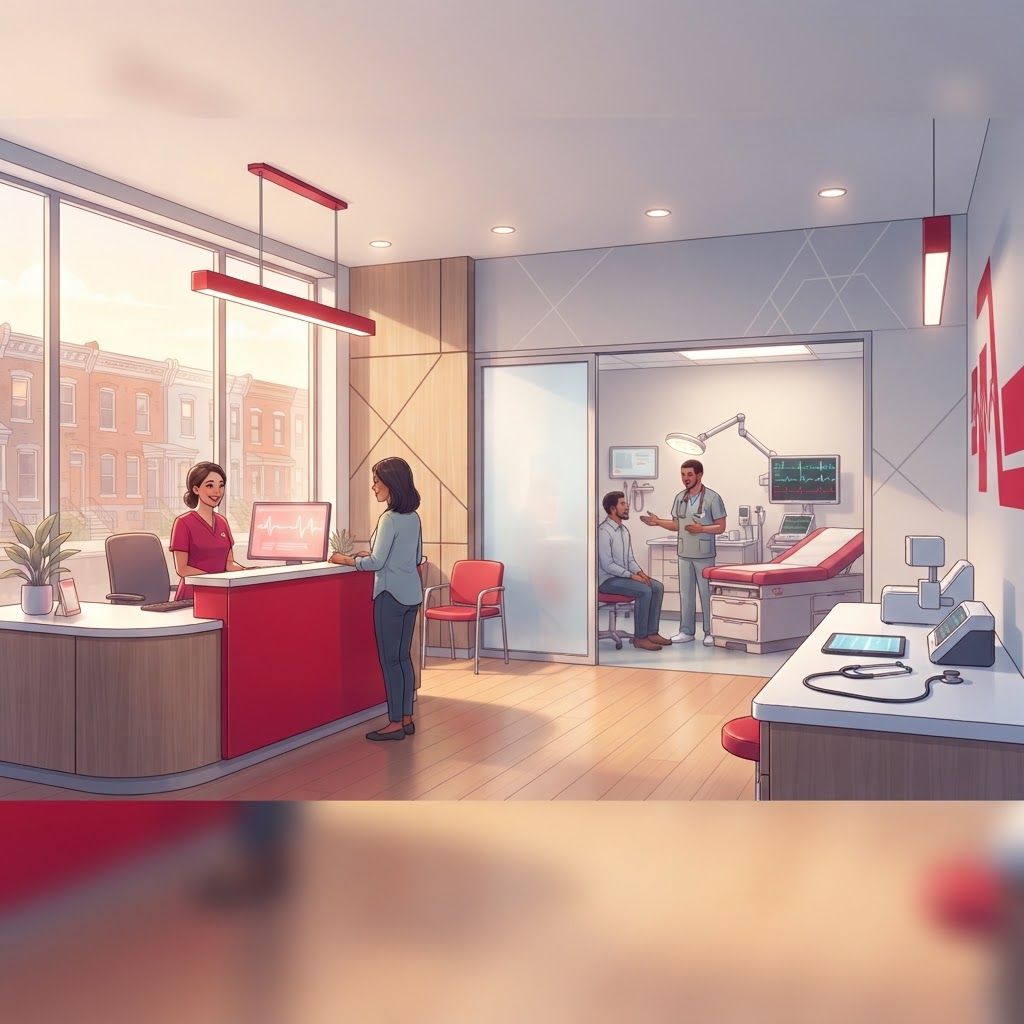
The Growing Role of Outpatient Clinics
Most healthcare in Baltimore no longer happens in hospital beds. Primary care offices, specialty clinics, urgent care centers and federally qualified health centers manage prevention, chronic disease, minor injuries and follow-up care at far lower cost than inpatient settings. For residents, choosing the right clinic often has more impact on long-term health than choosing a hospital.
Baltimore's clinic landscape is unusually varied. Academic health systems operate community practices across neighborhoods, nonprofit health centers serve patients regardless of insurance status, and independent practices continue to thrive in areas such as Roland Park, Canton and Mount Washington. That mix means nearly every resident has a realistic option within a short trip.
How to Choose the Right Clinic
Start with continuity. Seeing the same clinician over time produces better chronic disease control, fewer duplicate tests and more accurate diagnoses. Ask whether you will be assigned a specific primary care provider and how quickly routine and same-day appointments are typically available.
Then consider practical access: hours including evenings and weekends, on-site laboratory and imaging, integrated behavioral health, pharmacy proximity, language services and public transit access. Confirm insurance participation, and for uninsured patients, ask about sliding-scale fees, which many Baltimore community health centers offer based on household income.
The Top 10 Clinics in Baltimore
1. Johns Hopkins Community Physicians. This network operates primary care and specialty clinics throughout the Baltimore area, connecting community-based visits to academic specialists and a shared medical record. It suits patients who want neighborhood convenience without losing access to advanced referral pathways.
2. University of Maryland Faculty Physicians outpatient centers. Affiliated with the university medical system, these clinics provide primary and specialty outpatient care downtown and in surrounding communities, with strong integration into academic subspecialty programs and clinical research.
3. Total Health Care. A longstanding federally qualified health center with multiple Baltimore locations, Total Health Care delivers primary care, pediatrics, dental services, behavioral health and pharmacy support with sliding-scale pricing. It is a cornerstone of access for underinsured residents.
4. Baltimore Medical System. One of Maryland's largest community health center networks, BMS operates clinics across the city offering family medicine, pediatrics, dentistry, women's health and behavioral health. Care coordination and school-based programs are notable strengths.
5. Chase Brexton Health Care. Widely respected for LGBTQ-affirming care, Chase Brexton provides primary care, behavioral health, pharmacy services, dental care and specialized programs for HIV prevention and treatment. Its patient-centered model draws people from across the region.
6. Park West Health System Centers. Serving northwest Baltimore neighborhoods, Park West offers family medicine, pediatrics, dental, vision and behavioral health services with an emphasis on culturally competent community care and preventive outreach.
7. Patient First. With several locations in the Baltimore area, Patient First provides walk-in urgent care with extended daily hours, on-site x-ray, lab testing and dispensing of common medications. It is the practical choice for after-hours illness and minor injuries.
8. MedStar Health urgent care and primary care clinics. MedStar operates a broad outpatient footprint across Baltimore, combining urgent care access with primary care practices linked to its hospital network. Continuity between urgent visits and follow-up care is a key advantage.
9. Mercy Personal Physicians. The outpatient primary care arm of Mercy Medical Center, with locations serving downtown and suburban patients, known for internal medicine, women's health and coordinated referrals into hospital specialty services.
10. Health Care for the Homeless. Based in Baltimore, this organization delivers integrated medical, dental, mental health, addiction treatment and case management services to people experiencing housing instability. Its model is widely studied for effective care of complex, high-need populations.
Trends in Outpatient Care
Team-based care is now standard at high-performing Baltimore clinics, with nurses, pharmacists, social workers and community health workers supporting physicians. Behavioral health integration has expanded significantly, allowing depression, anxiety and substance use to be addressed during ordinary medical visits rather than through separate referrals.
Telehealth has settled into a hybrid pattern, used for follow-ups, medication management and counseling while preserving in-person visits for examinations and procedures. Clinics also increasingly screen for social factors such as food access, housing and transportation, because those variables strongly influence outcomes in many Baltimore neighborhoods.
Getting the Most from Your Clinic Visits
Prepare a short written list of concerns ranked by priority, along with current medications and supplements. Schedule annual preventive visits rather than waiting for symptoms, and complete recommended screenings, which are the highest-value service any clinic provides.
Use the patient portal for prescription refills, results and non-urgent questions to avoid unnecessary appointments. Ask directly about cost before tests when you have a high-deductible plan, and request generic prescriptions where clinically appropriate. If you need an interpreter or accessibility accommodation, request it when booking so the clinic can schedule appropriate time.
Final Thoughts
The best clinic is the one you will actually use consistently. Baltimore offers academically connected practices, mission-driven community health centers and convenient urgent care within a compact geography. Establishing a relationship with a primary care team now, before a health issue becomes urgent, remains the single most valuable healthcare decision most residents can make.
