
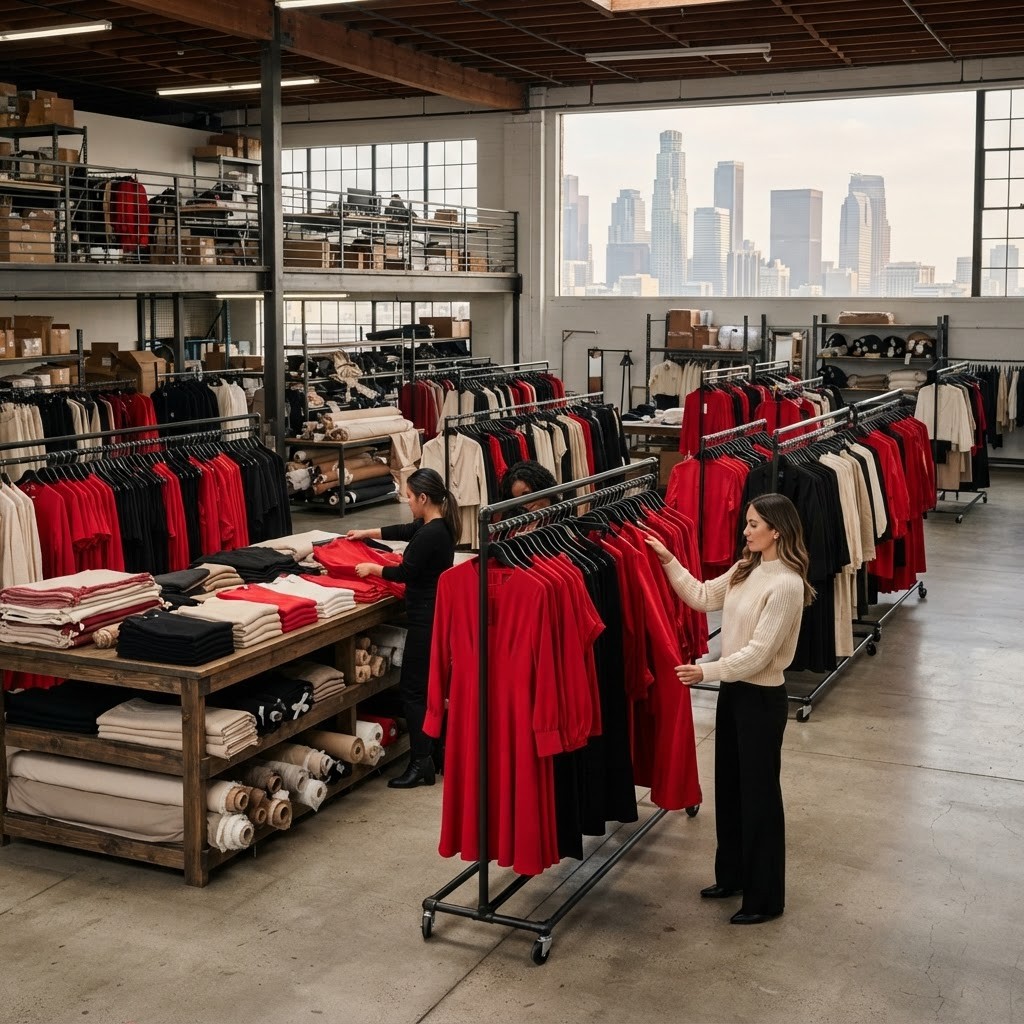
Why Buyers Source Apparel in Los Angeles
Los Angeles is one of North America’s most influential apparel centers, combining design talent, import networks, showrooms, sewing contractors, and a large wholesale marketplace. Buyers can compare products quickly, discover emerging silhouettes, and often reorder faster than when sourcing overseas. The market is particularly strong in contemporary women’s fashion, denim, casualwear, basics, and trend-driven boutique merchandise.
The companies below have distinct aesthetics and sales policies. Wholesale access commonly requires business documentation, and availability can change by season. Buyers should inspect current lines and terms before making commitments.
1. FashionGo
FashionGo is a major wholesale marketplace connecting retailers with numerous Los Angeles apparel vendors. Its breadth makes trend and price comparison efficient for boutiques that cannot visit every showroom. Retailers should assess each vendor individually because sizing, shipping, photography, and return policies vary.
2. LA Showroom
LA Showroom provides a digital wholesale marketplace for apparel, accessories, and related products. It gives buyers access to many Fashion District brands and supports remote sourcing. Search tools are useful, but disciplined buyers still order samples and track vendor-level performance.
3. Tasha Apparel
Tasha Apparel supplies trend-focused women’s clothing, accessories, and boutique merchandise. The wholesaler is popular with independent retailers seeking accessible packs and frequently updated styles. Its assortment can help smaller stores test trends without building an entire private-label program.
4. OrangeShine
OrangeShine is another established online marketplace featuring Los Angeles fashion vendors. It serves boutiques and e-commerce sellers across women’s apparel and accessories. Buyers can use the platform to broaden assortments, though consistent fit and quality require careful vendor selection.
5. Bloom Wholesale
Bloom Wholesale focuses on women’s boutique clothing with an easygoing, contemporary sensibility. Dresses, tops, layers, and casual pieces form an important part of its offering. Retailers seeking approachable Southern California styling may find the collection aligned with their customers.
6. Listicle
Listicle is known for relaxed women’s apparel with bohemian and vintage-influenced details. Textural fabrics, roomy silhouettes, and casual layering give the line a recognizable point of view. It can add character to boutiques that want more than generic basics.
7. POL Clothing
POL Clothing offers distinctive contemporary and bohemian-inspired women’s fashion. The brand is recognized for washed finishes, layered construction, knits, and expressive details. Its strong aesthetic can support retailers that merchandise coordinated stories rather than isolated trend items.
8. Hyfve
Hyfve supplies trend-conscious women’s apparel across dresses, tops, bottoms, and outerwear. The brand responds to fast-moving silhouettes while maintaining a broad boutique audience. Buyers should evaluate how new pieces complement existing inventory instead of chasing every microtrend.
9. Zenana
Zenana is widely associated with affordable basics, casual apparel, leggings, layering pieces, and inclusive everyday options. Reliable basics can stabilize a boutique’s assortment because they sell across seasons and support higher-impact fashion items. Color continuity and replenishment are important strengths to investigate.
10. Judy Blue
Judy Blue is a prominent Los Angeles denim wholesaler known for stretch, comfort, and a broad range of fits. Denim customers are especially sensitive to sizing consistency, so clear fit education is essential. Retailers often benefit from trying core fits before expanding into seasonal washes and details.
Building a Profitable Wholesale Assortment
Begin with a defined customer profile, target retail price, and planned margin. Wholesale cost alone does not determine profit; include inbound freight, payment fees, markdowns, returns, and damaged units. Ask about pack ratios, minimum orders, restocking, exclusivity, and whether product images are licensed for retailer use.
Inspect seams, fabric recovery, opacity, trims, colorfastness, and measurement consistency. Los Angeles shoppers encounter climates ranging from coastal cool to inland heat, so seasonality is more layered than a simple winter-summer calendar. Successful retailers combine timely fashion with dependable basics, photograph products accurately, and maintain vendor scorecards. The best wholesaler is one that repeatedly delivers the right product, not just the most exciting sample.
Planning a Successful Supplier Relationship
Before opening an account, create a written purchasing brief that defines required products, expected order frequency, acceptable lead times, quality standards, budget limits, and delivery constraints. Share realistic forecasts without presenting them as guaranteed orders. Ask each supplier how quotations are updated, how backorders are communicated, who handles quality concerns, and what documentation accompanies a shipment. A trial order can reveal far more about picking accuracy, packaging, communication, and product consistency than a polished sales presentation.
It is also wise to avoid dependence on a single source for every critical item. Maintain approved alternatives while giving strong primary suppliers enough predictable business to invest in the relationship. Review performance quarterly using measurable factors such as on-time delivery, defect rate, response speed, invoice accuracy, and resolution of claims. In Los Angeles, delivery plans should account for traffic, loading zones, limited warehouse space, seasonal demand, and the distance between coastal, central, and inland locations. Clear receiving procedures help teams photograph damage, check quantities, preserve lot information, and report discrepancies promptly.
Finally, treat the list above as a starting point rather than a substitute for due diligence. Visit showrooms or facilities when practical, request samples, verify business credentials and insurance where relevant, and speak with comparable customers. The best long-term partner is transparent about both strengths and limitations. Consistent communication, documented expectations, and fair payment practices create a more resilient supply chain for buyer and supplier alike.
