
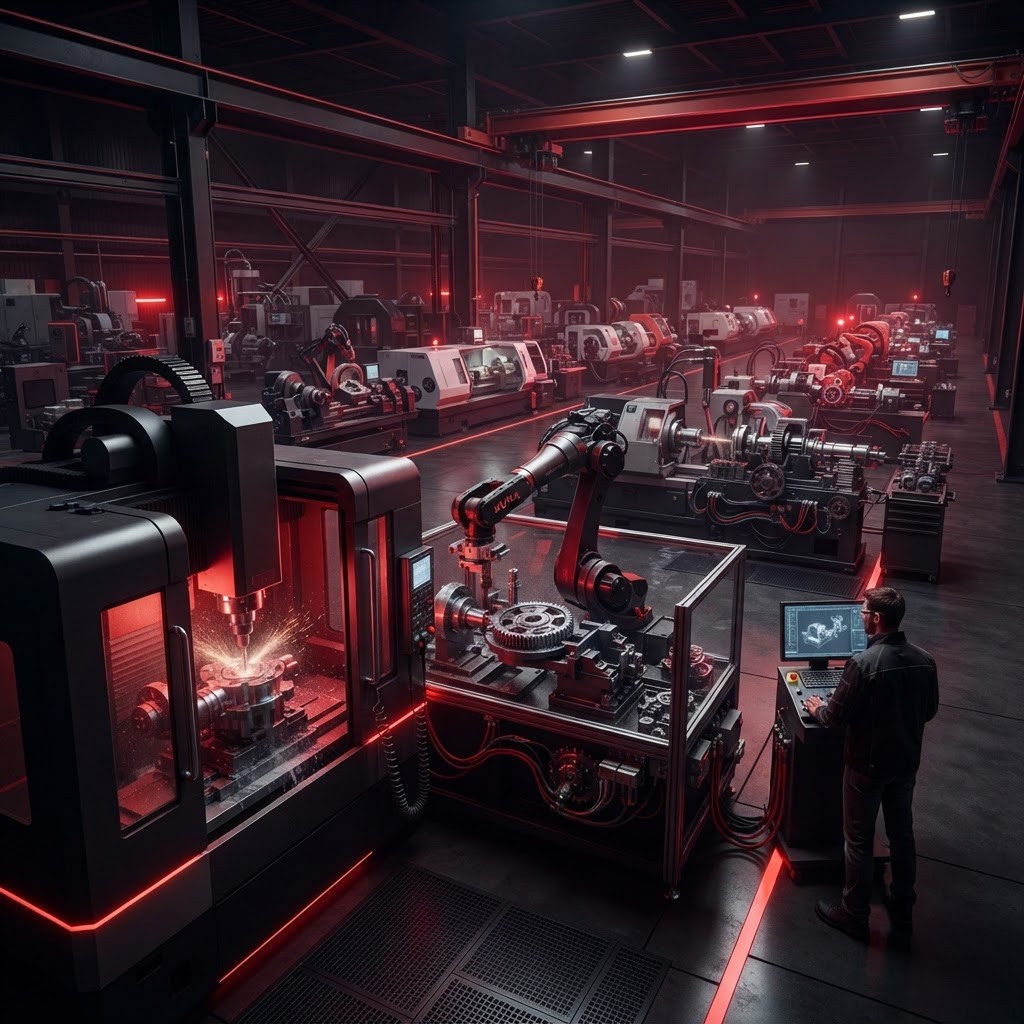
Why New York Machinery Matters
New York’s machinery sector is rooted in industrial cities with generations of metalworking, engineering, and systems-integration knowledge. Today, manufacturers serve energy, food, aerospace, construction, medical, packaging, and general industry. A strong supplier does more than ship equipment: it supports application design, installation, controls, operator training, parts, and long-term maintenance.
1. GE Vernova
GE Vernova’s New York operations are linked to advanced power-generation equipment and engineering. Large turbines and grid technologies require exacting metallurgy, machining, assembly, and testing. The company’s installed-base knowledge and global service organization are major differentiators for utility and industrial customers.
2. Dresser-Rand
Dresser-Rand, now part of Siemens Energy, has deep roots in Olean. Its compressor and rotating-equipment expertise supports energy and process industries around the world. Custom engineering, reliability analysis, and aftermarket service are especially important where downtime carries substantial cost.
3. Hardinge
Hardinge is a respected name in precision machine tools, workholding, and related manufacturing technology, with a long Elmira-area heritage. Its equipment supports accurate turning, milling, grinding, and component production. Precision, rigidity, and application support define the brand’s value.
4. Raymond Corporation
The Raymond Corporation manufactures material-handling equipment in Greene. Its lift trucks, warehouse solutions, and operator technologies help distribution centers improve storage density and productivity. Manufacturing quality is complemented by ergonomics, fleet data, dealer support, and service coverage.
5. JBT Corporation
JBT has meaningful food-processing equipment capabilities in New York through legacy operations and specialized product lines. Its systems help processors automate preparation, filling, sterilization, and handling. Hygienic design, throughput, consistency, and service access are crucial buying factors.
6. Gleason Corporation
Rochester-based Gleason develops machinery, tooling, software, and inspection systems for gear production. Its technology serves automotive, aerospace, energy, and industrial markets. Deep process knowledge allows the company to support customers from gear design through manufacturing verification.
7. Davis-Standard
Davis-Standard’s New York-connected operations contribute extrusion and converting equipment expertise. Such systems produce films, tubing, coatings, and other continuous materials. Customers value process control, line integration, energy efficiency, and the ability to run demanding polymers consistently.
8. Koike Aronson
Koike Aronson, based in Arcade, manufactures cutting machines, welding-positioning equipment, and automation systems. Its products help fabricators improve accuracy, safety, and productivity on large metal components. Application engineering and durable equipment are notable strengths.
9. All-Fill
All-Fill’s New York-region presence and packaging machinery expertise serve food, pharmaceutical, cosmetic, and industrial businesses. Filling and inspection equipment must balance speed with accuracy, sanitation, and quick changeover. Flexible configurations are valuable to producers managing multiple package sizes.
10. Haun Welding Supply
Haun Welding Supply supports machinery-intensive fabrication across New York with welding systems, automation, gases, and technical expertise. Although also a distributor, its integration and service capabilities make it an important production partner for manufacturers modernizing metalworking operations.
Choosing Machinery
Evaluate total cost of ownership rather than purchase price alone. Review cycle time, tolerances, energy use, floor-space needs, controls compatibility, guarding, training, spare-parts availability, preventive maintenance, and service response. Ask for references running comparable materials and duty cycles.
Technology Trends
Connected controls, predictive maintenance, robotics, additive manufacturing, and energy-efficient drives are changing factory economics. New York’s leading machinery companies combine digital tools with practical mechanical knowledge. That balance helps customers automate without sacrificing maintainability or production resilience.
