
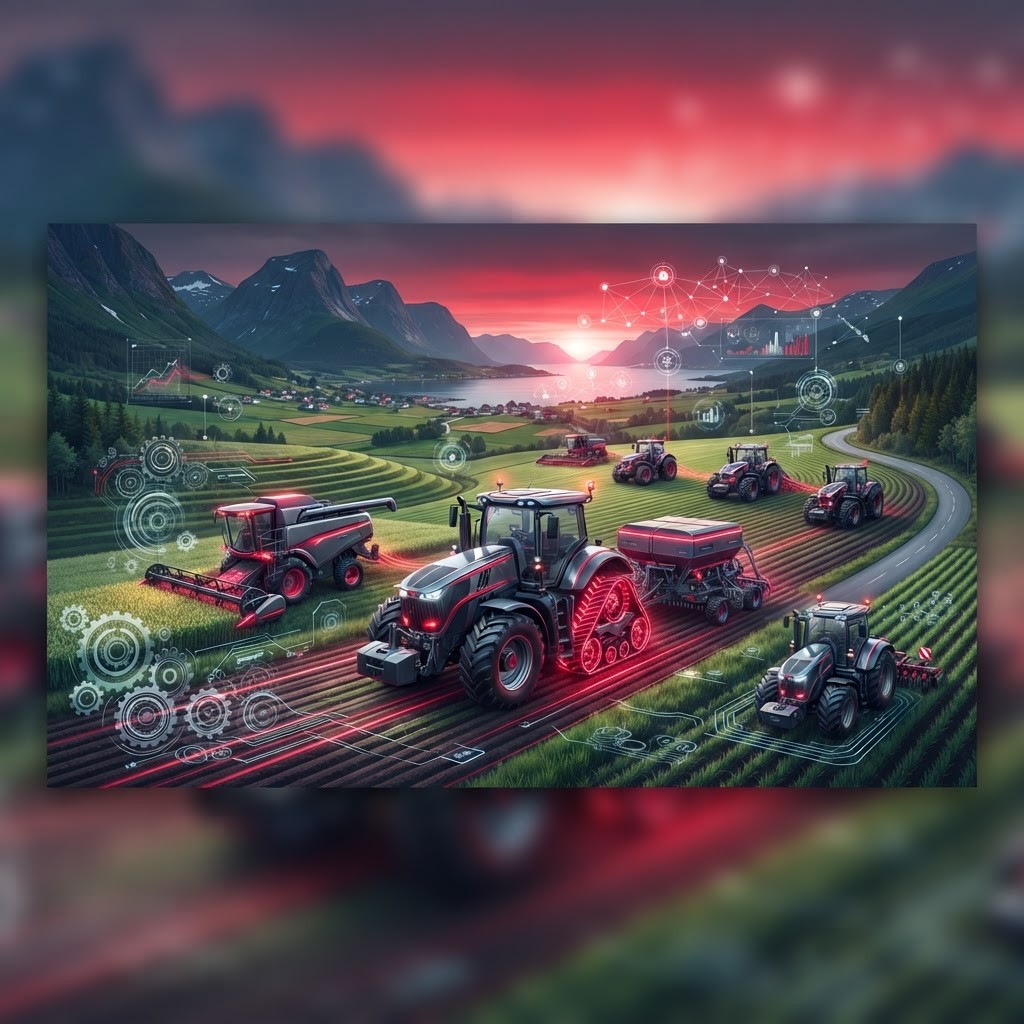
Equipping Farms in a Challenging Climate
Norwegian agriculture demands equipment that can perform reliably in tough conditions: steep terrain, cold temperatures, short growing seasons, and often small, fragmented fields. The agricultural equipment brands serving this market must deliver durability, versatility, and increasingly, the precision technology that modern farming requires. From tractors and harvesters to feeding systems and forestry machinery, these brands are essential to the productivity and sustainability of farms across the country.
The market blends established international manufacturers with strong local distributors and specialized domestic producers. Together they ensure that farmers across Norway, from the fertile southern lowlands to remote northern valleys, have access to the tools they need to work efficiently and profitably despite the demanding environment in which they operate.
Global Brands with Strong Norwegian Presence
Several international brands dominate the Norwegian equipment landscape, supported by robust dealer and service networks. John Deere is a familiar sight on Norwegian farms, valued for its reliable tractors and advanced precision agriculture systems. Massey Ferguson and Valtra, the latter especially well suited to Nordic conditions, are popular for their rugged performance and dependable cold-weather capability.
New Holland and Case IH offer comprehensive lineups spanning tractors, balers, and harvesting equipment. Claas is respected for its forage and grain harvesting machinery, which is particularly relevant to Norway's grass-based livestock farming. These brands succeed because they pair quality machinery with dependable local support, ensuring minimal downtime during the critical and often narrow seasonal windows that define Norwegian farming.
Local Distributors and Specialists
Norway's equipment market relies heavily on strong distributors who adapt global products to local needs. Felleskjøpet is a central player, supplying a wide range of machinery, spare parts, and agronomic support to farmers nationwide. A-K Maskiner is another key distributor, representing leading tractor brands and offering extensive service capabilities across the country.
Domestic specialists have carved out important niches. Serigstad is known for feeding and grain-handling equipment tailored to Norwegian farms. Orkel has earned international recognition for its baling and compaction technology, exporting Norwegian engineering around the world. Kverneland, with deep Scandinavian roots, produces plows, seeding equipment, and implements engineered specifically for demanding northern conditions.
Forestry equipment is also significant given Norway's extensive woodlands. Brands offering forwarders, harvesters, and related machinery support the many farms that combine agriculture with forestry operations, providing an important secondary income stream and making full use of rural land holdings.
The Precision Agriculture Revolution
Precision farming has firmly arrived in Norway, and equipment brands are central to the transformation. GPS-guided steering, variable-rate application, and telematics systems help farmers optimize inputs, reduce waste, and increase yields. These technologies are particularly valuable in a country where every hectare of arable land is precious and input costs are among the highest in Europe.
Automated and autonomous machinery is fast approaching, with brands testing self-driving tractors and robotic tools designed for repetitive tasks. Data platforms that connect equipment, weather, and agronomic information are helping farmers make smarter, more timely decisions. The brands that integrate these capabilities most effectively are steadily gaining favor among forward-looking Norwegian farmers.
Sustainability and Efficiency
Environmental considerations increasingly influence equipment purchasing decisions. Fuel efficiency, lower emissions, and compatibility with renewable fuels are now important factors for buyers. Electric and hybrid machinery is beginning to appear, especially for smaller tasks and indoor operations such as feeding and material handling. Equipment that supports reduced tillage, precise fertilizer application, and efficient manure handling helps farmers meet environmental goals while cutting costs.
Durability also contributes meaningfully to sustainability. Machinery built to last and easy to repair reduces waste and lowers the total cost of ownership, a priority for budget-conscious Norwegian farmers who expect their investments to serve them well for many years across countless harsh seasons.
Service and Support Matter Most
In Norway's geography, after-sales service can be as important as the machinery itself. A tractor that breaks down during a narrow harvest window can be extremely costly. The best brands and distributors maintain extensive service networks, rapid parts availability, and skilled technicians who can respond quickly. Financing options, operator training, and digital support further strengthen the relationship between farmers and equipment providers, building lasting loyalty.
Conclusion
Agricultural equipment brands are indispensable partners to Norwegian farmers, delivering the durable, versatile, and increasingly intelligent machinery needed to farm productively in a demanding environment. From global manufacturers with strong local support to homegrown specialists exporting Norwegian engineering worldwide, these brands combine reliability with innovation. As precision agriculture and sustainability reshape farming, the leading equipment providers will continue to drive efficiency and resilience across the nation's fields and forests.
