
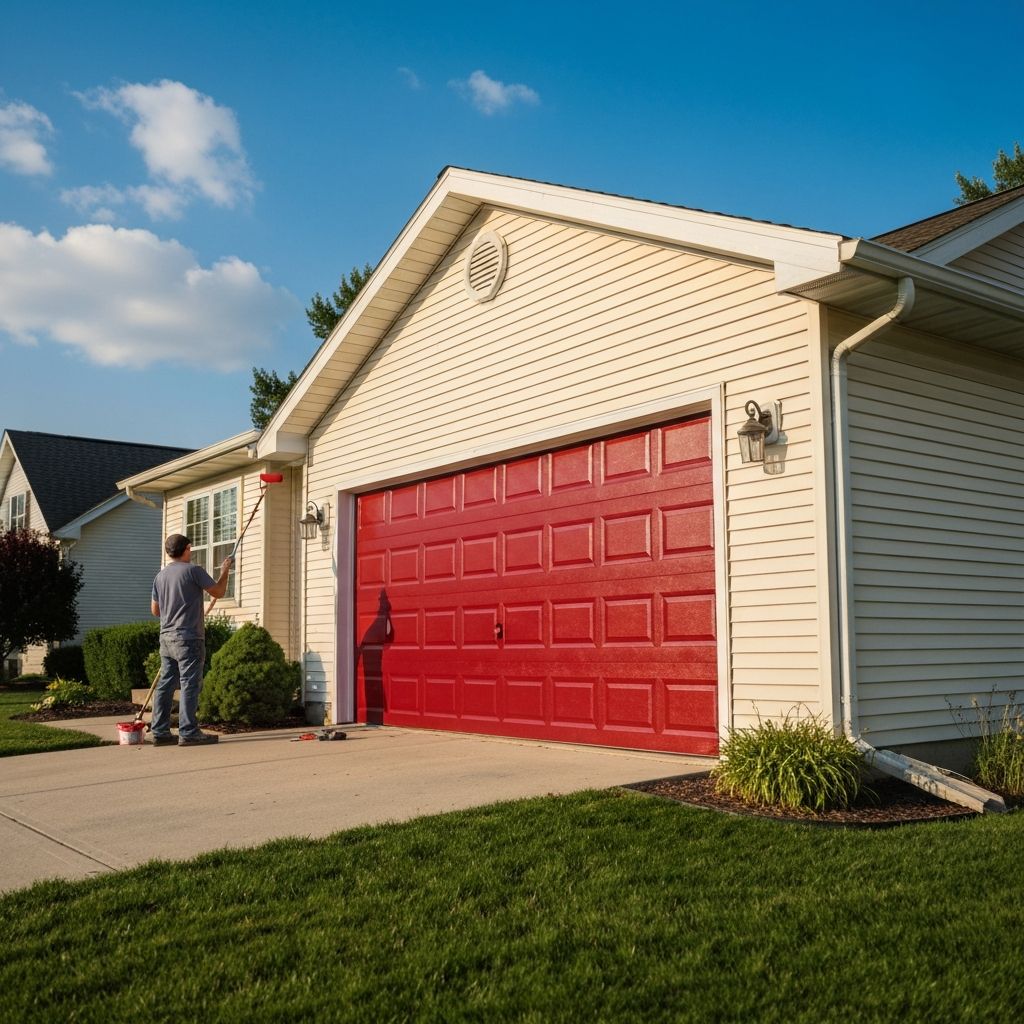
Why Painting Your Garage Door Matters
Your garage door is one of the largest and most visible elements of your home's exterior. It can account for up to 30 percent of your home's front-facing facade, making it a significant contributor to curb appeal and first impressions. A faded, peeling, or outdated garage door can drag down the appearance of an otherwise well-maintained home, while a freshly painted door can dramatically enhance its visual appeal.
Painting your garage door is also one of the most cost-effective exterior home improvements you can make. For an investment of $50 to $200 in materials and a weekend of your time, you can achieve results that would cost $500 to $1,000 or more if done by a professional painter. Beyond aesthetics, a quality paint job protects the door from weathering, rust, UV damage, and moisture, extending its lifespan and saving you money on premature replacement.
Choosing the Right Paint for Your Garage Door
Selecting the right paint is crucial for achieving a durable, professional-looking finish. The type of paint you need depends on the material of your garage door, which is typically steel, aluminum, wood, or fiberglass.
For steel and aluminum garage doors, 100 percent acrylic latex exterior paint is the best choice. Acrylic latex adheres well to metal surfaces, resists peeling and cracking, and provides excellent weather protection. Look for a paint that is specifically formulated for exterior use and includes UV protection to prevent fading. Semi-gloss or satin finishes are most popular for garage doors because they provide a subtle sheen that is easy to clean and resistant to moisture.
For wood garage doors, either acrylic latex or oil-based exterior paint can be used. Acrylic latex is easier to work with, dries faster, and cleans up with water, making it the preferred choice for most DIY painters. Oil-based paints provide a harder, more durable finish but take longer to dry, require mineral spirits for cleanup, and produce stronger fumes during application.
For fiberglass garage doors, use an acrylic latex paint that is designed for use on fiberglass or composite surfaces. These paints are formulated to flex with the material and resist chipping and peeling.
Regarding color selection, lighter colors tend to perform better on garage doors because they absorb less heat from the sun. Dark colors can cause metal garage doors to expand and contract more dramatically with temperature changes, which can lead to premature paint failure. If you prefer a darker color, choose a high-quality paint with heat-reflective technology to minimize thermal expansion issues.
Tools and Materials You Will Need
Gathering all necessary tools and materials before you begin will make the painting process smoother and more efficient. Here is a comprehensive list of what you will need for the project.
Essential materials include exterior acrylic latex paint (one to two gallons, depending on door size), exterior primer suitable for your door material, painter's tape (at least two rolls), drop cloths or plastic sheeting, clean rags or tack cloths, and fine-grit sandpaper (120 to 220 grit). For cleaning, you will need a bucket, mild detergent or TSP solution, a sponge or scrub brush, and a garden hose.
For application, you will need a high-quality paint roller (4-inch or 6-inch foam roller for smooth doors), a two-inch angled brush for edges and details, a paint tray, and optionally an airless sprayer for the smoothest finish. Safety equipment should include safety glasses, work gloves, and a dust mask for sanding.
Preparing the Garage Door Surface
Proper surface preparation is the most important step in achieving a professional-quality paint job. Skipping or rushing preparation will result in poor adhesion, premature peeling, and an uneven finish.
Start by thoroughly cleaning the garage door to remove dirt, dust, cobwebs, grease, and any other contaminants. Mix a solution of mild detergent or trisodium phosphate with warm water and scrub the entire door surface using a sponge or brush. Pay particular attention to the bottom panels, which tend to accumulate more dirt and road splash. Rinse the door thoroughly with a garden hose and allow it to dry completely before proceeding.
Inspect the door for any damage, including dents, rust spots, cracks, or peeling paint. Sand any areas with peeling or flaking paint using 120-grit sandpaper until you reach a smooth, sound surface. For steel doors with rust, sand the rusted areas down to bare metal and apply a rust-inhibiting primer before painting.
Lightly sand the entire door surface with 220-grit sandpaper to create a slightly rough texture that will help the new paint adhere. This is known as scuff sanding and is especially important on smooth metal and fiberglass surfaces. After sanding, wipe the door with a tack cloth to remove all sanding dust.
Use painter's tape to mask off areas that you do not want to paint, including windows, weather stripping, hardware, and the surrounding door frame. Cover the driveway beneath the door with drop cloths or plastic sheeting to protect it from paint drips and spills.
Applying Primer
Priming the garage door before painting is essential for ensuring proper adhesion and achieving a uniform, professional-looking finish. The type of primer you use depends on the door material and the condition of the surface.
For bare metal surfaces, use a rust-inhibiting metal primer that is designed for exterior use. These primers contain anti-corrosion agents that protect the metal from rust while providing an excellent bonding surface for the topcoat.
For previously painted surfaces in good condition, a high-quality bonding primer or a paint-and-primer combination product may be sufficient. However, if the existing paint is in poor condition or if you are making a dramatic color change, a dedicated primer coat is recommended.
Apply the primer using the same technique you plan to use for the topcoat, whether that is a roller, brush, or sprayer. Apply a thin, even coat and allow it to dry according to the manufacturer's instructions, typically two to four hours. Lightly sand the dried primer with 220-grit sandpaper to ensure a smooth surface for the topcoat.
Painting the Garage Door Step by Step
With the surface properly prepared and primed, you are ready to apply the topcoat. Follow these steps for the best results.
Choose a day with mild weather for painting. Ideal conditions are temperatures between 50 and 85 degrees Fahrenheit, low humidity, and no rain in the forecast for at least 24 hours. Avoid painting in direct sunlight, as the heat can cause the paint to dry too quickly, leading to brush marks and poor leveling. Early morning or late afternoon is usually the best time to paint.
If your garage door has raised panels, start by painting the recessed panel areas first using a brush. Work from the top of the door to the bottom, painting one panel at a time. Use smooth, even strokes and avoid overloading the brush with paint, as this can cause drips and runs.
After painting the recessed areas, switch to a roller to paint the raised sections and flat stiles and rails. Use a foam roller for the smoothest finish, or a short-nap woven roller for lightly textured surfaces. Roll in one direction, from top to bottom, to maintain a consistent finish pattern.
Allow the first coat to dry completely before applying the second coat. Drying time varies by product but is typically two to four hours for latex paint. A second coat is almost always necessary to achieve full coverage and uniform color, especially with lighter colors over darker surfaces.
After the second coat has dried, carefully remove the painter's tape by pulling it away at a 45-degree angle. Remove the tape while the paint is still slightly tacky for the cleanest edges.
Using a Paint Sprayer for Best Results
For the smoothest, most professional-looking finish, consider using an airless paint sprayer. Spraying eliminates brush and roller marks and allows you to apply a thin, even coat quickly and efficiently.
When spraying a garage door, maintain a consistent distance of 10 to 12 inches from the surface and use slow, steady side-to-side strokes. Overlap each pass by about 50 percent to ensure even coverage. Apply two to three light coats rather than one heavy coat to prevent drips and runs.
Mask the surrounding area thoroughly before spraying, as overspray can travel a significant distance. Cover nearby walls, windows, plants, and vehicles with plastic sheeting or drop cloths.
Aftercare and Maintenance
Once your newly painted garage door has cured, which typically takes 7 to 14 days for full hardness, it will require minimal maintenance to keep it looking great.
Wash the door two to three times a year with a mild detergent and water to remove dirt, pollen, and grime. Avoid using harsh chemicals or abrasive cleaners that could damage the paint finish.
Inspect the door periodically for signs of wear, including chipping, cracking, or fading. Touch up any damaged areas promptly to prevent moisture from reaching the underlying surface and causing rust or rot.
Depending on the quality of paint used and the local climate, a garage door paint job typically lasts 5 to 10 years before requiring a refresh. Homes in harsh climates with extreme temperatures, heavy UV exposure, or high humidity may need repainting sooner.
Conclusion
Painting a garage door is a rewarding DIY project that can dramatically improve your home's curb appeal at a fraction of the cost of a professional job. The key to success lies in thorough surface preparation, choosing the right paint for your door material, applying paint in thin and even coats, and allowing proper drying time between applications. With the right approach and a weekend of effort, you can transform your garage door from an eyesore into a standout feature that enhances the beauty and value of your entire home.
