
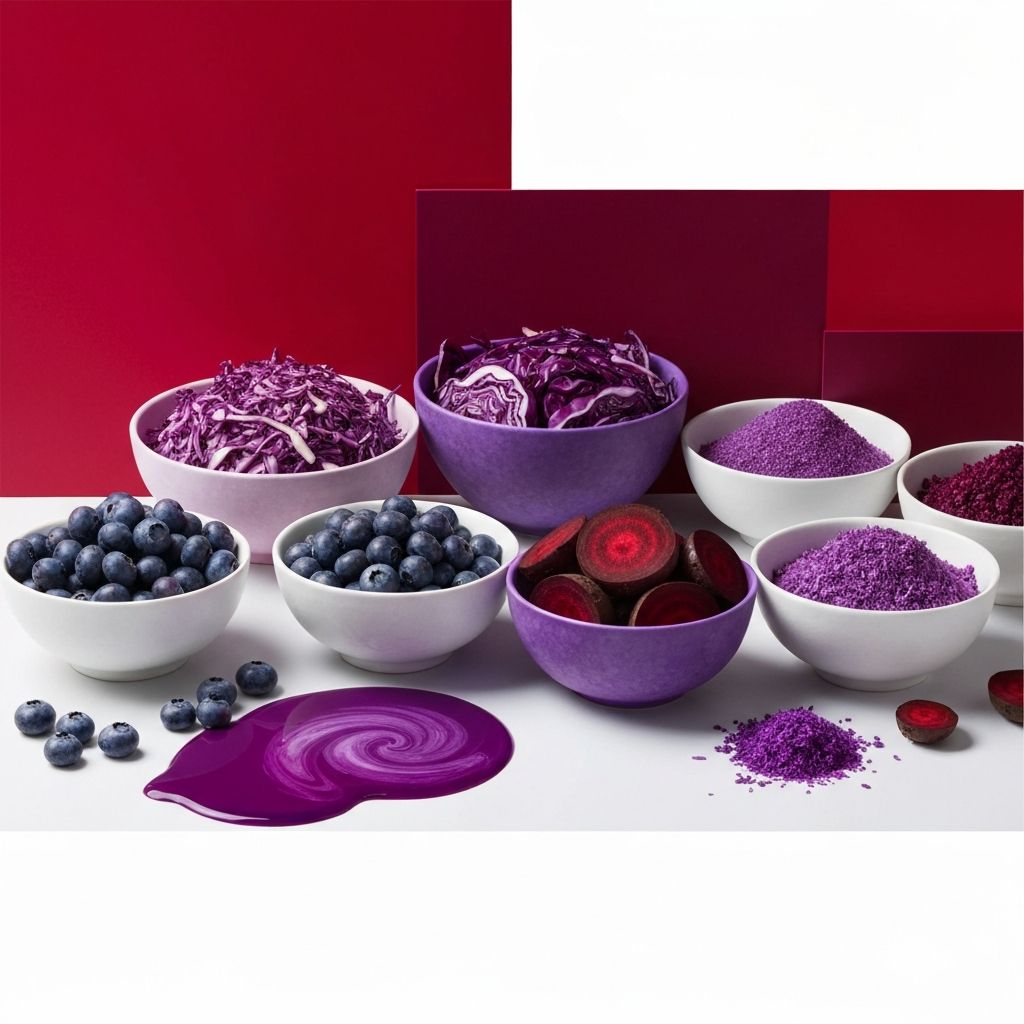
Why Make Your Own Purple Food Coloring
Making your own purple food coloring at home is an increasingly popular choice for health-conscious bakers, parents concerned about artificial additives, and anyone who appreciates the beauty of naturally derived colors in their food. Commercial food dyes, while effective at producing vivid colors, have faced growing scrutiny over potential health effects, particularly for children. Studies have suggested links between artificial food dyes and hyperactivity in some children, prompting many parents and bakers to seek natural alternatives.
Natural purple food coloring offers several advantages beyond avoiding synthetic chemicals. The ingredients used to create natural purple dyes, such as blueberries, purple cabbage, and beets, bring their own nutritional benefits including antioxidants, vitamins, and minerals. Additionally, natural colorings often produce more subtle, sophisticated hues that give baked goods and desserts an artisanal, handcrafted appearance that is highly prized in today's food culture.
Understanding Color Theory in Food
Before diving into specific methods for creating purple food coloring, it helps to understand the basic color theory behind achieving the perfect shade of purple. Purple is a secondary color created by combining red and blue. In the world of food coloring, this means you can create purple either by finding a naturally purple ingredient or by combining a red natural colorant with a blue one.
The exact shade of purple you achieve will depend on the ratio of red to blue in your mixture. More red produces a warmer purple that leans toward magenta or plum, while more blue creates a cooler purple that approaches violet or lavender. Understanding this relationship allows you to fine-tune your purple food coloring to achieve exactly the shade you want, whether it is a deep royal purple, a soft lilac, or a rich burgundy.
Method 1: Purple Cabbage Food Coloring
Red cabbage (which is actually purple in color) is one of the most versatile and effective natural sources of purple food coloring. The pigment responsible for its color, anthocyanin, is a powerful natural dye that can produce a range of colors from blue to purple to pink depending on the pH of the environment. This chameleon-like quality makes purple cabbage an fascinating ingredient for natural food coloring.
To make purple food coloring from red cabbage, start by roughly chopping half a head of red cabbage into small pieces. Place the chopped cabbage in a saucepan and add just enough water to cover the pieces. Bring the mixture to a boil, then reduce the heat and simmer for 15 to 20 minutes until the water has turned a deep blue-purple color and the cabbage has lost most of its color. Strain the liquid through a fine-mesh sieve, discarding the cabbage solids. Allow the liquid to cool completely.
The resulting liquid will be blue-purple in color. To shift it toward a truer purple, add a small amount of acid such as a few drops of lemon juice or white vinegar. The acid reacts with the anthocyanin pigment, causing it to shift from blue toward pink. By carefully controlling the amount of acid you add, you can dial in exactly the shade of purple you prefer. For a more concentrated coloring, simmer the strained liquid over low heat until it reduces by half or more, creating a thicker, more intensely colored dye.
Method 2: Blueberry Food Coloring
Blueberries are another excellent source of natural purple food coloring, producing a rich, deep purple that works beautifully in frostings, batters, and doughs. The pigment in blueberries is also anthocyanin, the same compound found in purple cabbage, but the specific type of anthocyanin in blueberries tends to produce a warmer, more consistently purple tone without the need for pH adjustment.
To make blueberry food coloring, place two cups of fresh or frozen blueberries in a saucepan with a quarter cup of water. Bring the mixture to a gentle boil, then reduce the heat and simmer for 10 to 15 minutes, mashing the berries with a fork or potato masher as they cook. The goal is to extract as much color and juice from the berries as possible. Once the mixture is deeply colored and the berries are thoroughly broken down, strain the liquid through a fine-mesh sieve or cheesecloth, pressing on the solids to extract every drop of colored juice.
For a more concentrated coloring, return the strained juice to the saucepan and simmer over low heat until it reduces to about a quarter of its original volume. This concentrated blueberry colorant will be a deep, intense purple that can color large batches of frosting or batter without significantly altering the flavor or consistency of your recipe. Store the finished coloring in a small glass jar in the refrigerator for up to two weeks.
Method 3: Beet and Blueberry Combination
For those seeking a vibrant, true purple that sits squarely between red and blue, combining beet juice (which provides red) with blueberry juice (which provides blue-purple) is an excellent strategy. This combination allows you to customize the exact shade of purple by adjusting the proportions of each ingredient, giving you much more control over the final color than using a single ingredient alone.
To create this combination coloring, prepare beet juice by grating one medium-sized raw beet and squeezing the gratings through cheesecloth to extract the juice. Alternatively, you can simmer chopped beets in a small amount of water for 15 minutes and strain the liquid. Prepare blueberry juice using the method described above. Then combine the two juices, starting with a ratio of one part beet juice to two parts blueberry juice and adjusting from there until you achieve your desired shade.
The beet juice contributes a strong red-pink color and a slightly earthy flavor, while the blueberry juice adds blue-purple tones and a mild berry sweetness. Together, they create a rich, complex purple that is difficult to achieve with a single ingredient. This combination works particularly well in chocolate baked goods, where the deep color complements the chocolate and the subtle earthiness of the beet is masked by the cocoa.
Method 4: Using Purple Sweet Potatoes
Purple sweet potatoes, also known as Okinawan sweet potatoes or ube, are a stunning source of natural purple food coloring that has gained enormous popularity in recent years, partly driven by the global trend for ube-flavored desserts. These potatoes have a vibrant violet flesh that produces one of the most intensely colored natural purple dyes available, with a color that is remarkably stable during baking and cooking.
To extract purple food coloring from purple sweet potatoes, peel and cube two medium potatoes and boil them in two cups of water until very tender, about 15 to 20 minutes. Mash the cooked potatoes into the cooking water, then strain the mixture through a fine-mesh sieve, pressing the solids firmly to extract as much colored liquid as possible. The resulting liquid will be a vivid, almost electric purple that can be used directly as food coloring.
For an even more versatile colorant, you can make ube powder by dehydrating cooked purple sweet potato slices in a food dehydrator or low-temperature oven until completely dry, then grinding them into a fine powder. This powder can be stored indefinitely and added directly to dry ingredients for consistent purple coloring. Ube powder has the added advantage of contributing a mild, pleasant sweetness and subtle vanilla-like flavor that complements many dessert recipes.
Tips for Using Natural Purple Food Coloring
Working with natural food colorings requires a slightly different approach than using commercial dyes. Natural colorings are generally less concentrated than synthetic ones, so you will need to use more to achieve vivid colors. Start by adding your natural coloring in small increments, mixing thoroughly between additions, until you reach the desired intensity. Keep in mind that the color may deepen slightly as the food bakes or sets.
The pH of your recipe can affect the final color of natural purple dyes, particularly those based on anthocyanin pigments. Acidic ingredients like lemon juice, cream of tartar, and buttermilk can shift the color toward pink, while alkaline ingredients like baking soda can shift it toward blue or green. Being aware of these interactions allows you to predict and control the final color more effectively.
Heat can also affect natural food colorings. Some natural purple dyes are heat-sensitive and may fade or change color during baking. To minimize color loss, add the coloring late in the mixing process and avoid overbaking. For frostings, icings, and no-bake desserts, natural colorings generally perform excellently since they are not subjected to the high temperatures of an oven.
Storage and Shelf Life
Natural food colorings are perishable and should be stored properly to maintain their quality and safety. Liquid colorings should be stored in airtight glass containers in the refrigerator, where they will typically last for one to two weeks. For longer storage, you can freeze natural food coloring in ice cube trays, then transfer the frozen cubes to a freezer bag for storage of up to three months.
Powdered natural colorings, such as freeze-dried blueberry powder or ube powder, have a much longer shelf life and can be stored in airtight containers in a cool, dark place for several months. These powdered forms are also more convenient to use, as they can be measured precisely and added directly to dry ingredients without altering the liquid content of your recipe.
Conclusion
Making your own purple food coloring at home is a rewarding and surprisingly simple process that opens up a world of natural, beautiful color for your cooking and baking projects. Whether you choose the versatile purple cabbage method, the rich blueberry approach, the customizable beet-blueberry combination, or the stunning purple sweet potato option, you will discover that nature provides an impressive palette of purple hues that rival anything a synthetic dye can produce. Experiment with different sources and methods to find the perfect shade of purple for your next culinary creation.
