
Fast Food Jobs for 14-Year-Olds: Where to Apply and What to Know
Getting your first job at 14 is an exciting milestone that teaches valuable life skills like responsibility, time management, and financial literacy. The fast food industry is one of the few sectors that regularly hires workers as young as 14, making it a popular starting point for young teens entering the workforce. However, not all fast food chains have the same hiring policies, and federal and state labor laws impose specific restrictions on what 14-year-olds can do on the job.
Understanding which restaurants hire at 14, what the work entails, and how labor laws protect young workers is essential for both teens and their parents. This guide provides a comprehensive overview of the fast food employment landscape for 14-year-olds, helping you make informed decisions about your first job.
Fast Food Chains That Hire 14-Year-Olds
Several major fast food chains are known to hire workers at age 14, though policies can vary by location and franchise owner. Chick-fil-A is one of the most popular options for young workers. Many franchise locations hire at 14, offering positions in front-of-house customer service, food preparation, and dining room maintenance. The company is known for its structured training programs and positive work environment.
McDonald's is another chain where some locations hire at 14, though this largely depends on the franchise owner and local labor laws. Positions for younger workers typically involve lighter duties such as taking orders, operating the cash register, cleaning the dining area, and restocking supplies. McDonald's offers flexible scheduling that accommodates school hours and extracurricular activities.
Dairy Queen often hires 14-year-olds for positions that include serving customers, preparing ice cream treats, and maintaining the dining area. Culver's, a Midwest-based chain, also has a reputation for hiring younger teens and providing a supportive first-job experience. Baskin-Robbins, being primarily an ice cream shop with less complex food preparation, frequently hires workers at 14 for scooping and customer service roles.
Other chains that may hire at 14 include Arby's, Taco Bell (at select locations), and various local or regional fast food restaurants. It is always worth checking directly with nearby locations, as hiring policies can differ significantly between franchise operators even within the same brand.
Federal and State Labor Laws for 14-Year-Olds
The Fair Labor Standards Act (FLSA) sets the federal minimum age for employment at 14 for non-agricultural jobs. However, the law imposes specific restrictions on the hours and types of work 14 and 15-year-olds can perform. During the school year, minors aged 14-15 can work a maximum of three hours on a school day and 18 hours per week. During non-school periods like summer vacation, they can work up to eight hours per day and 40 hours per week.
Work hours for 14-year-olds are further restricted to the period between 7 AM and 7 PM during the school year. During the summer months from June 1 through Labor Day, the evening limit extends to 9 PM. These restrictions are designed to ensure that employment does not interfere with the education and well-being of young workers.
Certain types of work are prohibited for 14 and 15-year-olds under federal law. These include operating or cleaning most power-driven equipment, cooking over open flames, baking, operating motor vehicles, and working in freezers or meat coolers. In a fast food setting, this means young workers typically cannot use deep fryers, grills, or other cooking equipment, limiting them to roles like cashiering, serving, and cleaning.
State laws may impose additional restrictions beyond federal requirements. Some states set the minimum working age higher than 14 or impose stricter limits on hours and job duties. Many states require work permits or employment certificates for minors, which typically need to be obtained from the school before starting a job. Check your state's Department of Labor website for specific regulations that apply to your location.
What to Expect in Your First Fast Food Job
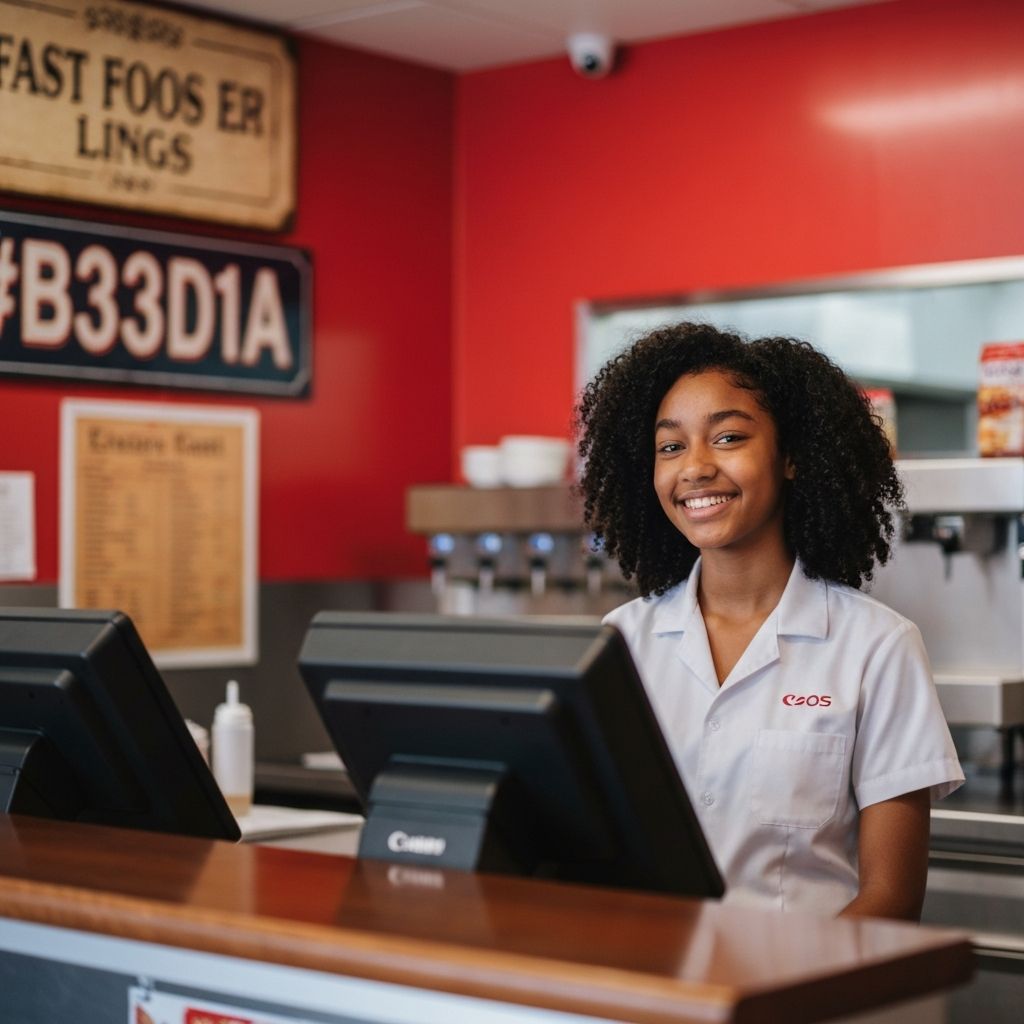
Working in fast food at 14 involves a variety of tasks, most centered around customer service and maintaining a clean, organized restaurant. Common duties include greeting customers, taking orders at the counter or drive-through, operating the point-of-sale system, filling drink orders, packaging food items, cleaning tables and floors, restocking condiments and supplies, and emptying trash.
The pace of work in fast food can be fast and demanding, especially during peak meal times. You will learn to work efficiently under pressure, communicate effectively with team members, and handle customer interactions professionally. These skills are incredibly valuable and will serve you well in any future career, regardless of the industry.
Training typically involves shadowing experienced employees, watching training videos, and gradually taking on more responsibilities as you become comfortable. Most fast food restaurants have structured training programs that teach everything from food safety and hygiene to customer service standards and emergency procedures. Do not be afraid to ask questions during training, as understanding your role thoroughly will help you perform confidently.
How to Apply for Fast Food Jobs at 14
The application process for fast food jobs is generally straightforward. Many chains allow you to apply online through their websites or through job search platforms. Some locations still accept paper applications, which you can pick up in person. When applying in person, dress neatly, be polite, and ask to speak with the manager if possible.
Your application or resume should highlight any relevant experience, even if it is not formal employment. Babysitting, yard work, volunteer work, school projects, and extracurricular activities all demonstrate responsibility and work ethic. If you do not have any work experience, focus on your skills, reliability, and eagerness to learn.
Be prepared to provide documentation such as a birth certificate or government-issued ID to verify your age. You will also need a Social Security number for tax purposes. In many states, you will need to obtain a work permit from your school before you can legally begin working. Your school guidance counselor can help you with this process.
Tips for Success in Your First Job
Starting your first job can feel overwhelming, but there are several strategies that will set you up for success. Show up on time, every time. Punctuality is one of the most basic and important professional qualities, and being reliable will quickly earn you the respect of your managers and coworkers.
Maintain a positive attitude, even during busy or stressful shifts. Fast food work can be physically demanding, and you may encounter difficult customers from time to time. Staying calm, polite, and solution-oriented in challenging situations demonstrates maturity and professionalism that managers notice and appreciate.
Take initiative beyond your basic duties. If you see a spill, clean it up without being asked. If a coworker is struggling, offer to help. If you finish your assigned tasks early, ask your manager what else needs to be done. This proactive approach shows leadership potential and can lead to additional hours, better shifts, and opportunities for advancement as you get older.
Managing Work and School
Balancing work and school is one of the biggest challenges for working teens. Your education should always be your top priority, so make sure your work schedule does not interfere with your academic performance or extracurricular commitments. Communicate your school schedule clearly to your manager and do not be afraid to set boundaries around your availability.
Create a weekly schedule that includes dedicated time for homework, studying, extracurricular activities, work, and rest. Using a planner or calendar app can help you stay organized and ensure nothing falls through the cracks. If you find that work is negatively impacting your grades or well-being, consider reducing your hours or adjusting your schedule.
The money management skills you develop at this age will benefit you for life. Consider opening a savings account and setting aside a portion of every paycheck. Learning to budget, save, and make thoughtful spending decisions now will give you a significant head start in financial literacy and responsibility compared to your peers.
