
Understanding Black in Color Theory
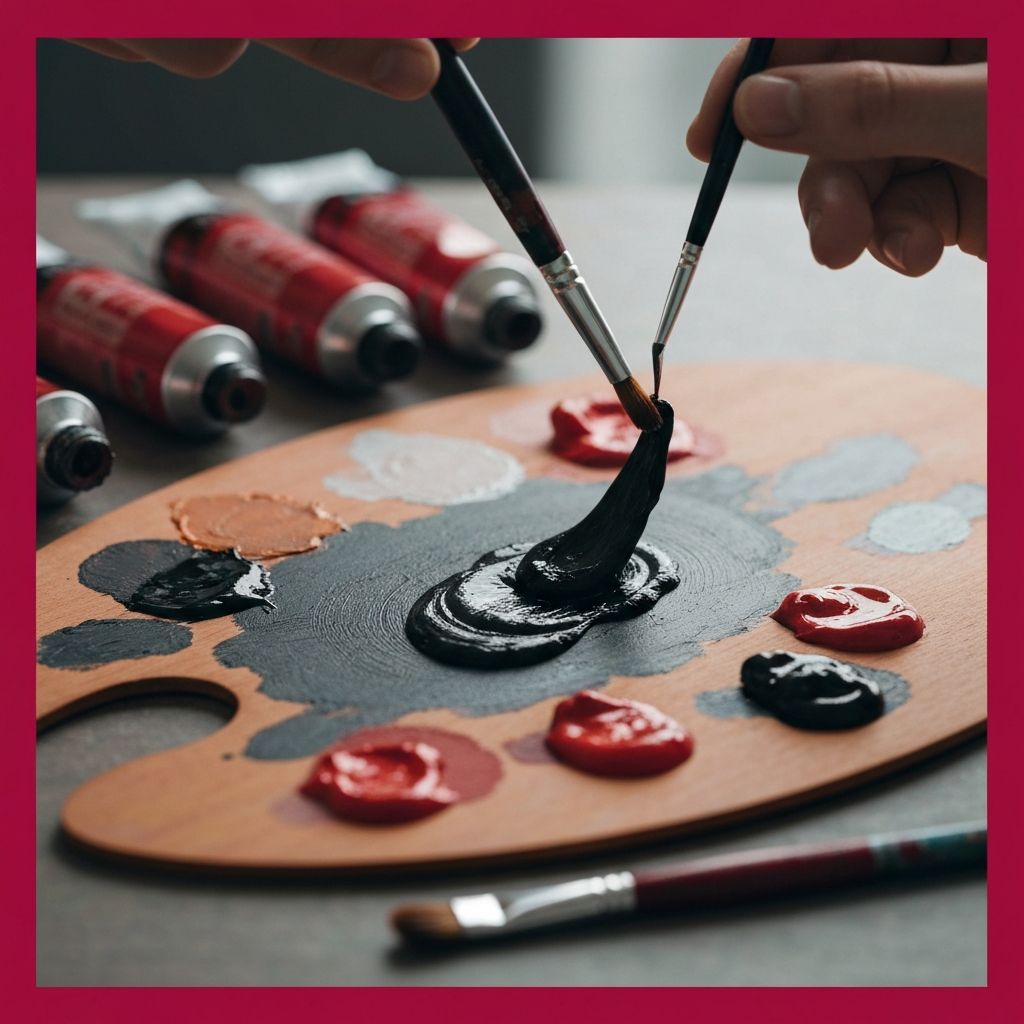
Black is one of the most essential colors in any artist's palette, used for shading, creating depth, adding contrast, and defining shapes. While it is easy to purchase a tube of black paint from an art supply store, many artists prefer to mix their own black because pre-made blacks can sometimes appear flat, lifeless, or overly cool or warm. By mixing your own black, you gain greater control over the tone, temperature, and depth of the color, allowing you to create richer, more nuanced dark values in your artwork.
In color theory, black is technically the absence of light. In subtractive color mixing, which is the type of mixing used with paints and pigments, combining all colors theoretically produces black. In practice, mixing all available paint colors together often produces a muddy dark brown rather than a true black. However, there are several proven methods for mixing black paint using specific color combinations that produce beautiful, deep blacks with various undertones.
Method 1: Mixing Primary Colors
One of the most common methods for making black paint is to mix the three primary colors together: red, blue, and yellow. When combined in the right proportions, these three colors create a dark, nearly black mixture. The key to success with this method is using the right shades of each primary color and mixing them in the correct ratios.
Start with equal parts of each primary color and mix them thoroughly. You will likely produce a very dark brown or charcoal color initially. To push the mixture closer to black, adjust the proportions by adding more blue, as blue is the darkest of the three primary colors. Continue adjusting and mixing until you achieve the desired depth and tone.
The specific shades of primary colors you use will affect the resulting black. Using ultramarine blue, alizarin crimson, and yellow ochre will produce a different black than using phthalo blue, cadmium red, and cadmium yellow. Experiment with different combinations to find the blacks that work best for your artistic style and subjects.
One advantage of mixing black from primary colors is that you can easily adjust the temperature of the resulting color. Adding more blue creates a cooler black, while adding more red or yellow creates a warmer black. This flexibility allows you to match the black to the overall color temperature of your painting.
Method 2: Complementary Color Mixing
Another effective method for creating black paint is to mix complementary colors together. Complementary colors are pairs of colors that sit opposite each other on the color wheel. When mixed together, complementary colors neutralize each other and produce a dark, neutral color that can approach black.
The most commonly used complementary pairs for mixing black include ultramarine blue and burnt umber, phthalo blue and burnt sienna, and alizarin crimson and viridian green. Each of these combinations produces a black with a slightly different undertone, giving you a range of options for different applications.
Ultramarine blue and burnt umber is perhaps the most popular combination for mixing black among oil painters. Mix approximately equal parts of each color, then adjust the proportions to achieve the desired tone. Adding more blue will create a cooler black, while adding more burnt umber will create a warmer black. This mixture produces a rich, versatile black that works well for a wide range of subjects.
Phthalo blue and burnt sienna is another excellent combination that produces a deep, intense black. Phthalo blue is an extremely powerful pigment, so you will need less of it relative to the burnt sienna. Start with a small amount of phthalo blue and gradually add burnt sienna until you achieve the desired darkness and warmth.
Alizarin crimson and viridian green create a beautiful, complex black with a slightly purplish undertone. This combination is particularly useful for painting shadows in portraits and still life paintings, where a pure, neutral black might appear too stark or artificial.
Method 3: Using Dark Pigments as a Base
Some artists start with a very dark pigment as a base and adjust it to create their ideal black. Payne's gray is a popular starting point, as it is a very dark blue-gray that can be deepened with the addition of other dark colors. Adding a small amount of burnt umber or burnt sienna to Payne's gray can produce a rich, warm black.
Indigo is another dark pigment that can be used as a base for mixing black. By adding small amounts of dark red or brown pigments, you can push indigo toward a true black while maintaining its depth and richness.
Ivory black and lamp black are two traditional black pigments made from charred bone and soot, respectively. While these are pre-made black pigments, you can modify their character by mixing them with small amounts of other colors. Adding a touch of ultramarine blue to ivory black gives it a cooler, deeper quality, while adding a small amount of burnt umber warms it up and adds richness.
Making Black Paint for Home and DIY Projects
If you need black paint for home improvement or DIY projects rather than fine art, there are several practical approaches. For wall paint, the easiest option is to purchase pre-mixed black paint from a hardware store. However, if you need to create a custom shade or are working with paint you already have on hand, you can mix dark colors together to achieve black.
For acrylic craft paints, mixing dark blue, dark red, and dark green in roughly equal proportions can produce a serviceable black. Adding a small amount of pre-made black paint to a dark mixture can help deepen the color and push it closer to a true black.
For natural or eco-friendly black paint, you can use charcoal powder or activated carbon mixed with a binder such as linseed oil, gum arabic, or acrylic medium. This produces a matte black with a slightly textured finish that can be used for art projects, crafts, or decorative applications.
Tips for Mixing Beautiful Blacks
When mixing black paint, there are several tips that can help you achieve better results. Always mix more paint than you think you will need. Black mixtures can be difficult to match exactly, so having extra ensures consistency throughout your painting or project.
Mix your colors thoroughly to avoid streaks or patches of the component colors showing through. Use a palette knife to mix oil paints and a brush or palette knife for acrylics. Take your time with the mixing process, as rushing can lead to uneven results.
Test your mixed black against a true black reference to evaluate its depth and tone. Apply a small swatch of your mixture next to a commercial black paint to see how they compare. This will help you determine if any adjustments are needed before using the mixture in your work.
Consider the context in which the black will be used. A warm black may be more appropriate for shadows in a sunlit scene, while a cool black may work better for a moonlit or overcast atmosphere. By matching the temperature of your black to the overall mood of the piece, you can create more cohesive and convincing artwork.
Finally, remember that in most paintings, using a pure, opaque black for shadows is less effective than using a dark, transparent mixture. Transparent darks allow underlying colors to show through, creating shadows that are more luminous and visually interesting than flat, opaque blacks. By mixing your own blacks with transparent or semi-transparent pigments, you can achieve richer, more lifelike shadows in your work.
