
Why Home Jewelry Cleaning Matters
Your jewelry encounters a remarkable amount of buildup from daily wear. Hand lotions, soaps, perfumes, natural skin oils, cooking residue, and environmental dust all accumulate on your precious pieces, gradually diminishing their sparkle and luster. Professional cleanings are recommended once or twice a year, but regular home cleaning between professional visits keeps your jewelry looking its best and can even extend the lifespan of certain metals and gemstones.
The good news is that most jewelry can be safely and effectively cleaned at home using supplies you probably already have in your kitchen or bathroom. The key is knowing which cleaning method is appropriate for each type of metal and gemstone, because using the wrong technique can damage delicate stones, strip protective coatings, or cause discoloration. This guide covers the safest home cleaning methods for every common type of jewelry.
Cleaning Gold Jewelry at Home
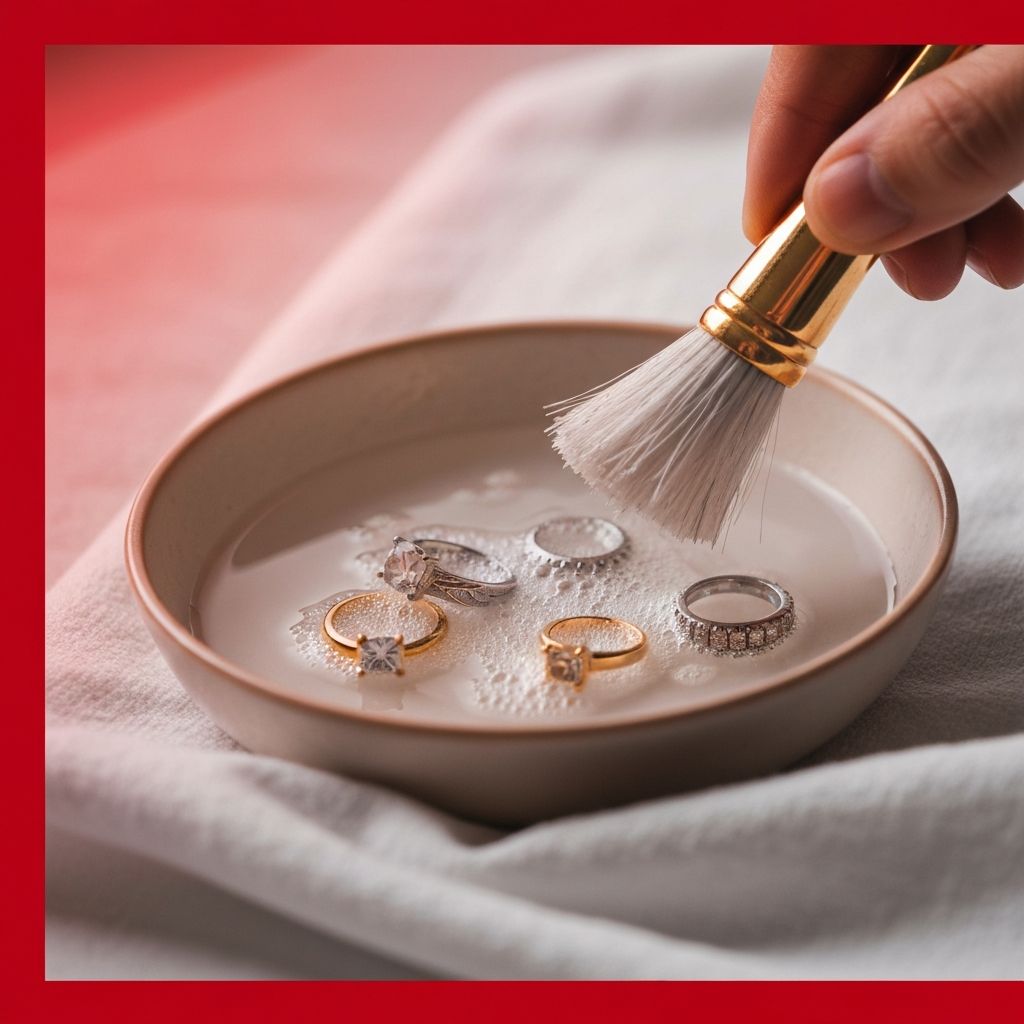
Gold is relatively durable and resistant to tarnishing, making it one of the easiest metals to clean at home. The most effective and safest method uses warm water and mild dish soap. Fill a small bowl with warm, not hot, water and add two to three drops of gentle dish soap like Dawn. Place your gold jewelry in the solution and let it soak for 15 to 30 minutes to loosen any buildup.
After soaking, use a very soft toothbrush, ideally a baby toothbrush or one specifically designated for jewelry cleaning, to gently scrub the piece, paying special attention to crevices, prong settings, and the underside of rings where lotion and soap tend to accumulate. Rinse thoroughly under warm running water, making sure to plug the drain or work over a bowl to prevent any accidents. Pat dry with a soft, lint-free cloth and allow the piece to air dry completely before storing.
For gold jewelry with diamonds, this same soap and water method works beautifully and is recommended by the Gemological Institute of America. The warm soapy water loosens oils and grime without damaging either the gold or the diamonds. For extra sparkle, you can add a small splash of household ammonia to the soaking solution, but avoid this if your gold jewelry contains pearls, opals, or other porous stones.
Cleaning Silver Jewelry at Home
Silver is more prone to tarnishing than gold because it reacts with sulfur compounds in the air, creating a dark layer of silver sulfide on the surface. While regular cleaning with soap and water helps maintain silver, removing existing tarnish requires a slightly different approach.
The baking soda and aluminum foil method is one of the most effective home remedies for removing silver tarnish. Line a bowl or baking dish with aluminum foil, shiny side up. Place your tarnished silver jewelry on the foil and sprinkle one to two tablespoons of baking soda over the pieces. Pour boiling water into the dish until the jewelry is fully submerged. You will notice a chemical reaction occurring as the tarnish transfers from the silver to the aluminum foil. Let the jewelry sit in the solution for 5 to 10 minutes, then remove, rinse with clean water, and polish dry with a soft cloth.
For light tarnish, a simple paste of baking soda and water works well. Mix three parts baking soda with one part water to create a thick paste. Apply the paste to the tarnished areas with a soft cloth or sponge and gently rub in a straight back-and-forth motion rather than circular motions, which can create scratches. Rinse thoroughly and dry with a clean cloth. Avoid using this method on silver-plated jewelry, as the abrasive action can wear through the thin silver layer.
Cleaning Diamond Jewelry at Home
Diamonds are the hardest natural substance on earth, which makes them relatively easy to clean at home. However, the metal settings and any other gemstones in the piece may be more delicate, so always consider the entire piece of jewelry when choosing a cleaning method.
The most effective home cleaning method for diamond jewelry is a soak in warm water with a few drops of dish soap, followed by gentle brushing with a soft toothbrush. Focus the brushing on the underside of the diamond, known as the pavilion, where oils and lotions tend to collect and block light from entering the stone. A clean pavilion allows maximum light return, which is what gives a diamond its brilliant sparkle.
For an extra deep clean, you can soak diamond jewelry in a solution of equal parts warm water and household ammonia for 20 to 30 minutes. The ammonia is excellent at dissolving oils and organic residue. After soaking, brush gently, rinse thoroughly, and dry with a lint-free cloth. This method should only be used for diamonds set in gold or platinum, not for diamonds paired with pearls, opals, emeralds, or other sensitive stones.
Cleaning Costume and Fashion Jewelry
Costume jewelry requires the most gentle cleaning approach because it often features plated metals, glued-in stones, and materials that can be damaged by water or chemicals. Never soak costume jewelry, as prolonged water exposure can loosen glue, cause plating to peel, and promote rust on base metals.
Instead, dampen a soft cloth with plain water and gently wipe each piece to remove surface dust and oils. For stubborn spots, add a tiny amount of mild soap to the damp cloth. Dry immediately and thoroughly with a clean dry cloth after cleaning. Store costume jewelry in a dry place, ideally in individual bags or compartments to prevent pieces from scratching each other. If your costume jewelry has developed green discoloration from oxidation, gently rub the affected area with a cloth dampened with white vinegar, then dry immediately. To prevent future oxidation, apply a thin coat of clear nail polish to the parts of the jewelry that touch your skin.
