
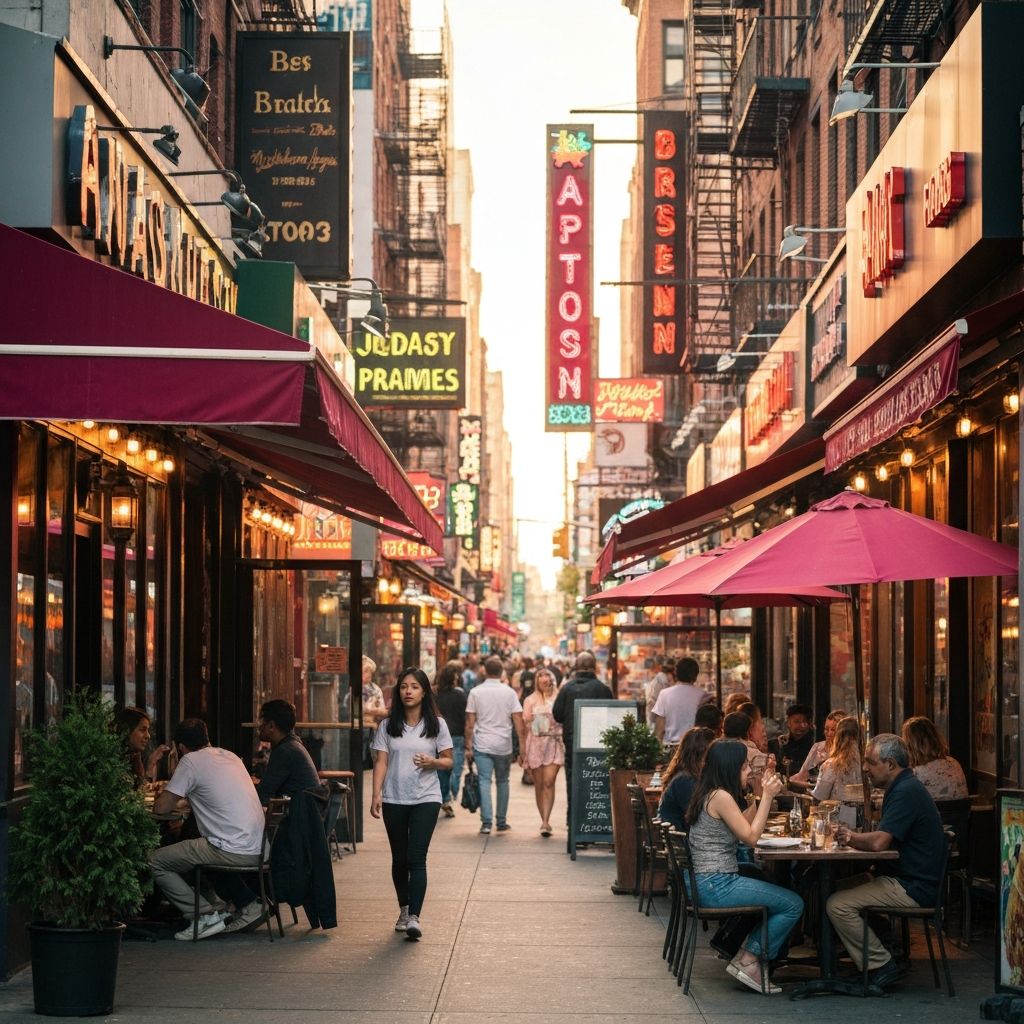
The Sheer Scale of NYC's Restaurant Scene
New York City is widely regarded as one of the greatest food cities on the planet, and the numbers back up that reputation. According to the most recent data from the New York City Department of Health and Mental Hygiene, there are approximately 27,000 restaurants operating across the five boroughs at any given time. This figure fluctuates constantly as new establishments open and others close their doors, but it consistently hovers in that remarkable range.
To put that number in perspective, if you ate at a different NYC restaurant every single day, it would take you nearly 74 years to visit them all. That's an entire lifetime dedicated to dining out, and you still might not make it to every spot. The sheer density of dining options is what sets New York apart from virtually every other city in the world.
Breaking Down the Numbers by Borough
Manhattan, unsurprisingly, leads the pack with the highest concentration of restaurants. The borough is home to roughly 10,000 to 11,000 dining establishments, packed into just 23 square miles. That translates to approximately 435 restaurants per square mile, making it one of the most restaurant-dense areas anywhere on Earth.
Brooklyn comes in second with around 6,000 restaurants, reflecting the borough's explosive growth as a culinary destination over the past two decades. Queens follows with approximately 5,500 restaurants, and it arguably offers the most diverse dining scene in the entire city, with authentic cuisines from virtually every corner of the globe represented along its streets.
The Bronx and Staten Island round out the five boroughs with around 3,000 and 1,500 restaurants respectively. While these boroughs may have fewer total establishments, they offer incredible culinary gems that are well worth the trip, from authentic Italian cuisine on Arthur Avenue in the Bronx to Sri Lankan specialties in Staten Island.
Types of Restaurants You'll Find
NYC's restaurant landscape is incredibly diverse in terms of both cuisine and dining format. The city is home to roughly 70 Michelin-starred restaurants, including several three-star establishments that rank among the finest dining experiences in the world. At the other end of the spectrum, thousands of casual eateries, delis, pizzerias, and food carts serve affordable meals to millions of New Yorkers every day.
The city boasts restaurants representing more than 150 different cuisines. You can find everything from Ethiopian injera in Harlem to hand-pulled noodles in Flushing, from classic New York-style pizza slices to elaborate omakase experiences that cost hundreds of dollars per person. This extraordinary diversity is a direct reflection of New York's status as one of the most multicultural cities in human history.
Fast-casual dining has exploded in recent years, with chains and independent operators alike capitalizing on New Yorkers' desire for quality food served quickly. The city also has a thriving food truck and street food scene, with an estimated 5,000 mobile food vendors adding to the total count of dining options available on any given day.
The Economics Behind NYC Restaurants
Operating a restaurant in New York City is notoriously challenging from a financial perspective. The average restaurant in Manhattan pays between $100 and $300 per square foot in annual rent, which can translate to monthly rent bills of $20,000 to $100,000 or more depending on location and size. Labor costs are similarly steep, with New York's minimum wage among the highest in the nation.
Despite these challenges, the restaurant industry is one of the largest employers in New York City, providing jobs to approximately 320,000 people. The industry generates an estimated $50 billion in annual revenue, making it a critical pillar of the city's economy. Restaurants also drive tourism, with food being cited as a primary reason for visiting New York by millions of tourists each year.
The failure rate for NYC restaurants remains sobering, however. Industry estimates suggest that roughly 60% of new restaurants close within their first year, and up to 80% shutter within five years. The combination of high fixed costs, intense competition, and thin profit margins makes the restaurant business one of the most difficult industries to succeed in, particularly in a market as demanding as New York City.
How NYC Compares to Other Major Cities
When compared to other major metropolitan areas, New York City's restaurant count is truly exceptional. Los Angeles, despite having a much larger geographic footprint, has approximately 25,000 restaurants. Chicago has around 7,500, while San Francisco has roughly 4,500. London, one of New York's closest international rivals in the dining arena, has approximately 18,000 restaurants.
What truly sets New York apart, however, is not just the raw number of restaurants but the density and diversity of its dining options. No other city in the world packs so many different cuisines and dining experiences into such a compact area. The ability to walk a few blocks and transition from a world-class French bistro to an authentic Sichuan hotpot spot to a beloved neighborhood pizza joint is something that is uniquely New York.
The Future of Dining in New York City
The NYC restaurant scene continues to evolve at a rapid pace. The pandemic fundamentally changed the landscape, with outdoor dining becoming a permanent fixture through programs like the Open Restaurants initiative. Ghost kitchens and delivery-only concepts have also proliferated, adding a new dimension to the city's food scene that doesn't always show up in traditional restaurant counts.
Technology is playing an increasingly important role, with reservation platforms, delivery apps, and social media influencing where and how New Yorkers dine. Despite all the changes, however, the fundamental appeal of eating out in New York City remains the same: an unparalleled variety of cuisines, a constant stream of new openings and innovations, and the energy of a city that truly never stops eating.
Whether you're a lifelong New Yorker or a first-time visitor, the city's restaurant scene offers something for every palate and every budget. With approximately 27,000 restaurants to choose from, the only real challenge is deciding where to eat next.
