
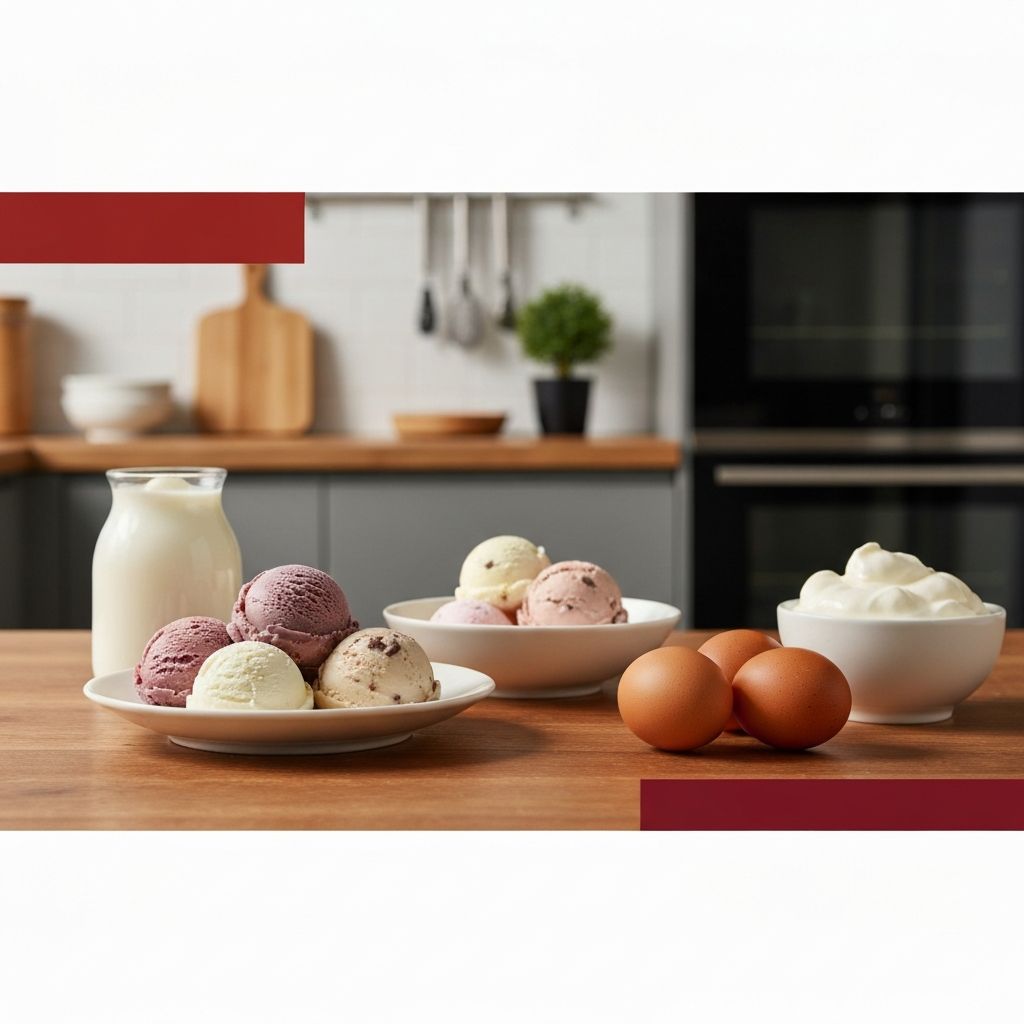
The Role of Eggs in Ice Cream
The question of whether ice cream contains eggs isn't as straightforward as you might expect. The answer depends on the type of ice cream, the brand, and the recipe used. Some ice cream is made with eggs as a key ingredient, while other varieties are completely egg-free. Understanding the difference is important not only for those with egg allergies but also for anyone who wants to know exactly what's in their favorite frozen treat.
Eggs have been used in ice cream making for centuries, dating back to the earliest frozen dessert recipes from Europe. When eggs are included, it's typically the yolks that are used rather than the whites. Egg yolks serve several important functions in ice cream: they act as an emulsifier, helping to blend fat and water together smoothly; they add richness and a velvety texture; they contribute to a creamier mouthfeel; and they improve the ice cream's ability to hold air, resulting in a lighter, more scoopable product.
French-Style vs. Philadelphia-Style Ice Cream
In the world of ice cream, there are two primary traditional styles that differ in their use of eggs. Understanding these styles will help you identify which ice creams are likely to contain eggs and which are not.
French-style ice cream, also known as custard-based ice cream, is made with a cooked egg yolk custard as its base. The process involves heating milk, cream, and sugar together, then slowly tempering in beaten egg yolks to create a rich custard. This custard base is then cooled and churned in an ice cream maker. French-style ice cream is known for its luxurious, dense, and incredibly smooth texture. Premium brands and artisanal ice cream shops often use this method.
Philadelphia-style ice cream, in contrast, is made without eggs. This simpler style uses just cream, milk, sugar, and flavorings — no egg custard required. The result is a lighter, fresher-tasting ice cream that allows the flavor of the ingredients to shine through more directly. While it may not have the same rich, custard-like texture as French-style, Philadelphia-style ice cream can be just as delicious in its own right.
Which Commercial Brands Use Eggs?
When it comes to store-bought ice cream, egg usage varies significantly between brands. Many premium ice cream brands do use eggs in their recipes. Haagen-Dazs, for example, uses egg yolks in many of its flavors — it's part of what gives their ice cream its signature dense, rich texture. If you look at the ingredients list on a pint of Haagen-Dazs vanilla, you'll find egg yolks listed.
Other brands that commonly use eggs include Talenti (which makes gelato, traditionally an egg-based frozen dessert), many organic and artisanal brands, and some premium store-brand varieties. If a product is labeled as "frozen custard" rather than "ice cream," it almost certainly contains eggs, as egg yolks are a defining ingredient in frozen custard by FDA standards.
On the other hand, many mainstream ice cream brands do not use eggs in most of their flavors. Breyers, Turkey Hill, Blue Bunny, and many store brands typically make their ice cream without egg yolks, instead relying on stabilizers and emulsifiers like guar gum, carrageenan, and mono- and diglycerides to achieve a smooth texture. However, it's always important to check the ingredient label, as formulations can change and specific flavors within a brand may contain eggs even if other flavors don't.
Ice Cream and Egg Allergies
For people with egg allergies — which is one of the most common food allergies, particularly in children — knowing whether ice cream contains eggs is a critical safety concern. Egg allergies can cause reactions ranging from mild hives and digestive discomfort to severe anaphylaxis, making ingredient awareness essential.
If you or someone in your family has an egg allergy, always read the ingredient label carefully before purchasing ice cream. Look for terms like "egg yolks," "eggs," "egg solids," or "egg lecithin" in the ingredients list. Also pay attention to allergen warnings — FDA regulations require that products containing eggs clearly state "Contains: Eggs" on the label, making it easier to identify products to avoid.
Be cautious with ice cream from shops and parlors where scoops are served. Cross-contamination is a real concern in these environments, as the same scoops and equipment are used for different flavors, some of which may contain eggs. Ask the staff about their allergen protocols and whether they can use a clean scoop for your order.
Egg-Free Ice Cream Options
Fortunately, there are plenty of delicious egg-free ice cream options available. As mentioned, many mainstream brands like Breyers and Blue Bunny don't use eggs in most of their products. Additionally, the growing dairy-free and vegan ice cream market offers a wealth of egg-free options made from bases like coconut milk, almond milk, oat milk, cashew milk, and soy milk.
Popular dairy-free ice cream brands like So Delicious, Oatly, and Coconut Bliss are inherently egg-free, making them safe choices for those with egg allergies. These products have improved dramatically in recent years in terms of taste and texture, with many being virtually indistinguishable from traditional dairy ice cream.
If you enjoy making ice cream at home, you can easily create egg-free versions using the Philadelphia-style method. A basic recipe of heavy cream, whole milk, sugar, and vanilla extract — churned in an ice cream maker — produces a delicious, egg-free ice cream. Adding a tablespoon of cornstarch dissolved in a bit of the milk before heating can help achieve a smoother texture without the need for egg yolks.
Gelato, Frozen Custard, and Other Frozen Treats
It's helpful to understand how eggs factor into other popular frozen desserts beyond traditional ice cream. Gelato, the Italian frozen dessert, typically contains eggs, though usually fewer than French-style ice cream. Traditional gelato recipes call for egg yolks to create a smooth, dense texture, but some modern gelato makers have moved toward egg-free formulations.
Frozen custard, popular in the Midwest and along the East Coast of the United States, always contains eggs by definition. According to FDA standards, frozen custard must contain at least 1.4 percent egg yolk solids by weight. This high egg content gives frozen custard its characteristically dense, creamy, and rich texture. If you have an egg allergy, frozen custard is always off-limits.
Sorbet and most fruit-based frozen treats are naturally egg-free, as they're made primarily from fruit, sugar, and water. Sherbet, which contains a small amount of dairy, is also typically egg-free. These can be good alternatives for those avoiding eggs while still wanting to enjoy a frozen dessert.
How to Check for Eggs in Ice Cream
The simplest way to determine whether a specific ice cream product contains eggs is to read the ingredient label. In the United States, the FDA requires that all major allergens — including eggs — be clearly identified on food labels. Look for the "Contains" statement near the ingredient list, which will explicitly list any major allergens present in the product.
When dining out or visiting an ice cream shop, don't hesitate to ask staff about egg content in their products. Reputable establishments should be able to provide ingredient information and allergen details for their menu items. Many ice cream shops now post allergen information on their websites or display it in-store.
In summary, whether ice cream contains eggs depends entirely on the specific product and recipe. French-style and custard-based ice creams use egg yolks, while Philadelphia-style ice cream and many mainstream brands do not. Always check labels if eggs are a concern, and take comfort in knowing that there are excellent egg-free options available for every frozen treat lover.
