
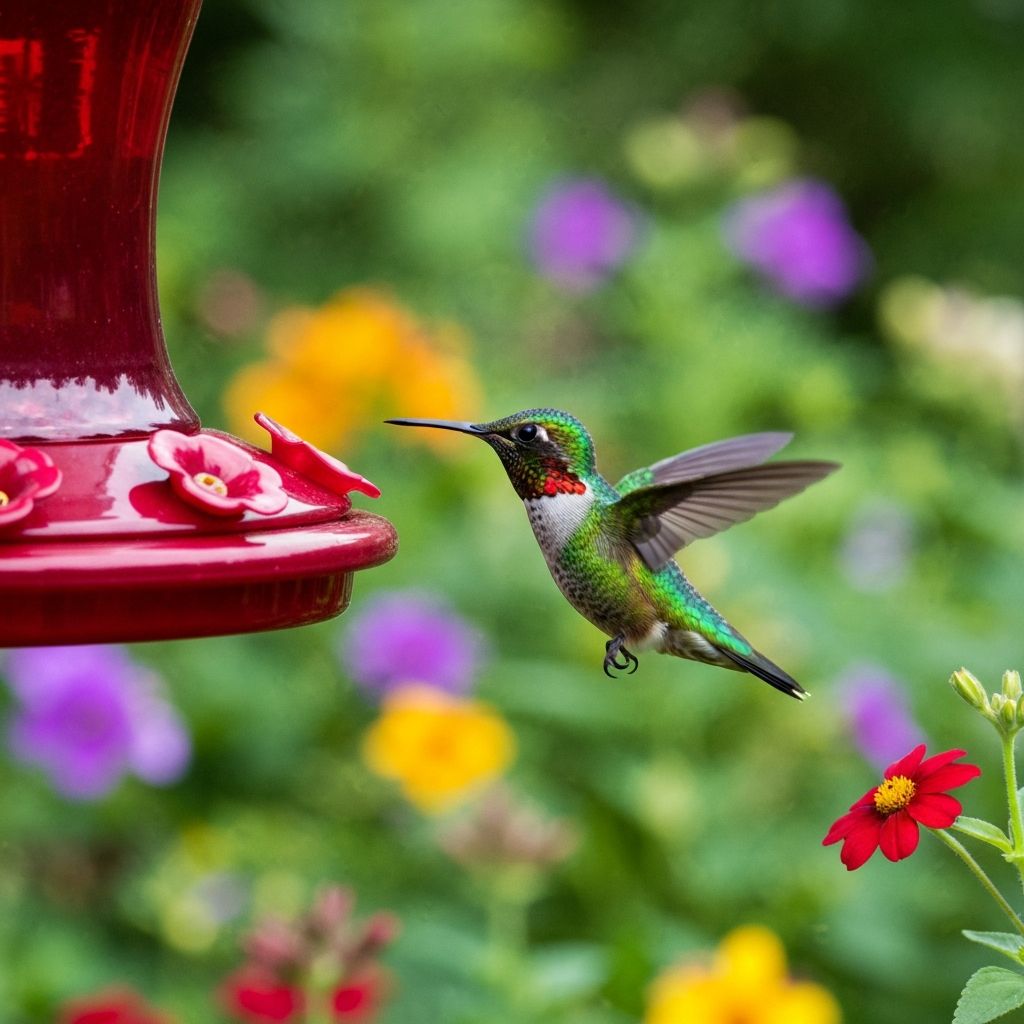
The Perfect Hummingbird Food Recipe
Making hummingbird food at home is one of the simplest and most rewarding ways to attract these magnificent tiny birds to your garden. The recipe could not be more straightforward: mix one part plain white granulated sugar with four parts water. That is it. No food coloring, no additives, no fancy ingredients. This simple 1:4 ratio of sugar to water closely mimics the natural nectar concentration found in the flowers that hummingbirds feed on in the wild.
To prepare a standard batch, combine one cup of white granulated sugar with four cups of water in a saucepan. Heat the mixture on the stove until the sugar is completely dissolved, stirring occasionally. You do not need to bring the mixture to a full boil, though a brief boil can help slow the growth of mold and bacteria, extending the life of the nectar in your feeder.
Allow the solution to cool completely to room temperature before filling your feeder. Hot nectar can warp plastic feeders and potentially harm hummingbirds. Any leftover nectar can be stored in the refrigerator for up to two weeks, making it convenient to prepare larger batches in advance.
Why the 1:4 Ratio Matters
The 1:4 sugar-to-water ratio is not arbitrary. It has been carefully studied and recommended by ornithologists and hummingbird researchers because it closely approximates the sugar concentration found in the nectar of flowers that hummingbirds naturally visit. Most wildflower nectars contain between 20% and 25% sucrose, and the 1:4 ratio produces a solution with approximately 20% sugar concentration.
Using a stronger concentration, such as a 1:3 or 1:2 ratio, might seem like it would attract more hummingbirds, but it can actually cause problems. Overly concentrated nectar can lead to dehydration in hummingbirds, as their bodies must use water to metabolize the excess sugar. It can also cause liver damage over time and may ferment more quickly in warm weather, producing alcohol and harmful bacteria.
Conversely, a weaker solution, such as 1:5 or more dilute, may not provide sufficient calories to justify the energy hummingbirds expend visiting the feeder. Hummingbirds have extraordinarily high metabolic rates and must consume approximately half their body weight in sugar each day to survive. A nectar that is too dilute simply is not worth the trip for these energy-intensive little birds.
Ingredients to Avoid
While the recipe for hummingbird food is simple, there are several common mistakes and dangerous substitutions that can harm these delicate birds. Understanding what not to use is just as important as knowing the correct recipe.
Never use red food dye or any artificial coloring in your hummingbird nectar. While many commercial hummingbird food products contain red dye, research suggests that artificial colorings can be harmful to hummingbirds, potentially causing kidney damage, tumors, and other health issues. The red color of your feeder is sufficient to attract hummingbirds; the nectar itself does not need to be colored.
Do not substitute honey for sugar. While honey may seem like a more natural choice, it ferments rapidly when diluted with water, creating a breeding ground for a deadly fungal infection called candidiasis that can affect hummingbirds' tongues and throats. Honey also contains bacteria and mold spores that are harmless to humans but can be fatal to hummingbirds.
Avoid using brown sugar, raw sugar, turbinado sugar, powdered sugar, or any sugar substitute. Brown and raw sugars contain iron and other minerals that hummingbirds cannot process effectively and that can cause liver damage. Powdered sugar often contains cornstarch, which can promote bacterial growth. Artificial sweeteners provide no calories and can starve hummingbirds that rely on nectar for energy.
Never add any other ingredients to your nectar, including fruit juice, vitamins, protein supplements, or preservatives. Hummingbirds obtain these additional nutrients from the insects they eat, which make up a significant portion of their diet. The nectar feeder should provide only a clean, simple sugar-water solution.
Feeder Selection and Placement
Choosing the right feeder and placing it strategically can significantly increase your success in attracting hummingbirds. There are two main types of hummingbird feeders: bottle-style (inverted) feeders and saucer-style feeders, each with their own advantages.
Saucer-style feeders are generally easier to clean, less prone to leaking, and less attractive to bees and wasps because the nectar level sits further from the feeding ports. Bottle-style feeders hold more nectar and can be useful in areas with high hummingbird traffic, but they require more frequent cleaning due to their more complex internal structure.
Regardless of the style you choose, select a feeder that is easy to disassemble and clean thoroughly. Feeders with multiple parts, narrow crevices, or hard-to-reach areas can harbor mold and bacteria that are difficult to remove. Red-colored feeders are most effective at attracting hummingbirds, as these birds are naturally drawn to red and orange flowers.
Place your feeder in a location that is partially shaded to keep the nectar fresh longer and prevent it from becoming too hot. The feeder should be visible and accessible, but also near trees or shrubs where hummingbirds can perch and rest between feedings. Avoid placing feeders near windows where birds might collide with the glass, and keep them away from areas where cats or other predators could ambush visiting birds.
Feeder Cleaning and Maintenance
Proper feeder maintenance is crucial for the health of your hummingbird visitors. Dirty feeders can harbor harmful mold, bacteria, and yeast that can cause illness and death in hummingbirds. Establishing a regular cleaning routine is one of the most important responsibilities of feeding hummingbirds.
In warm weather, when temperatures exceed 80 degrees Fahrenheit, nectar should be changed every one to two days. In cooler weather, you can extend this to every three to five days. However, if you notice the nectar becoming cloudy, developing black spots of mold, or attracting insects, change it immediately regardless of how recently it was filled.
To clean your feeder, disassemble it completely and rinse all parts with hot water. Use a bottle brush or pipe cleaners to scrub the interior surfaces and feeding ports. For a deeper clean, soak the feeder parts in a solution of one part white vinegar to four parts water for about an hour, then scrub and rinse thoroughly. Avoid using soap or detergent, as residue can be harmful to hummingbirds. If mold is persistent, a dilute bleach solution (one tablespoon of bleach per quart of water) can be used, followed by extensive rinsing.
Attracting More Hummingbirds to Your Garden
While feeders are an excellent way to attract hummingbirds, creating a comprehensive hummingbird-friendly habitat will draw even more of these amazing birds to your yard. Planting native flowers that produce nectar is the most natural and effective approach.
Hummingbirds are particularly attracted to tubular flowers in red, orange, and pink shades. Some of the best plants for hummingbird gardens include trumpet vine, bee balm, cardinal flower, salvia, fuchsia, columbine, and coral honeysuckle. Planting a variety of species that bloom at different times throughout the growing season ensures a continuous nectar supply from spring through fall.
In addition to nectar sources, hummingbirds need insects for protein, especially during the breeding season when they are feeding growing chicks. Avoiding pesticide use in your garden helps maintain healthy insect populations that hummingbirds depend on. Providing a gentle water source, such as a misting fountain or shallow birdbath with a dripper, gives hummingbirds a place to bathe and drink.
Hummingbirds are territorial and will often claim a feeder as their own, chasing away other birds. If you want to attract multiple hummingbirds, place several feeders around your yard, spaced far enough apart that a single bird cannot guard all of them. Hanging feeders on different sides of your house or in separate garden areas can help distribute territorial boundaries and allow more birds to feed peacefully.
Seasonal Considerations
The timing of when you put out and take in your hummingbird feeders depends on your geographic location and the migration patterns of your local hummingbird species. In most parts of the United States, feeders should be put out in spring before the first hummingbirds arrive, typically two to three weeks before the expected arrival date for your region.
In fall, leave your feeders out for at least two weeks after you see the last hummingbird. Contrary to the popular myth, leaving feeders out will not prevent hummingbirds from migrating. Migration is triggered by changes in daylight length, not food availability. Late feeders can actually be lifesaving for stragglers, young birds on their first migration, or rare vagrant species passing through your area.
In regions with mild winters, such as the southern United States and Pacific Coast, hummingbirds may be present year-round, and feeders can be maintained throughout all seasons. In cold weather, prevent nectar from freezing by bringing feeders inside overnight and putting them back out at dawn, rotating between two feeders, or using feeder warmers designed for this purpose.
