
What Is a Producer in a Food Chain? Understanding the Foundation of Every Ecosystem
Every ecosystem on Earth, from the deepest ocean trenches to the highest mountain peaks, depends on a fundamental group of organisms known as producers. These remarkable living things form the base of every food chain and food web, converting raw energy from the sun or chemicals into usable food that sustains all other life. Without producers, no other organisms could survive, making them the most critical component of any ecosystem.
Understanding what producers are, how they function, and why they matter is essential for anyone studying ecology, biology, or environmental science. This comprehensive guide explains everything you need to know about producers in food chains.
Defining Producers in Ecology
In ecology, a producer is an organism that can make its own food from inorganic substances using energy from sunlight or chemical reactions. Producers are also called autotrophs, which literally means self-feeders. They do not need to consume other organisms to obtain energy. Instead, they harness energy from their environment and convert it into organic molecules that serve as food.
The most common type of producer is a photosynthetic organism, which uses sunlight as its energy source. Plants, algae, and certain bacteria fall into this category. These organisms capture light energy and use it to convert carbon dioxide and water into glucose, a simple sugar that stores chemical energy. This process, known as photosynthesis, is one of the most important chemical reactions on the planet.
A less common but equally important type of producer is a chemosynthetic organism. These producers, primarily certain types of bacteria and archaea, obtain energy from chemical reactions involving inorganic compounds like hydrogen sulfide or ammonia rather than from sunlight. Chemosynthetic producers are found in extreme environments such as deep-sea hydrothermal vents, where sunlight cannot reach.
How Photosynthesis Works
Photosynthesis is the process by which most producers convert light energy into chemical energy. The process occurs primarily in the chloroplasts of plant cells, which contain a green pigment called chlorophyll. Chlorophyll absorbs light energy, primarily from the red and blue portions of the visible light spectrum, and uses it to drive the chemical reactions of photosynthesis.
The overall equation for photosynthesis is relatively simple: six molecules of carbon dioxide plus six molecules of water, in the presence of light energy, produce one molecule of glucose and six molecules of oxygen. The glucose produced serves as the primary energy source for the plant and, ultimately, for the organisms that consume the plant.
Photosynthesis occurs in two main stages. The light-dependent reactions take place in the thylakoid membranes of the chloroplasts, where light energy is captured and used to produce ATP and NADPH, two energy-carrying molecules. The light-independent reactions, also known as the Calvin cycle, take place in the stroma of the chloroplasts, where ATP and NADPH are used to convert carbon dioxide into glucose.
Types of Producers
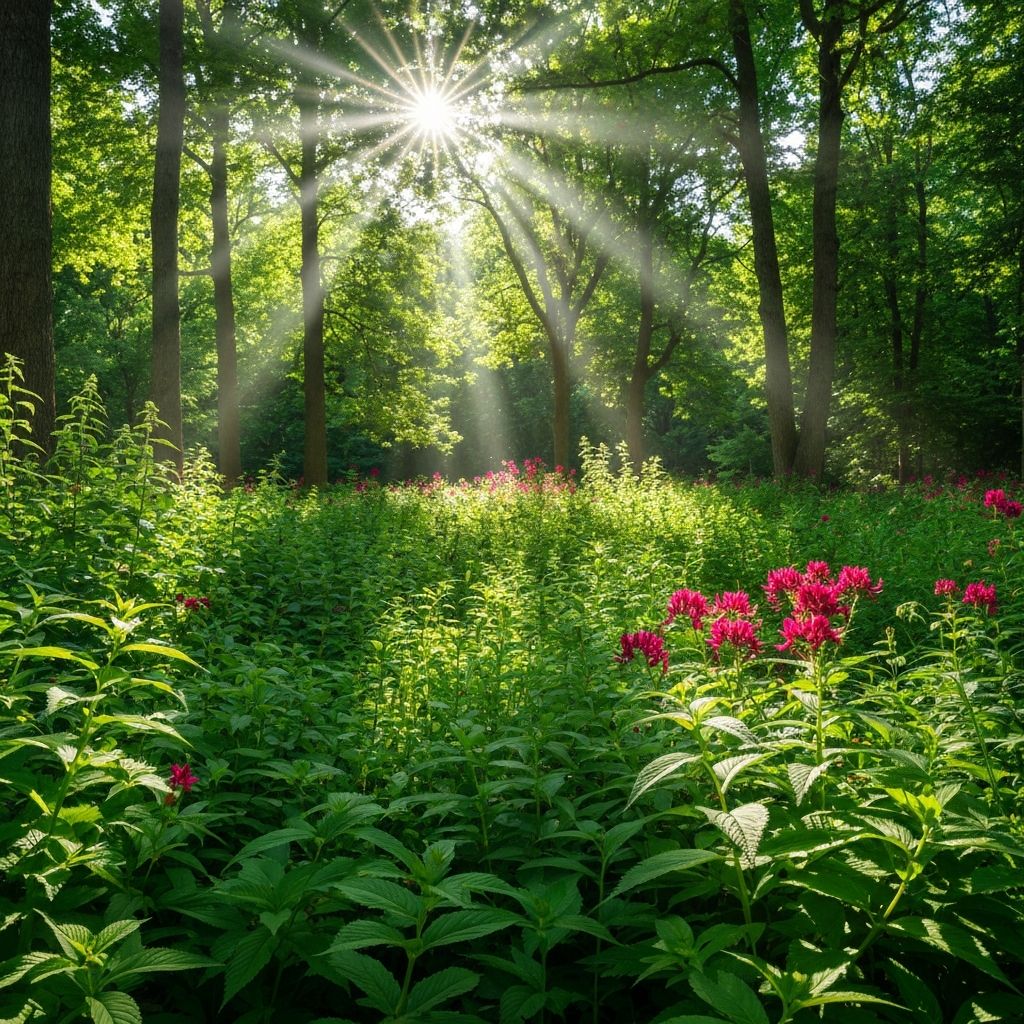
Producers come in many forms, from towering trees to microscopic algae. Terrestrial plants are the most visible and familiar producers. Trees, grasses, shrubs, mosses, and ferns all perform photosynthesis and serve as the primary producers in land-based ecosystems. These plants form the base of food chains in forests, grasslands, deserts, and tundra environments around the world.
Aquatic producers include a diverse range of organisms. Phytoplankton, which are microscopic photosynthetic organisms that float near the surface of oceans, lakes, and rivers, are among the most important producers on the planet. Despite their tiny size, phytoplankton are responsible for producing roughly half of the oxygen in Earth's atmosphere and form the base of nearly all aquatic food chains.
Algae, which range from microscopic single-celled organisms to large multicellular seaweeds like kelp, are another important group of aquatic producers. Kelp forests, found in cool, nutrient-rich coastal waters, are incredibly productive ecosystems that support a wide variety of marine life.
Cyanobacteria, sometimes called blue-green algae, are photosynthetic bacteria that have been producing food and oxygen for billions of years. They are among the oldest known producers and played a crucial role in creating the oxygen-rich atmosphere that allowed more complex life forms to evolve.
The Role of Producers in Food Chains
Producers occupy the first trophic level in every food chain, serving as the foundation upon which all other trophic levels depend. The energy that producers capture from sunlight or chemical reactions flows through the food chain as organisms at each successive level consume those below them.
In a simple terrestrial food chain, grass serves as the producer. A grasshopper eats the grass, making it a primary consumer. A frog eats the grasshopper, making it a secondary consumer. A snake eats the frog as a tertiary consumer, and a hawk eats the snake as a quaternary consumer. At every step, the energy originally captured by the grass producer is transferred through the food chain.
However, energy transfer between trophic levels is not efficient. On average, only about 10 percent of the energy at one trophic level is transferred to the next level. The remaining 90 percent is used by the organism for its own life processes or lost as heat. This inefficiency explains why food chains typically have only four or five trophic levels and why producers must capture enormous amounts of energy to support the organisms above them.
Producers vs. Consumers and Decomposers
To fully understand the role of producers, it helps to compare them with the other major groups of organisms in an ecosystem. Consumers, also called heterotrophs, cannot make their own food and must consume other organisms to obtain energy. Primary consumers eat producers directly, while secondary and tertiary consumers eat other consumers.
Decomposers are organisms that break down dead organic matter, recycling nutrients back into the ecosystem where they can be used by producers once again. Fungi and certain bacteria are the most common decomposers. Without decomposers, dead plant and animal material would accumulate, and the nutrients locked within them would be unavailable for producers to use.
Together, producers, consumers, and decomposers form a complete nutrient cycle that keeps ecosystems functioning. Producers capture energy and create organic matter, consumers transfer that energy through the food chain, and decomposers recycle nutrients back to the producers. This cycle has been operating for billions of years and is fundamental to life on Earth.
Why Producers Matter for the Environment
Producers are essential not only for supporting food chains but also for maintaining the overall health of the global environment. Through photosynthesis, producers absorb carbon dioxide from the atmosphere and release oxygen. This process is the primary source of atmospheric oxygen and plays a critical role in regulating the global carbon cycle.
The carbon dioxide that producers absorb during photosynthesis would otherwise accumulate in the atmosphere, contributing to the greenhouse effect and global warming. Forests, grasslands, and ocean phytoplankton act as carbon sinks, removing billions of tons of carbon dioxide from the atmosphere each year and storing it in their biomass and in the soil.
Protecting and restoring producer populations, whether through forest conservation, reforestation efforts, or protecting marine ecosystems, is therefore a critical strategy for addressing climate change and maintaining the environmental conditions that support all life on Earth.
Conclusion
Producers are the indispensable foundation of every food chain and ecosystem on Earth. Through photosynthesis and chemosynthesis, they capture energy from the environment and convert it into organic matter that sustains all other living organisms. From the towering trees of tropical rainforests to the microscopic phytoplankton of the open ocean, producers make life possible. Understanding their role is essential for appreciating the interconnectedness of all living things and for making informed decisions about environmental conservation and sustainability.
