
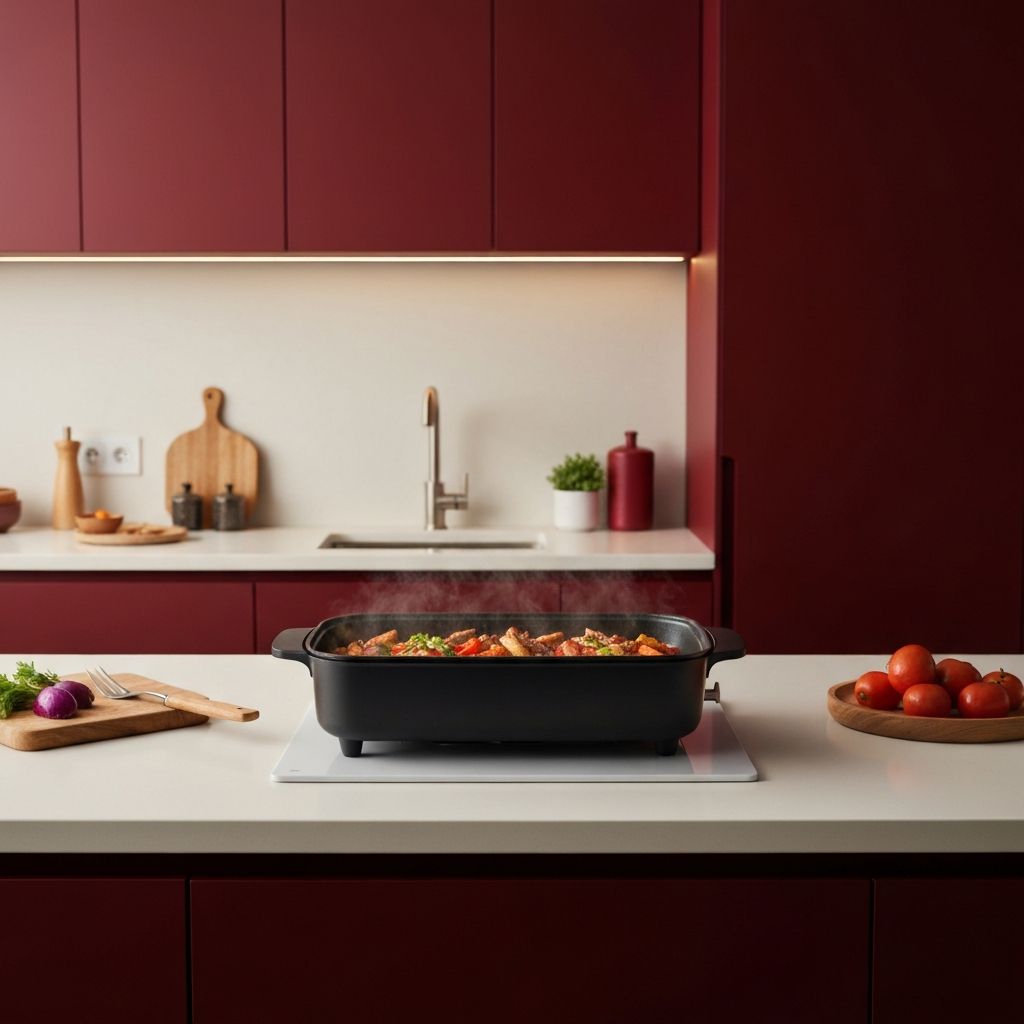
Understanding Electric Skillets and Their Popularity
Electric skillets have been a staple in American kitchens since the mid-20th century, offering a convenient alternative to traditional stovetop cooking. These countertop appliances feature a built-in heating element controlled by a thermostat, allowing users to cook a variety of dishes without using a conventional stove or oven. While they have earned their place in many households for their portability and ease of use, electric skillets are not without significant disadvantages that every potential buyer should carefully consider.
The appeal of electric skillets lies in their simplicity. Plug them in, set the temperature, and start cooking. They are particularly popular among college students, RV travelers, and anyone working in kitchens with limited stovetop space. However, the convenience factor often masks several practical limitations that can impact cooking quality, kitchen efficiency, and long-term satisfaction with the appliance.
Limited Temperature Control and Heat Distribution
One of the most significant disadvantages of electric skillets is their limited temperature control compared to gas or induction stovetops. While most electric skillets offer a temperature range from approximately 200°F to 400°F, the precision of these settings is often questionable. The thermostat mechanism in many models cycles the heating element on and off rather than maintaining a constant temperature, resulting in temperature fluctuations that can adversely affect delicate cooking techniques.
Heat distribution presents another challenge. Unlike a quality stovetop pan that receives uniform heat from a burner, electric skillets often develop hot spots near the center of the heating element and cooler zones toward the edges. This uneven heat distribution makes it difficult to achieve consistent browning on meats, even caramelization on vegetables, or uniform cooking of pancakes and other breakfast items that require consistent surface temperature.
Professional chefs and serious home cooks frequently note that the lack of instantaneous temperature adjustment is a critical shortcoming. On a gas stove, turning down the flame produces an immediate reduction in heat. Electric skillets, however, retain residual heat in the element and pan body, making it challenging to quickly reduce cooking temperature when a dish requires it. This thermal lag can lead to overcooking, burning, or difficulty executing techniques like deglazing that require rapid temperature changes.
Bulky Size and Storage Challenges
Electric skillets are inherently bulky appliances. Even compact models occupy significant counter or cabinet space, and their irregular shapes make efficient storage difficult. The detachable temperature probe, power cord, and lid add to the storage complexity, creating a collection of parts that must be kept together for the appliance to function properly.
For kitchens with limited cabinet space, dedicating storage to an electric skillet means sacrificing room that could be used for more versatile cooking equipment. A quality 12-inch stainless steel pan paired with a stovetop can accomplish everything an electric skillet does while stacking neatly with other cookware and taking up minimal space when stored vertically in a pan organizer.
The portability argument, while valid for specific scenarios like outdoor cooking or dorm room living, loses its appeal for permanent kitchen installations. Many homeowners who purchase electric skillets with the intention of regular use find that the appliance gradually migrates to the back of a cabinet or storage closet, becoming an expensive space occupier rather than a daily cooking tool.
Cleaning and Maintenance Difficulties
Cleaning an electric skillet is notably more cumbersome than washing a conventional pan. Because the heating element and electrical connections must be protected from water, most electric skillets cannot be fully submerged for cleaning. This limitation means users must carefully clean the cooking surface while avoiding the electrical components, often leading to inadequate cleaning and the gradual buildup of grease and food residue in hard-to-reach areas.
The non-stick coating found on most electric skillets presents its own set of maintenance concerns. Over time, these coatings degrade through regular use, exposure to high temperatures, and contact with metal utensils. Once the non-stick surface begins to peel or scratch, the skillet's primary advantage of easy food release diminishes significantly, and concerns about ingesting non-stick coating particles arise.
Many electric skillet models feature textured surfaces around the heating element housing and temperature probe receptacle that trap food particles and grease. These areas are particularly difficult to clean effectively and can become breeding grounds for bacteria if not meticulously maintained. The inability to use abrasive scrubbers on non-stick surfaces further compounds the cleaning challenge.
Energy Consumption and Cost Considerations
Electric skillets typically consume between 1,000 and 1,500 watts of electricity during operation, which is comparable to or exceeds the energy consumption of a standard stovetop burner. For households conscious of energy costs, this consumption level represents a meaningful addition to monthly electricity bills, particularly when the skillet is used frequently as a primary cooking appliance.
The cost-effectiveness argument often made in favor of electric skillets crumbles under closer examination. While they may use less energy than heating a full-size oven for small meals, this comparison is misleading. A stovetop burner accomplishes the same task with similar or lower energy consumption while offering superior temperature control and cooking versatility. The initial purchase price of a quality electric skillet, typically ranging from $30 to $100, adds to the total cost of ownership when factored alongside ongoing electricity costs.
Furthermore, the lifespan of electric skillets is generally shorter than that of quality conventional cookware. While a well-maintained cast iron or stainless steel pan can last for decades or even generations, electric skillets typically require replacement every three to seven years due to heating element failure, thermostat malfunction, or non-stick coating degradation. This replacement cycle adds recurring costs that conventional cookware avoids entirely.
Limited Cooking Versatility
Despite marketing claims of versatility, electric skillets are fundamentally limited in the range of cooking techniques they can perform effectively. They excel at basic frying, sautéing, and keeping food warm, but struggle with techniques that require high heat concentration, such as stir-frying, searing, or achieving a proper Maillard reaction on proteins.
The fixed cooking surface cannot be transferred from stovetop to oven, eliminating the ability to start a dish on the stove and finish it under a broiler—a technique essential for many professional recipes. Electric skillets also cannot be used over an open flame for camping or emergency cooking situations, limiting their utility to environments with electrical outlets.
The shallow depth of most electric skillets restricts their usefulness for soups, stews, deep frying, and braising. While some larger models offer increased depth, they still cannot match the capacity and functionality of a dedicated Dutch oven or stockpot for these cooking applications. This limitation often results in electric skillet owners still needing a full complement of conventional cookware.
Safety Concerns
Electric skillets introduce unique safety considerations that stovetop cooking does not. The external power cord creates a tripping hazard, particularly in busy kitchens or homes with children and pets. Unlike a stovetop that is fixed in place, the portable nature of electric skillets means they can be accidentally pulled off countertops by snagged cords, potentially causing burns or spills.
The heating element in electric skillets remains hot for an extended period after the appliance is turned off, creating a burn risk for anyone who touches the cooking surface prematurely. Unlike gas burners that visibly extinguish when turned off, the residual heat in an electric skillet is not immediately apparent, making it particularly dangerous in households with young children.
Conclusion
While electric skillets serve a niche purpose for specific cooking scenarios, their disadvantages in temperature control, storage requirements, cleaning difficulty, energy consumption, limited versatility, and safety concerns make them a suboptimal choice for most home kitchens. Investing in quality conventional cookware typically provides better cooking results, greater versatility, and longer-lasting value than relying on an electric skillet as a primary cooking tool.
