
What Does Code Blue Mean
Code Blue is one of the most critical emergency codes used in hospitals worldwide. It is called when a patient experiences a cardiac arrest, meaning their heart has stopped beating, or a respiratory arrest, meaning they have stopped breathing. When a Code Blue is announced over the hospital's communication system, it triggers an immediate, coordinated emergency response from a specially trained team of healthcare professionals whose goal is to restore the patient's heartbeat and breathing as quickly as possible.
The term Code Blue has become widely recognized both within the medical community and among the general public, largely due to its frequent portrayal in medical television shows and movies. However, the real-life response to a Code Blue is far more systematic, intense, and protocol-driven than what is typically depicted in entertainment media. Understanding what happens during a Code Blue can help patients, families, and healthcare workers appreciate the complexity and urgency of this life-saving response.
The History and Purpose of Hospital Color Codes
Hospital color codes, including Code Blue, were developed to communicate critical information quickly and efficiently without causing panic among patients, visitors, and staff. The coded language allows healthcare workers to understand the nature of an emergency immediately while keeping the communication discreet enough that it does not alarm people who may not be involved in the response.
The color code system was first widely adopted in the United States in the 1990s, though some hospitals had been using various coded systems for decades before that. While there has been a push toward standardizing hospital emergency codes across all healthcare facilities, the specific codes and their meanings can still vary somewhat between hospitals and health systems. Code Blue, however, is one of the most universally recognized and consistently defined codes across the healthcare industry.
The purpose of using a coded system rather than plain language announcements is multifaceted. It allows rapid communication without lengthy explanations, minimizes anxiety among patients and visitors who may hear the announcement, and ensures that trained responders immediately understand what is needed and where they need to go.
What Happens When Code Blue Is Called
When a Code Blue is activated, a rapid and highly orchestrated response begins. The first person to discover a patient in cardiac or respiratory arrest calls for help, either by pressing an emergency call button, shouting for assistance, or calling the hospital operator to activate the Code Blue. The announcement is then broadcast throughout the hospital, typically including the specific location of the emergency so that the response team can arrive as quickly as possible.
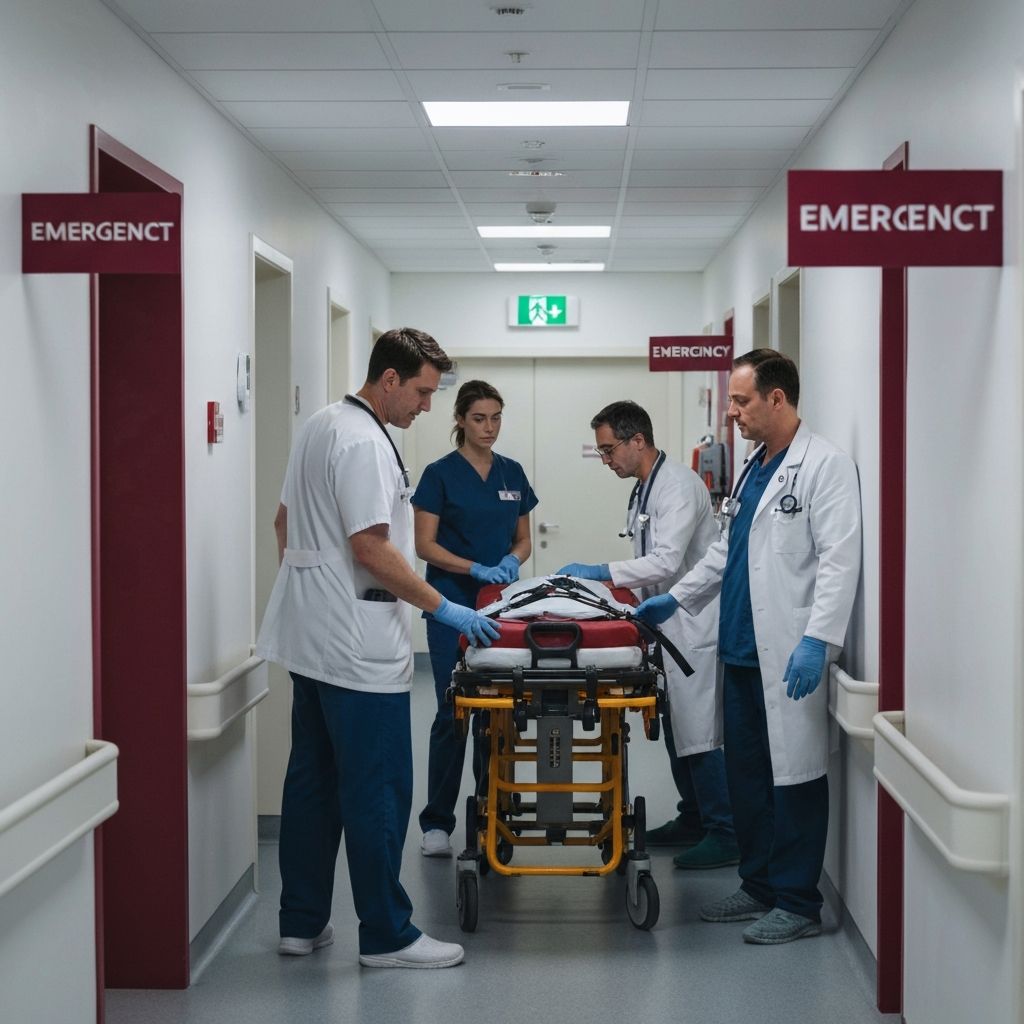
Within seconds of the announcement, the hospital's Code Blue team, often called the rapid response team or cardiac arrest team, begins mobilizing. This team typically includes a physician, one or more nurses, a respiratory therapist, a pharmacist, and sometimes additional specialists depending on the hospital's protocol. Each team member has a specific role and set of responsibilities that they have trained for extensively.
Meanwhile, the first responder at the scene begins cardiopulmonary resuscitation (CPR) immediately. High-quality CPR, which includes chest compressions and rescue breaths, is the most important intervention in the early minutes of a cardiac arrest. Studies have shown that immediate, effective CPR can double or triple a patient's chances of survival.
The Code Blue Response Team and Their Roles
The Code Blue response team is composed of healthcare professionals with specialized training in advanced cardiac life support (ACLS). Each member of the team has a defined role that ensures the response is organized, efficient, and effective. Understanding these roles provides insight into the complexity of a Code Blue response.
The team leader, usually a physician or experienced advanced practice provider, directs the overall response. The team leader assesses the patient's condition, makes critical decisions about treatment, and ensures that all team members are performing their roles effectively. This individual must remain calm, communicate clearly, and prioritize interventions based on established protocols.
The compressor is responsible for performing chest compressions. High-quality compressions are essential for maintaining blood flow to the brain and vital organs during cardiac arrest. The compressor pushes down hard and fast on the center of the patient's chest at a rate of 100 to 120 compressions per minute, at a depth of at least 2 inches. Because effective compressions are physically exhausting, compressors typically rotate every 2 minutes to maintain quality.
The airway manager, often a respiratory therapist or anesthesiologist, is responsible for maintaining the patient's airway and providing ventilation. This may involve using a bag-valve mask, inserting an advanced airway device like an endotracheal tube or laryngeal mask airway, and connecting the patient to a ventilator once the airway is secured.
The medication nurse prepares and administers emergency medications as directed by the team leader. Common medications used during a Code Blue include epinephrine (adrenaline), which stimulates the heart, amiodarone, which treats dangerous heart rhythms, and various other drugs depending on the specific situation.
The defibrillator operator manages the defibrillator or automated external defibrillator (AED), which delivers electrical shocks to the heart in an attempt to restore a normal rhythm. Not all cardiac arrests require defibrillation, as the treatment depends on the specific type of heart rhythm identified by the defibrillator's monitor.
The recorder or documenter is responsible for keeping a detailed log of all events during the Code Blue, including the time of each intervention, medications administered, defibrillation attempts, and the patient's response. This documentation is crucial for ongoing patient care and for quality improvement review after the event.
Survival Rates and Outcomes
The survival rate for in-hospital cardiac arrest has improved significantly over the past few decades, thanks to advances in training, technology, and protocols. According to data from the American Heart Association, the overall survival rate to hospital discharge for in-hospital cardiac arrest is approximately 25 to 30 percent, though this varies widely based on several factors.
The most important factors affecting survival include the time from arrest to the start of CPR, the initial heart rhythm, the patient's underlying health conditions, and the quality of the resuscitation effort. Patients who have a shockable rhythm (ventricular fibrillation or pulseless ventricular tachycardia) generally have better outcomes than those with non-shockable rhythms (asystole or pulseless electrical activity).
Age, pre-existing conditions, and the location of the arrest within the hospital also influence outcomes. Patients who arrest in monitored settings like the intensive care unit or the cardiac catheterization lab tend to have faster response times and better outcomes than those who arrest in unmonitored settings like general medical floors or restrooms.
Other Important Hospital Emergency Codes
While Code Blue is the most widely known hospital emergency code, healthcare facilities use a variety of color-coded alerts to communicate different types of emergencies. Understanding these codes provides a broader picture of hospital emergency preparedness.
Code Red indicates a fire in the hospital. When Code Red is called, staff follow specific fire safety protocols including evacuation procedures, fire containment, and activation of the fire alarm system. All staff members are trained in the RACE protocol: Rescue anyone in immediate danger, Activate the fire alarm, Contain the fire by closing doors, and Extinguish the fire if it is safe to do so.
Code Pink is used in many hospitals to indicate an infant or child abduction. This code triggers an immediate lockdown of the facility and activation of security protocols designed to prevent anyone from leaving the building with a child. All exits are monitored, and staff are trained to observe and report any suspicious activity.
Code Gray typically indicates a combative or violent patient or visitor who poses a threat to staff, other patients, or themselves. The response to Code Gray involves security personnel and trained staff who use de-escalation techniques and, if necessary, physical restraints to ensure the safety of everyone in the area.
Code Orange is used to indicate a hazardous materials spill or exposure. This code activates the hospital's hazmat response team and may require evacuation of the affected area, decontamination procedures, and notification of external emergency services.
Training and Preparedness
Healthcare facilities invest significant resources in Code Blue training and preparedness. All clinical staff members are required to maintain current certification in Basic Life Support (BLS), and members of the Code Blue response team must be certified in Advanced Cardiovascular Life Support (ACLS). These certifications require regular renewal, typically every two years, to ensure skills remain current.
Many hospitals conduct regular Code Blue drills and simulations to test their response systems and identify areas for improvement. These simulations use high-fidelity mannequins that can simulate various cardiac rhythms, breathing patterns, and physiological responses, providing a realistic training experience without risk to actual patients.
After each real Code Blue event, most hospitals conduct a debriefing session where the response team reviews the event, identifies what went well, and discusses areas for improvement. This continuous quality improvement process has been a major factor in the steady improvement of in-hospital cardiac arrest survival rates over the past several decades. The lessons learned from each event contribute to better training, more effective protocols, and ultimately, more lives saved.
